



SWISS MULTI-FUEL EXHAUST GAS SOLUTION TARGETS 2022 PILOTS
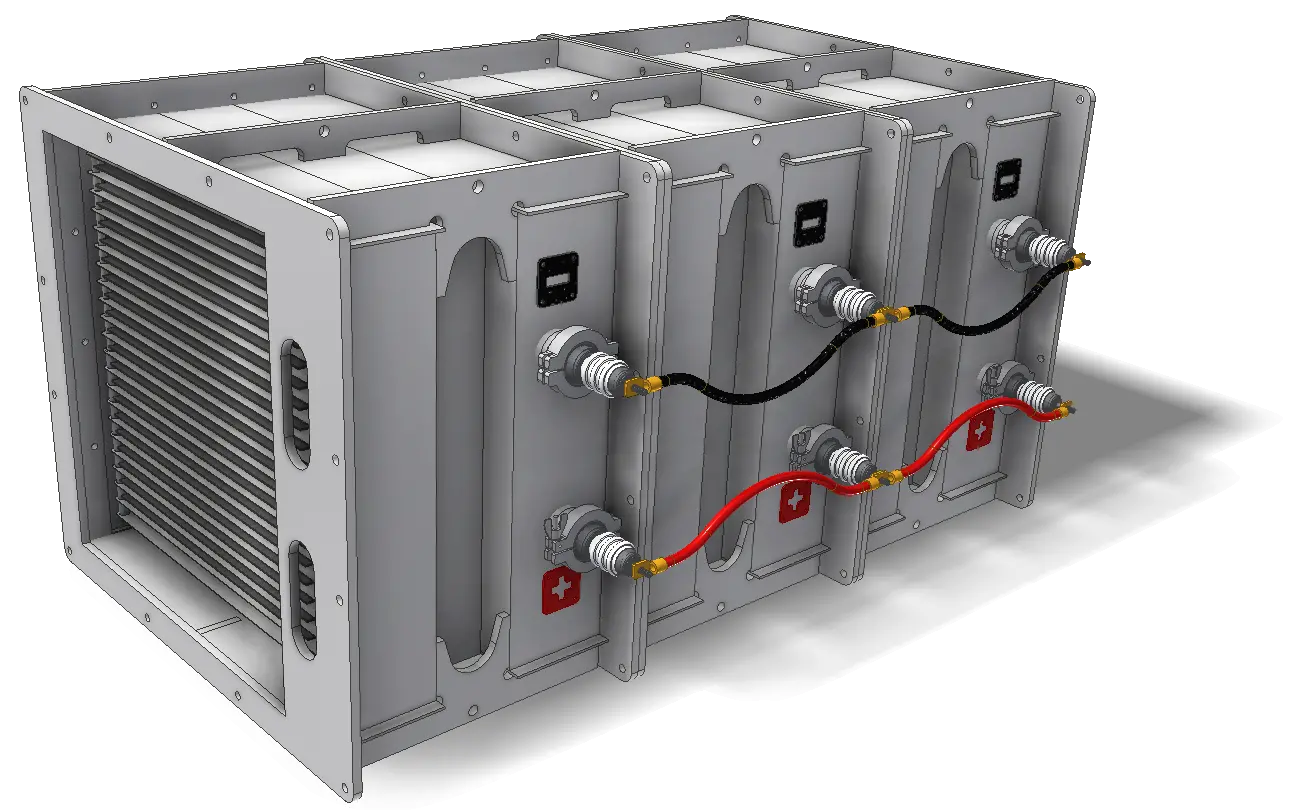
Founder and CEO of Daphne Technology, Dr Mario Michan, says that the marine industry’s fuel transition is a smart move, but it needs to be recognised that as long as there is combustion involved in generating power, there will always be emissions. The aim of the green converter is to provide a means of dealing with those emissions.
It is a plug-and-play solution reducing air and sea pollution for ships powered by heavy/residual fuel, LNG and future fuels such as ammonia, LPG and hydrogen. Land-based testing has proven that the converter can reduce SOx by 99%, particulate matter (PM) by 99%, NOx by 85%, methane by 90%, and ammonia slip chemicals: N2O by 65% and NH3 by 60%. Preliminary results have also shown promising results for CO2 reduction with a modified version of the technology.
For vessels operating on heavy fuel, the turnkey system SulPure includes the green converter plus an extra step to turn the pollutants, including black carbon and particulate matter, into a non-hazardous, saleable fertiliser. The closed-loop system can be delivered in a format that removes SOx only, or both SOx and NOx, as well as removing up to 90% of methane. Michan says the value of the fertiliser exceeds that of the urea used as a reagent and therefore reduces the OPEX of the system.
As the temperature of the exhaust gas is not a critical factor for operation of the green converter, the vessel’s engines can be run at their optimum, with the system managing any NOx formation. Using the system for NOx compliance can result in fuel savings of up to 7% in diesel engines, says Michan. For low pressure Otto cycle engines and four-stroke dual-fuel engines, approximately 50% of the methane slip can be removed, and for lean burn spark ignition engines, at least 60% can be removed using maximum 4% of the engine load. Michan expects this power consumption to be reduced to less than 2% in the next version of the system.
The system is also suited for LNG-fuelled and dual-fuel LNG engines. “Our solution can reduce over 90% of methane slip from LNG powered engines, providing a life extension to LNG as a marine fuel and therefore a clear pathway to carbon neutral shipping industry,” says Michan.
Several patents have been issued for the green converter. The process starts with an exhaust gas bypass that directs the exhaust gas into a humidifying tower where temperature and humidity are optimised for maximum pollutant removal efficiency. The exhaust gas then passes through Daphne Technology’s patented Electron Chamber, a cartridge that is electrically powered by Daphne’s patented Wavelet Pulsed Package (WPP™) power supply. This electrically excites electrodes in the cartridge to produce electrons that then convert SO2 and NOx emissions to sulphuric (H2SO4) and nitric (HNO3) acids, respectively. These are then neutralized using urea to yield a fertilizer ASN (ammonium sulphate ((NH4)2SO4) and ammonium nitrate (NH4NO3) blend solution). Finally, a condenser is used to lower the exhaust gas temperature and collect the fertilizer as a liquid fertiliser.
Rather than transferring electrical energy to the Electron Chamber as a single pulse, the WPP distributes it over an interval of several consecutive bipolar high voltage pulses. Testing has shown that this reduces power demand by over 30%.
Michan says the Daphne Technology solutions are easy, fast and inexpensive to install, no drydocking is required, and as seawater is not required, changes to the vessel are minimal. The systems are scalable and proportioned to the size of the vessel’s engine, with approximately 2m3 required for every 1.5MW of engine power. As they are about the same size as a selective catalytic reduction system and are temperature independent, the green converter and SulPure system can be installed near the turbocharger or beyond the economizer or the silencer. Alternatively, a containerised system can be delivered.
Saudi Aramco Energy Ventures is a strategic partner for the company, which Michan established in 2017, and which is currently conducting a crowdfunding campaign to bolster funding already received from the EU’s Horizon 2020 program. The funds will further seven pilot projects on various vessels with Wärtsilä and Bergen (Rolls-Royce) engines, including pilots using LNG dual-fuel engines. Both Lloyd’s Register and DNV are involved in HAZID studies as the company works towards Approval in Principle for the technology. Shipboard pilots are expected to be operational next year.
The company’s long-term vision is to capture and convert all pollutants into upcycled and useful products, both at sea and on shore.
Related Articles
 EMISSIONS REDUCTION TECHNOLOGY
 EMISSIONS REDUCTION TECHNOLOGY
 EMISSIONS REDUCTION TECHNOLOGY