



Green fuels conversion and techno-economic study to address risks of inaction
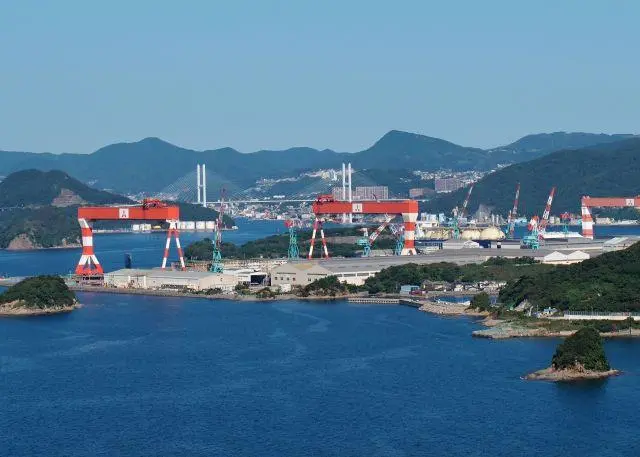
The Mærsk Mc-Kinney Møller Center for Zero Carbon Shipping is coordinating a project focused on identifying the costs and optionalities of dual-fuel conversions, and subsequently producing scenarios addressing the design configuration options and how to de-risk opportunities for future asset investments.
Claus Graugaard Head of Onboard Vessel Solutions at Mærsk Mc-Kinney Møller Center for Zero Carbon Shipping, spoke to The Motorship in May 2021 to discuss the development of pathways for the conversion of the world’s vessels to zero carbon and net zero fuels. The project brings together participants from across the shipping industry, including Mitsubishi Heavy Industries, NYK, MAN Energy Solutions, ABS, Total, Seaspan and Maersk.
Mærsk Mc-Kinney Møller Center for Zero Carbon Shipping
The Center itself is an independent research and development center, bringing together industry participants from diverse sectors, including classification societies, as well as representatives from the shipping, shipbuilding, manufacturing and energy sectors. Founder partners include ABS, A.P. Moller-Maersk, Cargill, MAN Energy Solutions, Mitsubishi Heavy Industries, NYK Line and Siemens.
The Center is seeking to accelerate the transformation of shipping, which will require significant investment from outside the industry, the development of new fuels and powering solutions, as well as the correct alignment of regulatory and commercial incentives.
The Center’s ambitions were underlined by an announcement shortly before the interview that the Center was participating in a joint Zero-Emission Shipping Mission together with the Global Maritime Forum and the governments of Denmark, Norway, and the United States to scale and deploy new green maritime solutions.
The three main goals of the Zero-Emission Shipping Mission are:
- Develop, demonstrate, and deploy zero-emission fuels, ships, and fuel infrastructure in a coordinated fashion along the full value chain.
- By 2030, ships capable of running on hydrogen-based zero-emission fuels – such as green hydrogen, green ammonia, green methanol, and advanced biofuels – make up at least 5% of the global deep-sea fleet (by fuel consumption).
- By 2030, at least 200 of these well-to-wake zero-emission fuelled ships are in service and operating on these fuels along their main deep sea shipping routes.
Modelling and more
A separate R&D team within the Center is conducting in-depth research into the technical, economic and infrastructure requirements of deploying zero-emission fuels and fuel infrastructure.
“We’re getting very close to being able to analyse the costs of producing up to 17 different potential energy carriers,” Graugaard said.
By combining granular insight into the power configuration of bulkers, containerships and tankers among deep-sea vessel types, with the economic and environmental aspects of supplying zero-carbon fuels, the model will be able to produce pathways assessing how the introduction of different energy carriers could affect the industry transition and the power demand of the fleet.
No analysis of the introduction of alternative fuels into the global fleet would be complete without an assessment of the overall impact of operating on such fuels, both from an operational cost perspective, but also taking into account the capital costs of ordering a newbuilding.
Graugaard noted that the Green Fuels Conversion Optionality Study is the first stage in conducting research into assessing the cost of converting existing vessels to operate on such new fuels.
The project aligns closely with Graugaard’s other research responsibilities within Onboard Vessel Solutions at the Center, which include energy efficiency technologies, emissions abatement technologies, ship design, safety and risk management design and operations. “Everything from quay to wake, covering everything from design questions – such as how to configure vessels to handle larger tank structures, fuel supply, fuel gas systems, power solutions and so on – to new technologies, such as solid oxide fuel cells.”
A trained naval architect, Graugaard has first-hand experience of working with alternative fuels from a classification society perspective at DNV, during the early stages of LNG rule development. Graugaard also understands the commercial imperatives of fleet management, gained during his extended period as Head of Technical Management at J. Lauritzen.
Green Fuels Conversion Optionality Study
The study is intended to produce reliable estimates for the economics of conversions, based on accurate estimates around retrofit costs. In the context of converting existing vessel from fuel oil, but also preparing new buildings of tomorrow with minor or larger readiness scope. One of the project partners involved in the project is from a Japanese shipyard, while other project participants have experience in converting engines between fuel types as a supplier .
“This is an area that really has attracted huge interest from many of our partners, because it should clarify the various technical configurations, including the choice between fuel oil or LNG configuration versus the optionality of subsequently converting to ammonia or methanol. By addressing these combinations in this project we want to try to get clarity on the impact on the technical designs and configurations of the vessels.”
The project is around creating scenarios around the conversion of existing shipping to operate on a comparatively limited number of zero carbon fuels. The fuels were selected on the basis of their likely commercial availability within a short timeframe, and include green ammonia, green methanol and advanced biofuels, as well as bio methane.
The project is intended to be delivered by the end of 2021, and will produce detailed analyses for lifetime cost of operating vessels on a variety of fuels, including the total cost of conversions, as well as the cost of operating on different fuels. The studies are intended to take a granular look at the cost of installing additional fuel tanks for various types of vessels, as well as structural alterations and the preparation of gas systems.
Graugaard also noted that the production of detailed assessments of fuel consumption and environmental emissions for different vessel types, routes and fuel types would also allow GHG emissions to be derived. This is central to the Center’s objectives, but also a necessary requirement for the impact of different environmental regulatory schemes to be modelled.
Graugaard noted that the technological aspects of the introduction of new fuels are closely integrated with regulatory questions. “As our intention is to accelerate the decarbonization of shipping globally, we also look closely at strategic and regulatory levers that could make the transition occur more quickly. In a similar way to how we are analysing the potential impact of market-based measures or a CO2 tax.”
The project will not only look at CAPEX and OPEX requirements, but also at the wider implications of alternative fuel conversions for the future value of vessels. Such considerations are highly topical, given the potential risk that changes in the regulatory landscape or regional fuel availability could leave an asset stranded. Meanwhile, many observers expect environmental premiums to emerge in some markets in the near future, perhaps initially as a means of recompensing owners for higher fuel costs. “The financial angle is important for shipowners, who are looking for a more profound basis when making investment decisions,” Graugaard concluded.
The conversion of vessels to operate on alternative fuels is an area that has enormous scope for further study, Graugaard adds. One potential area might be incorporating life cycle type thinking into conversions, factoring in the emissions from the newbuild process, while the potential for retrofit costs to fall with serialised conversions was another.
“Our ambition is to try to bring stakeholders together and hopefully see the best solutions, while thinking across the entire value chain, because we see that there are so many stakeholders there. It is very exciting,” Graugaard concluded.
Related Articles
 EMISSIONS REDUCTION TECHNOLOGY
 ALTERNATIVE FUELS & LUBRICANTS
 ALTERNATIVE FUELS & LUBRICANTS