



KBB RESEARCHING TURBOCHARGING FOR HYDROGEN COMBUSTION ENGINES
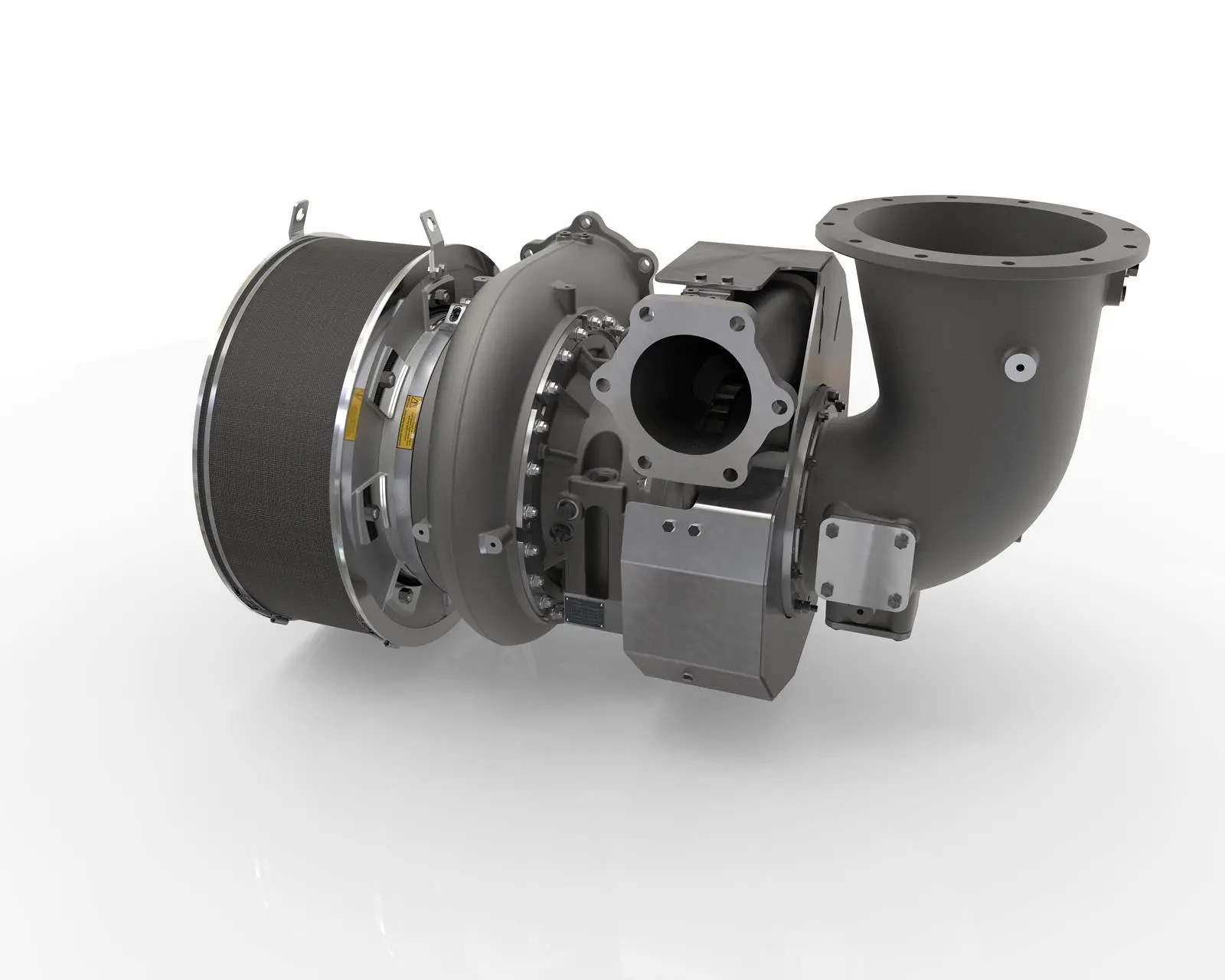
Determining the changes in operating parameters needed to ensure efficient and reliable charging of hydrogen combustion is a key focus for KBB, says Engineering Director, Dr Silvio Risse. This impacts the compressor and turbine’s operation, and KBB is running simulation tests to determine the adjustments that are required due to hydrogen’s unique combustion characteristics. It burns much faster than natural gas, knocking occurs more easily, and the engine requires combustion adjustments and more boost pressure to achieve comparable power.
Other key considerations are confirming that the housing sealing systems used are adequate, particularly on the compressor side when the fuel is mixed before reaching the compressor. In most cases it is adequate, but it must be checked to avoid safety critical leakages after long-term operation. Attention also needs to be paid to the bearing housing on the compressor side to prevent blowby if the shaft sealing is not 100%. The presence of hydrogen in the lubricating oil also needs to be considered, says Risse. “It is the same sort of discussion we have regarding gas engines with premixed biogases.”
Minimising condensation and corrosion, with adjusted engine shut-off procedures and exhaust piping design is another issue. “The water content increases on the turbine side, and this is a consideration for avoiding corrosion fouling,” says Risse.
Using hydrogen as a fuel is unlikely to affect turbine blade shape design, but there is discussion on how to fit an after-treatment system to reduce NOx-emissions. This can determine which turbine size and nozzle rings are fitted.
Engine load dynamics are unlikely to be an issue, as the load profile does not change due to the presence of hydrogen. Rather it is the need for flexibility in the proportion of hydrogen used in the fuel that needs to be considered. “If it’s 30% hydrogen or 100%, you can run with it, but there is also a compromise on performance,” says Risse. “It depends on what the starting proportion to be used is and then the final proportion. If this involves a big step, then some retrofitting is required. In most cases, though, this would only involve nozzle rings and diffuser on the compressor side.”
KBB is also involved in preliminary discussions with engine manufacturers about ammonia as a marine fuel and anticipates greater involvement in projects as COVID restrictions ease and engine development proceeds. Meanwhile, the company continues development of its existing turbocharger range with recent work involving boosting of the pressure ratio for two-stage turbocharger operation – with the ultimate goal of increasing pressure ratio from 10:1 to 12:1.
A research priority is to obtain higher charging pressures to enable the highest engine efficiency, especially in diesel, heavy fuel oil, gas and dual-fuel applications. In conjunction with adapted engine valve control times (Miller cycle timing), engine efficiency can be further increased with a simultaneous drop in fuel consumption and emissions. Additionally, turbocharging efficiencies of more than 75 percent are being achieved as a result of intermediate cooling.
Upgrade solutions
KBB continues to support customers in meeting IMO emissions regulations. This can involve the addition of after-treatment systems as well as turbocharger upgrades, says Account Manager, Florian Hermann. A turbocharger upgrade (available for engine output range between 500 and 6,000kW (per turbocharger)) results in higher engine efficiency and lower fuel consumption, better acceleration performance of the engine and lower emissions. It also results in quicker and easier maintenance and longer maintenance intervals. However, Hermann notes that the recertification of engines by classification societies can add to the burden of a retrofit turbocharger project, making the option of engine replacement more desirable in some cases, with the associated turbocharger upgrade coming as part of that larger project.
Related Articles
 PROPULSION
 GENERAL NEWS
 GENERAL NEWS