



EU’s proposed fuel regulation ‘bombs’ onto already-busy industry

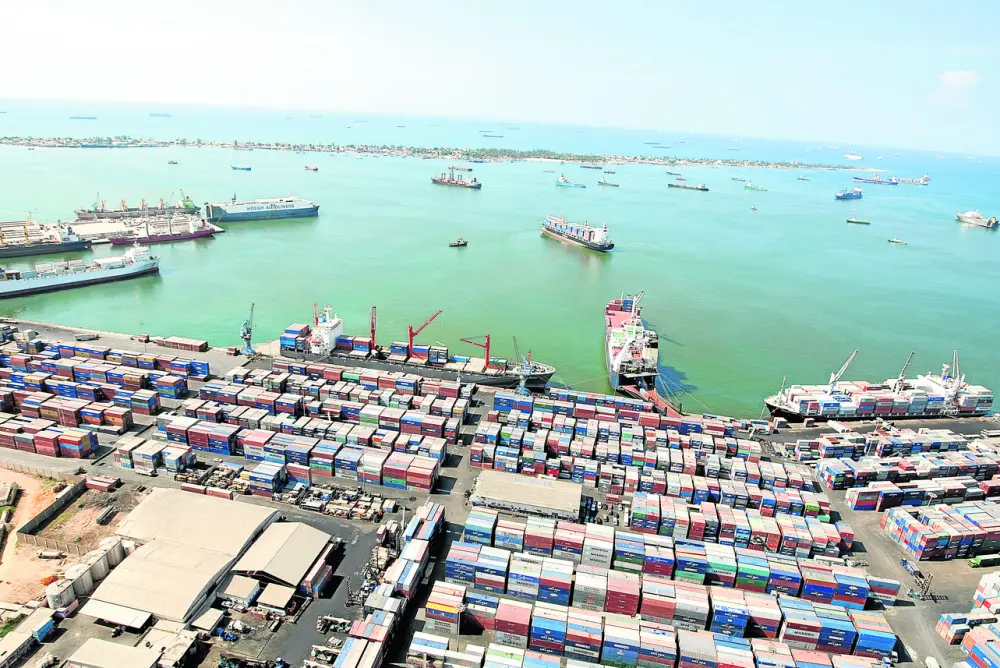
A proposal for a European regulation on the use of renewable and low-carbon fuels in maritime transport landed on 14 July like “a great bomb” that had been thrown into an industry already busy with the many aspects of the IMO’s GHG-related activities, Simon Bennett, deputy secretary general of the International Chamber of Shipping (ICS), commented to The Motorship.
Two key initiatives stand out from its 247 pages: the inclusion of shipping within Europe’s emission trading scheme (ETS) – which will also include ships on voyages beyond Europe’s borders – and the FuelEU Maritime initiative, which would create “a common EU regulatory framework to increase the share of renewable and low-carbon fuels in the fuel mix of international maritime transport,” the publication’s opening section explains.
According to the proposal, the regulation will take account of the energy used by ships during their stay within an EU port or on voyages between EU ports, and half of the energy used on voyages departing from or arriving to an EU port where the last or next port of call is in a third country.
The proposal also sets out intentions to review several other European directives, including, the Alternative Fuels Infrastructure Directive (AFID) and the Renewable Energy Directive (RED II).
In a statement coinciding with the proposal’s publication, ICS secretary general Guy Platten said that extending the ETS to shipping was “an ideological revenue raising exercise [that] will greatly upset the EU’s trading partners.” It was difficult to see, he said, “what extending the EU ETS to shipping will achieve towards reducing CO2, particularly as the proposal only covers about 7.5% of shipping’s global emissions.”
As The Motorship noted on 21 April, ICS commissioned a joint study with the European Community Shipowners Associations (ECSA), which was published in May, titled FuelEU Maritime – Avoiding Unintended Consequences. Yet it had not offered any comments during two consultation phases last year, which Mr Bennett said was because the information available at that time provided no detail “other than that they wanted to do something to encourage the take up of alternative fuel.”
Through its contacts it discovered what the commission was planning, he said, enabling it to prepare its report before the proposal was published and this will now be distributed “through our channels to the different DGs” for them to consider as they finalise the proposal. A response will also be submitted via the online consultation platform, he said.
Environmentalists were also critical of the proposed regulation, in particular its approach to future fuels. One organisation, Transport & Environment (T&E), saw a leaked copy of the report ahead of publication and issued a statement on 29 June saying that the FuelEU Maritime law “does not provide incentives to invest in e-fuels but promotes liquified natural gas (LNG) and biofuels as an alternative to marine fuel oil”, which it said would be “an environmental disaster”.
But The Motorship notes that, although the proposed regulation contains many mentions of LNG and acknowledges that “the GHG benefits of fossil LNG remain modest” it says that “in the longer term, LNG can pave the way to the use of bio-LNG or e-gas, which would also offer climate-related benefits.”
It also refers to e-fuels and in one of three policy options (POs) considered in the report, a factor is incorporated into its application “in such a way that it increases the competitiveness of zero-emission technologies (i.e. e-fuels, hydrogen, electricity used in electric vessels) relative to that of advanced biofuels”, the proposal document notes.
Non-EU fuel supplies
Practical questions, such as mechanisms for certifying alternative fuels from third countries, remain works-in-progress. “Specific rules should be set up to provide for GHG certification of fuels bunkered in third countries,” using methodology based on “existing practice such as the fuel import certification under RED II [the Renewable Energy Directive]”, the document notes.
Elsewhere, in a section considering the impact of the regulation on third countries, the document says that “bunkering of RLF [renewable and low-carbon fuel] is also allowed in third countries that comply with the certification requirements.” It acknowledges that, under each of its three POs, fuel costs will rise and predicts that “the increase in fuel cost … may also have an impact on trade with third countries.”
It is likely to be a long time before the proposed regulation comes into force, Mr Bennett predicted. This is just one of a number of similar proposals affecting a number of industries that were released simultaneously and there will be a lot of negotiations across the various EU directorates before they can be finalised, he suggested. “Normally, it would take about two years,” he said.
Related Articles
 METHANOL
 MONITORING, CONTROL & DIGITALISATION
 MONITORING, CONTROL & DIGITALISATION