



US evaluates wind farm effects on radar
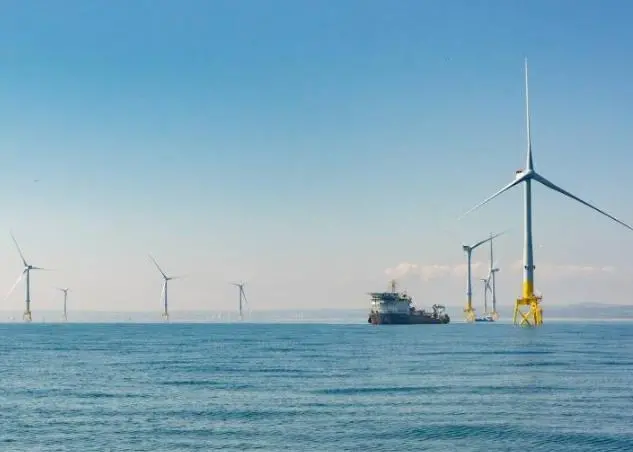
Offshore wind energy development is poised to expand rapidly across the U.S. Outer Continental Shelf over the next decade, as part of a government-wide effort to develop more renewable sources of energy. Offshore wind energy planning and development has expanded along the U.S. Atlantic Coast, and to areas in the Gulf of Mexico and Pacific Coast.
However, the maritime community has expressed concern that wind turbine generators, which are constructed predominantly of steel, can interfere with radar used in navigation. A particular concern is interference with marine vessel radar, which is a critical instrument for navigation, collision avoidance, and use in search and rescue missions, with secondary uses including activities like detecting reflectors on fishing nets or birds to indicate the presence of schools of fish. The most common impact is a substantial increase in strong, reflected energy cluttering the operator’s display.
Previous studies of the impacts of wind turbine generators on radar relied on data from European wind farms. However, wind turbines located in or planned for the U.S. Outer Continental Shelf are larger, wider, and laid out in different configurations.
Opportunities exist to ameliorate the interference using both active and passive means, such as improved radar signal processing and display logic or signature-enhancing reflectors on small vessels to minimize lost contacts, says the Academy. Additionally, requirements could be updated for vessels <150 gross tonnage to ensure they exhibit a radar reflector of suitable size and design while underway in or adjacent to a wind farm to improve their detectability when practicable. Deployment of reference buoys adjacent to wind farms would provide mariners with a reference target to appropriately adjust control settings to assist in the detection of smaller targets operating in the vicinity of wind farms.
Conducted at the request of the Bureau of Ocean Energy Management, the report recommends pursuing two courses of action to reduce impacts by: (1) filling knowledge gaps through data collection, modelling and analysis, and focused research on wind turbine generator characteristics; and (2) pursuing practicable options to reduce interference on marine vessel radar such as enhanced operator training, use of radar reflectors on small vessels, use of reference buoys, evaluation of radar mounting procedures, new radar designs, and the development of wind turbine generators with reduced radar signatures.
Report highlights are available here.
Related Articles
 ALTERNATIVE FUELS & LUBRICANTS
 GENERAL NEWS
 GENERAL NEWS