



UK Funding To Drive Electric Revolution
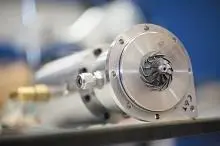
Investment into the PEMD supply chain is seen as vital to achieving UK net-zero emission objectives across the transport and energy sectors.
GE Power Conversion will be partnered in the endeavour, entitled Reducing Footprint and Weight of High Power, Integrated PEMD, by Lincoln-based Dynex Semiconductor, the University of Nottingham, and Warwick Manufacturing Group. The latter is part of the University of Warwick.
The project will focus on transformative design and novel manufacturing technologies, to substantially increase power density in high power electrification systems. The rationale for the accent on the density factor is that, despite their scale, large ships and industrial applications often have significant space constraints that limit the integration of new, electric microgrid equipment such as electric motors and advanced power electronics and cleaner energy sources.
GE notes that integrating the power electronics and electrical machines into a single housing will permit increased power density, and a reduced overall footprint, as well as overall system layout flexibility and cost. This offers the potential to reduce total system power density by up to 50% and weight by up to 25%, with additional added value creation for customers in freeing up space for operational use.
GE Power Conversion’s Managing Director in the UK, Andy Cooper explains: “Through transformative improvements in power density, we can help customers in the transition to electrification and decarbonization. It’s an excellent opportunity for industry’s investment in next generation technologies to be accelerated through UK government support, and for the UK supply chain to continue to be world-recognized for its expertise”.
Work will be carried out at GE’s systems and manufacturing facilities in the English Midlands at Rugby, and at its dedicated, land-based marine test, emulation and innovation centre at Whetstone, Leicestershire. Partner resources that will be utilised include the University of Nottingham’s Power Electronics and Machines centre, which opened in March 2021.
The scheme has qualified for approximately £2m (US$2.7m) in funding support via the government agency UK Research & Innovation. It is one of 10 newly announced projects authorised for a total £16.7m (US$22.3m) in state funding to drive net-zero PEMD developments.
Aside from the environmental objectives, the economic rationale for co-financing from the public purse is to grow the UK’s manufacturing base for PEMD components while better protecting British industry against possible future overseas supply chain disruption.
Related Articles
 OTHER EQUIPMENT
 LNG
LNG
 GENERAL NEWS