



Maintenance error led to US$3.8 million casualty
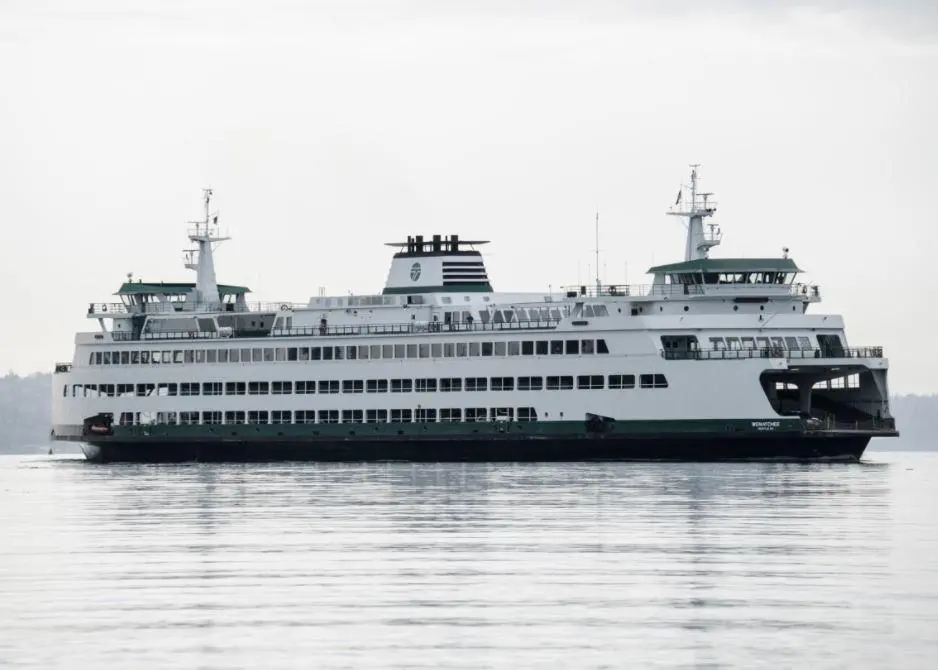
The catastrophic failure occurred in April 2021 while the 1998-built double-ended vessel was undertaking sea trials in Puget Sound. The diesel-electric vessel is powered by four EMD 710 series diesel engines, each driving a 4,160-volt AC generator.
In November 2020, the Wenatchee, operated by Washington State Ferries (WSF), was taken out of service for maintenance. During the maintenance period, two of the four main diesel engines, numbers 2 and 3, were overhauled by factory-trained technicians. In February 2021, following the completion of engine overhauls, the vessel crew conducted engine tests. Alarms activated for the no. 3 main engine. Crew members found pieces of a cigarette lighter in the lube oil system. The technicians returned to inspect the engine, drained the oil and searched the lube oil system for two days, recovering about 70% of the cigarette lighter’s plastic and metal components from the engine. They advised WSF it was acceptable to run the engine.
On April 22, a sea trial was conducted where the crew would monitor the four newly installed propulsion shaft bearings and shaft seals while operating at full power. They would also sequentially load the nos. 2 and 3 main engines for specific time intervals in order to condition the newly manufactured surfaces for rated power operations, ensure piston rings were seated sufficiently, and monitor engine performance.
During this trial, the no. 3 main engine experienced a connecting rod assembly failure and ejected components that breached the crankcase, resulting in the ignition of hot pressurized gases that were released in the engine room. The crew of the Wenatchee effectively contained the spread of the fire by stopping all fuel supply and ventilation to the engine room and isolating the space.
The NTSB determined the probable cause of the mechanical failure of the no. 3 main engine was a connecting rod assembly that came loose and separated from the crankshaft due to insufficient tightening of a lower basket bolt during the previous engine overhaul.
“When installing fasteners, personnel should use a calibrated torque wrench, follow the manufacturer’s recommended tightening guide and torque values, and verify that all required torque requirements have been completed,” the report stated. Under-torqueing a fastener may cause excess vibration or allow the fastener to come loose, while over-torqueing may lead to failure of the fastener or the machinery component being secured.
The NTSB has previously investigated other causalities caused by improperly torqued fasteners, including an engine room fire aboard the cruise ship Carnival Liberty in 2015, a fire aboard bulk carrier Nenita in 2016 and an engine failure on the offshore supply vessel Red Dawn in 2017.
The Marine Investigation Report is available here.
Related Articles
 ALTERNATIVE FUELS & LUBRICANTS
 GENERAL NEWS
 GENERAL NEWS