



Lack of effective engine repair cited in contact incident
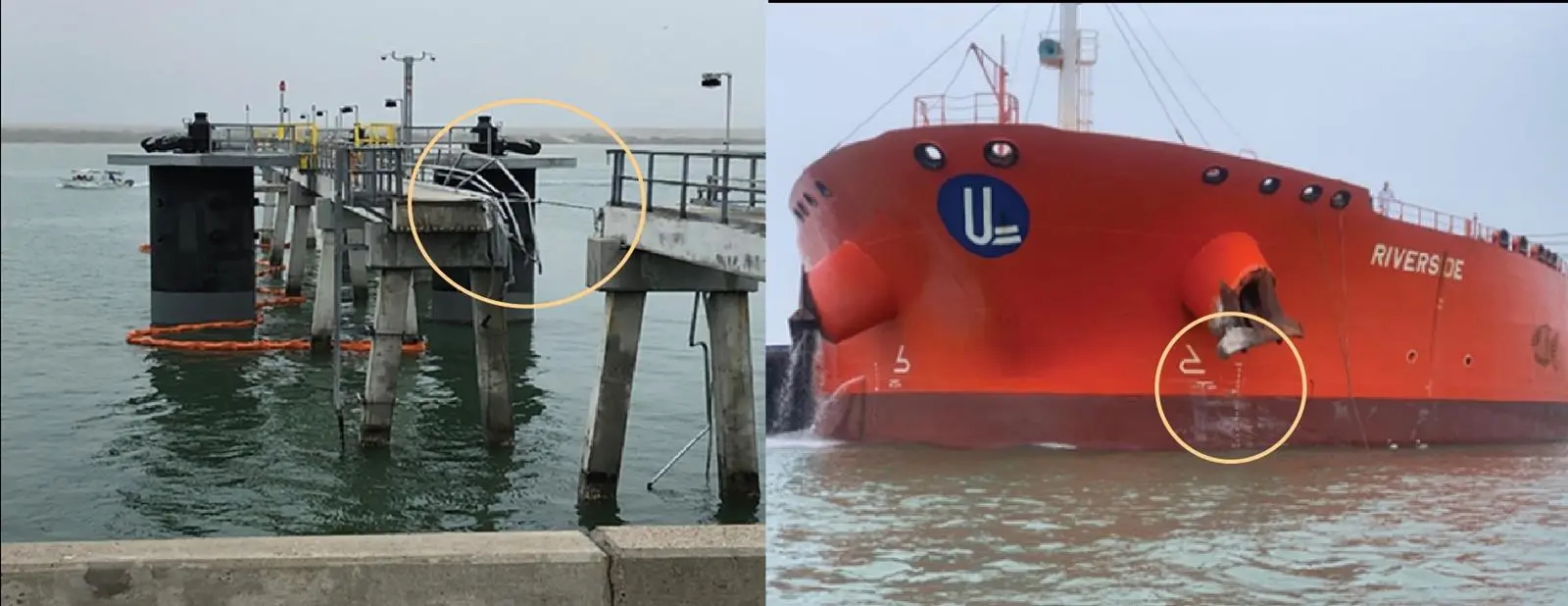
The incident occurred on 15 March 2021, when the oil tanker Riverside made contact with Moda Ingleside Energy Center No. 4 loading dock whilst carrying over 717,000 barrels of crude oil bound for Lisbon, Portugal. The contact resulted in $550,000 in damages to the vessel and $7 million in damages to the dock.
While outbound in the Corpus Christi Channel with two pilots onboard, another tank vessel ahead of Riverside was also departing, and the pilots of both vessels agreed the Riverside would slow down and allow the other vessel to depart. The pilot ordered a series of engine orders to slow the vessel, including stop. The Riverside began to sheer to port and a starboard rudder order was not effective. The pilot ordered dead slow ahead to increase the flow of water across the rudder, which required restarting the engine.
The engine failed to restart on multiple occasions. Without propulsion, the Riverside’s manoeuvrability remained limited, and its port bow struck the mooring dolphin and catwalk at the end of the no. 4 Moda dock.
The Riverside had experienced engine start issues three days prior. After troubleshooting, the engine would start in the ahead mode but would not start in the astern mode. The chief engineer engaged the limit cancel mode on fuel injection and was able to restart the engine in both ahead and astern modes. The crew believed the problem was resolved and did not request assistance from a diesel technician. However, the cause of the engine start failure was not properly identified or corrected, says the NTSB, and as such, the engine was not reliable to perform the manoeuvring required while transiting within a commercial port.
The NTSB determined the probable cause of the contact was the ineffective evaluation and incorrect solution for a main engine start issue by the company and shipboard engineers, overlooking the fouling of the main engine’s no. 6 air start actuator valve within the starting air distributor. Contributing to the casualty was the presence of moisture in and lack of routine drainage of the air start system, which allowed the buildup of hardened grease within the air start actuator valve.
“Vessel operators should ensure their crews are equipped with the resources and training to execute timely and thorough maintenance and repair on engines,” the report said. “If the root cause of an engine operating issue cannot be determined, it is critical for a chief engineer and vessel owner/operator to have a diesel technician further evaluate and determine the cause of the malfunction. Vessel reliability is dependent on the complete resolution of equipment malfunctions and abnormalities when they occur.”
The report is available here.
Related Articles
 ALTERNATIVE FUELS & LUBRICANTS
 GENERAL NEWS
 GENERAL NEWS