



Tanker owner sentenced for concealing deliberate pollution
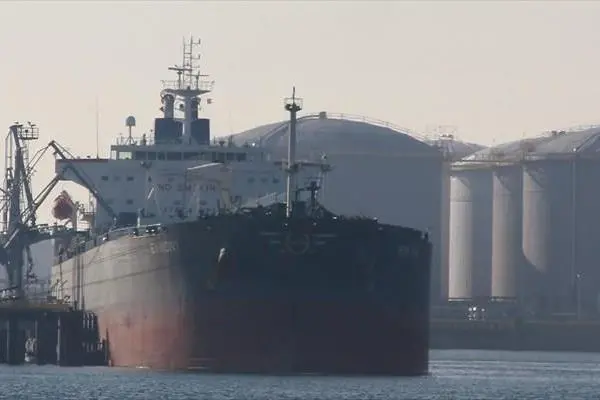
U.S. District Court Judge Richard G. Andrews for the District of Delaware fined Evridiki US$2 million and Liquimar US$1 million. The sentencing follows conviction at trial for charges including violating the Act to Prevent Pollution from Ships, falsifying ships’ documents, obstructing a U.S. Coast Guard inspection and making false statements to U.S. Coast Guard inspectors.
In March 2019, the Evridiki was inspected by the Coast Guard in Big Stone Anchorage, within Delaware Bay after a delivery of crude oil. The jury found that during the inspection, Liquimar, Evridiki and the ship’s Chief Engineer, Nikolaos Vastardis, tried to deceive Coast Guard inspectors regarding the use of the ship’s oily water separator (OWS) and oil content meter (OCM).
Vastardis used a hidden valve to trap fresh water inside the sample line so that the OCM sensor registered a concentration of zero parts per million of oil instead of what was really being discharged overboard.
The Coast Guard and government experts were able to prove that the OCM was being tricked with fresh water by analysing historic data recovered from the machine’s memory chip. When the Coast Guard opened the OWS, they found it was inoperable and fouled with copious amounts of oil and soot.
Vastardis’ conviction was upheld in December 2021 by the Third Circuit Court of Appeals, which rejected a challenge to U.S. jurisdiction over foreign vessels.
At sentencing, the government provided new evidence, based on a forensic examination of the ship’s computers, that Liquimar was also making and using fake and forged certificates regarding safety and environmental requirements. Fake certificates and fake seals, to imprint on the certificates, were e-mailed to the ship by senior shore side employees including the Designated Person Ashore.
At least three senior employees of Liquimar were involved with creating and sending the fake certificates which related to the calibration of the OCM and whether pressure relief valves for the cargo were actually tested properly. A fake OCM certificate was used during the Coast Guard inspection, and Vastardis was specifically asked about the validity of the certificate. The Coast Guard further discovered that the data stored on the OCM indicated the OCM was not energized on the date that the fake certificate claimed the OCM was calibrated.
In addition, the certificate for the pressure relief valves was noted to be false because it had claimed that the system was tested on a date that the cargo tanks were full, which is impossible. Referring to the forged documents as the “elephant in the room” which the defendants asked judge to ignore, federal prosecutors told the court that the companies “failure to address, let along mention this willful misconduct, demonstrates that these defendants are willfully blind if not completely unrepentant.”
Related Articles
 ALTERNATIVE FUELS & LUBRICANTS
 GENERAL NEWS
 GENERAL NEWS