



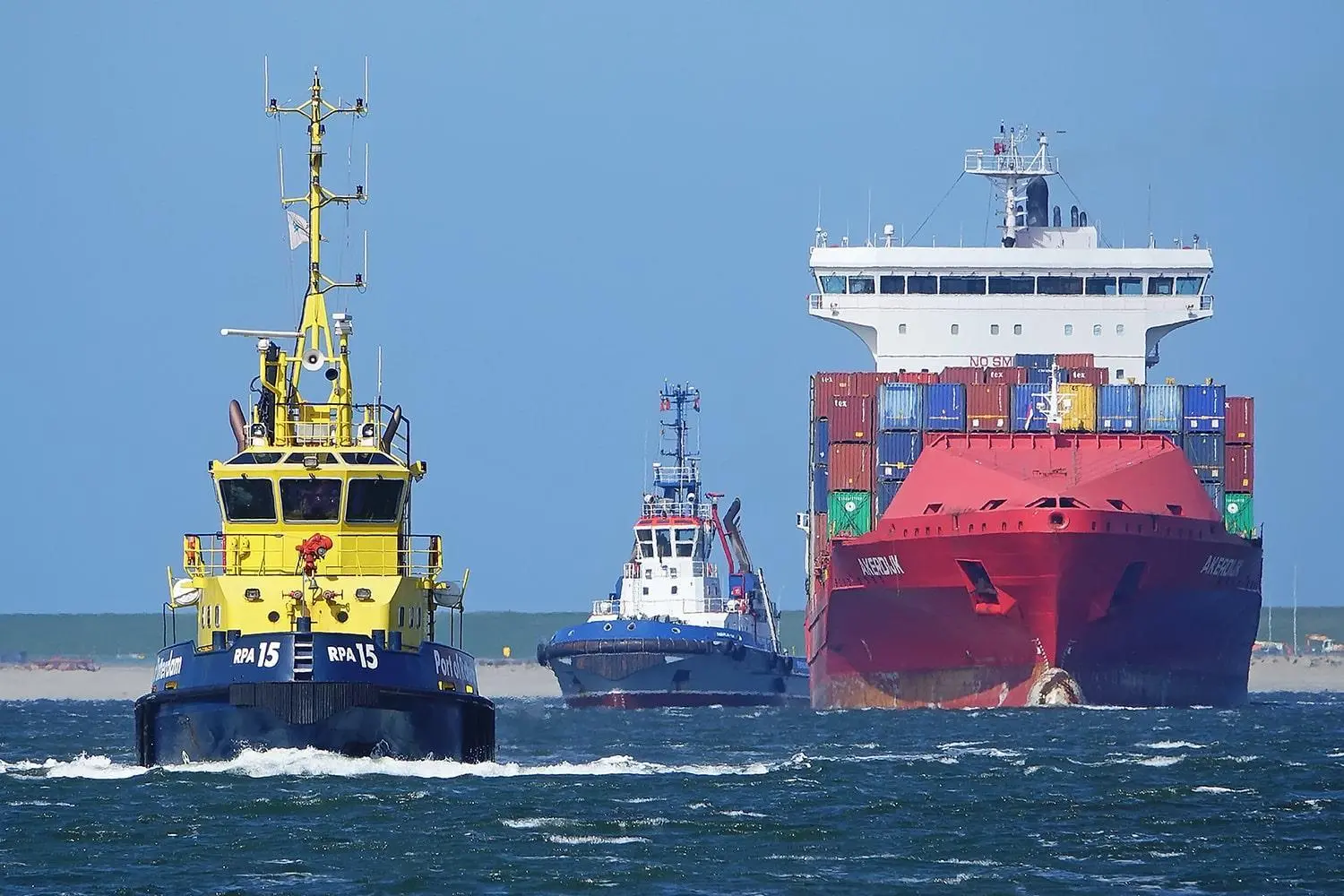
Rotterdam is aiming to make its first patrol vessels emission-free from 2025
“We are going to reduce our own carbon emissions as quickly as possible, while compensating in full what we still emit. So from that perspective, the Port Authority is already carbon neutral as we speak. Because our emissions will be lower and lower in the next few years, the compensation required will also decrease more and more,” said Allard Castelein, CEO Port of Rotterdam Authority.
Final push
Mr Castelein said that today, most of the CO₂ from the port authority is emitted by the patrol vessels. CO₂ is also emitted by the use of cars and buildings, adding up about 4,000 tonnes per year in total.
By focusing on reducing these aspects, the port authority’s carbon emissions should be 75% lower in 2025 and 90% lower in 2030 when compared with 2019. Eventually, the intention is to be entirely emission-free.
To achieve the targets, the port authority will switch all vessels completely to biofuel in the short term and it has the ambition that from 2025 new vessels will be emission-free.
It also wants to realise lower carbon emissions in other areas. Emission caused by its employees’ air travel is to be reduced by 70% in 2025 and by 80% in 2030, as a result of flying less and participation in a biokerosene programme.
Reduction objectives have been formulated for assignments awarded to contractors of the port authority as well. In this case, it is about a 45% reduction by 2030 with the use of fuels (especially dredging and earthmoving) and 20% for (construction) materials.
Related Articles
 ALTERNATIVE FUELS & LUBRICANTS
 GENERAL NEWS
 GENERAL NEWS