



Partners aim to measure and reduce methane emissions
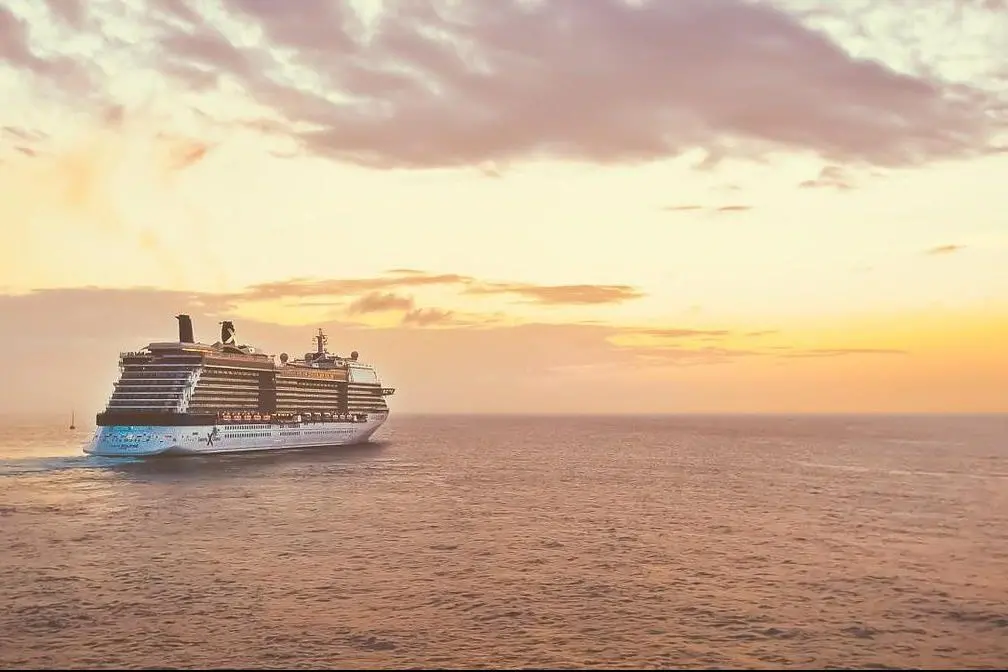
Led by Safetytech Accelerator, established by Lloyd’s Register, the initiative will initially be supported by seven partners: Maran Gas Maritime, Mediterranean Shipping Company (MSC), Carnival Corporation & Plc, Seaspan, Shell, Lloyd’s Register and Knutsen Group. It will also draw on the expertise of academics, civil society, and other stakeholders, such as the National Physical Laboratory.
In its first year, members will seek to identify and pilot new technologies to monitor and reduce methane slip from vessels fuelled by LNG. Once these solutions have been validated, the initiative will seek to endorse them to industry from 2023. The members will also tackle how shipowners and operators can be encouraged to adopt proven abatement technology at scale.
The initiative will be chaired by Panagiotis Mitrou, Lloyd’s Register’s Global Gas Director, and directed by Safetytech Accelerator’s Head of Partnerships, Steve Price.
Since 2010 the number of vessels fuelled by LNG has grown consistently by 20-40% per annum. However, some analysis has indicated that the environmental benefits of using LNG could be negated due to the propensity of LNG-vessels to leak unburned methane through the combustion process.
Methane is a potent greenhouse gas, estimated to have a Global Warming Potential (GWP) of 27-30 over 100 years, while CO2 has a GWP of 1 regardless of time period used.
Defining what constitutes negligible methane emissions, and then ensuring the sector meets that target, is therefore a vital imperative for an industry grappling with its climate footprint and increasingly using LNG as a transition fuel, say the members.
To date, there are no globally recognised methods for measuring methane slip – with a lack of available data and tools contributing to the issue. It is hoped that the new solutions identified by the innovation initiative will help the industry to understand the extent of, and then manage, their methane emissions activities.
Measuring the scale of methane emissions, and understanding if they can be managed to negligible levels, will signal if liquefied bio methane (LBM) and liquefied synthetic methane (LSM) are viable pathway fuels to help achieve 2050 decarbonisation targets.
Steve Price, Head of Partnerships, Safetytech Accelerator, said: “Shipping currently lacks the information and tools they need to accurately measure the amount of methane released by LNG-fuelled ships, and the extent of this impact. We believe that better information will allow the maritime industry to better understand the extent to which its LNG-fuelled ships are emitting methane.
“Understanding the extent of this methane slip will allow companies’, society and policymakers understand LNG’s real environmental impact. Empowering markets to channel investments to new technologies that can reduce methane slip, or to other transition fuels.”
Related Articles
 EMISSIONS REDUCTION TECHNOLOGY
 EMISSIONS REDUCTION TECHNOLOGY
 EMISSIONS REDUCTION TECHNOLOGY