



PSA joins LR’s Silk Alliance
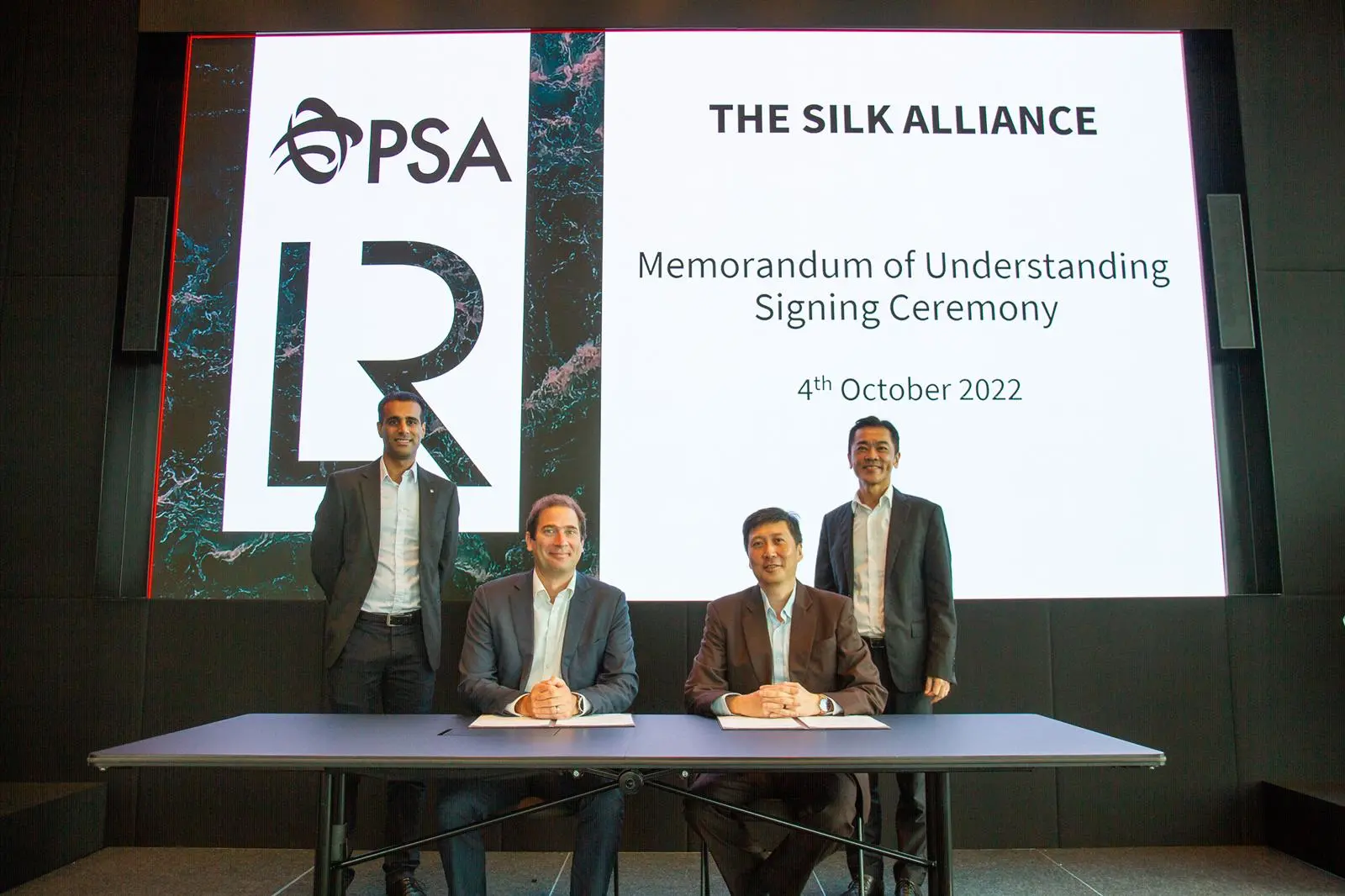
PSA is a fully owned subsidiary of PSA International which has a global network encompassing 160 locations in 42 countries around the world. The Group’s portfolio comprises over 60 deepsea, rail and inland terminals, as well as affiliated businesses in supply chain management, logistics, marine and digital services, which play a crucial role in developing a responsible and sustainable maritime industry.
As a signatory to the Call to Action for Shipping Decarbonisation by the Global Maritime Forum’s Getting to Zero Coalition, PSA is strongly committed to the mission of the Maritime Decarbonisation Hub to enable international shipping to achieve 5% adoption of zero carbon fuel by 2030.
Current members of The Silk Alliance include shipowners, MSC Shipmanagement, Pacific International Lines (PIL), Wan Hai Lines, X-Press Feeders, Yang Ming Marine Transport Corp.; shipyard, Keppel Offshore & Marine (Keppel O&M); bunker logistical supplier, Singfar International; engine manufacturer, Wärtsilä; ship manager, Wilhelmsen Ship Management; and financial institutions, the Asian Development Bank and ING.
The Silk Alliance was motivated by the partners’ shared belief that the maritime industry needs to strengthen leadership and foster collaboration that can demonstrate tangible actions in the deployment of zero carbon fuels and vessels at scale. Over the next few months, the partnership will work towards delivering learnings from focused studies and workshops to develop the strategy needed to transition intra-Asia shipping fleets to zero carbon fuels.
The Silk Alliance is carrying out the first stages of implementation for a “Green Corridor Cluster” by employing the Lloyd’s Register Maritime Decarbonisation Hub’s First Movers Framework to develop the strategy needed to transition a fleet to a carbon neutral fuel option, and test that strategy in a specific trade area.
Charles Haskell, Lloyd’s Register’s Decarbonisation Programme Manager, said, “Ports are nexus points in the maritime supply chain, providing the critical interface between importers, exporters, shipowners, logistics and transport providers, customs and other government authorities, and intermediaries such as freight forwarders. Ports are therefore uniquely positioned to become catalysts for the decarbonisation in a multitude of sectors, ranging from maritime, energy, logistics and transport.”
Related Articles
 ALTERNATIVE FUELS & LUBRICANTS
 GENERAL NEWS
 GENERAL NEWS