



Belfast Set For A Return To Shipbuilding
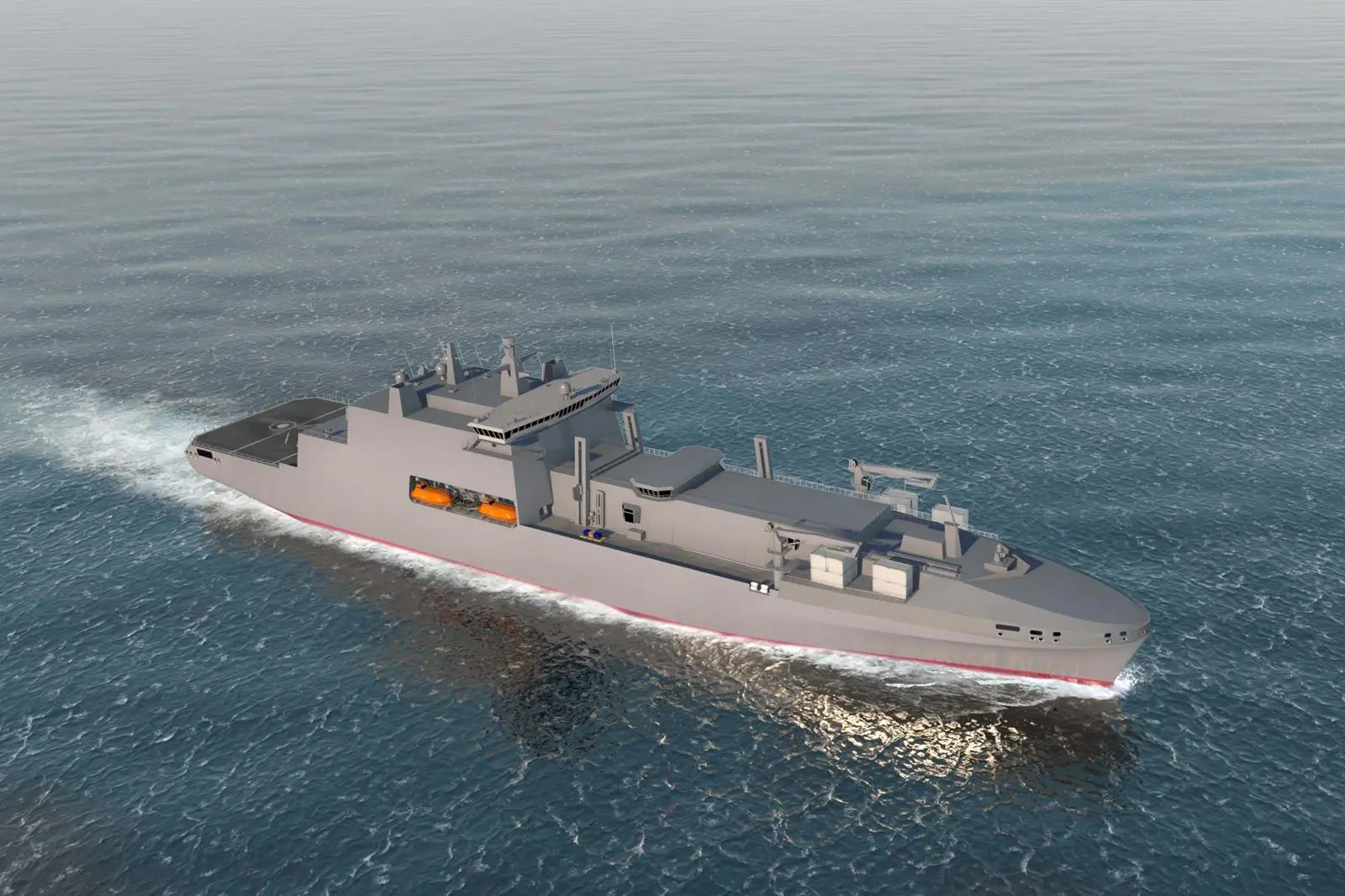
The series of 216m newbuilds, with the power to operate at speeds up to 19 knots, will have a primary role as replenishment vessels, supplying stores, munitions, spares and equipment to warships at sea.
Team Resolute, comprised of H&W, ship designer BMT, and the new UK arm of Spain’s largest shipbuilder Navantia, has won the bidding round in the face of competition from three other groups. A production contract, valued at £1.6bn ($1.9bn)(before inflation), is set to be authorised by the spring of 2023. However, under what has proved to be a long drawn-out competition, building of the first ship will not start before 2025 and the final vessel in the programme is not expected to be operational until 2032.
The majority of the blocks and modules for the ships will be constructed at H&W’s yards in Belfast and Appledore, with components also being sourced from the group’s fabrication sites in Scotland at Methil and Arnish. There will also be significant input from Spain, whereby Navantia’s Puerto Real yard at Cadiz will undertake some of the building work, while the organisation will also provide technology transfer and skills know-how to Belfast. Final assembly for all three vessels will take place at Belfast.
The formal contract award to Team Resolute will also trigger a £77m ($92m) investment in shipyard infrastructure, creating jobs and strengthening the capability to attract future export and domestic shipbuilding and offshore orders to the Northern Ireland yard. Although H&W, under previous ownership, delivered its last commercial vessel in 2003, the yard has maintained a presence in heavy engineering, steel and offshore fabrication, renewables, shiprepair and refurbishment, and business development has accelerated since the 2019 takeover by InfraStrata, now trading as Harland & Wolff Holdings.
The newbuilds, designated fleet solid support ships (FSS), will have cargo space for 9,000m2 of supplies and stores. They will have a beam of 34.5m and will be the longest vessels deployed by the civilian-crewed RFA, and will have some commonality with the 201m Tide-class fleet tankers. Four of the latter were constructed by Daewoo Shipbuilding & Marine Engineering to BMT’s Aegir design and commissioned between 2017 and 2019.
Few technical details as to the planned tonnage have as yet been made available, beyond the official statement that “The RFA vessels will be equipped with energy-efficient technologies to reduce power demand and will have the capability to reduce their carbon intensity by adopting low-carbon, non-fossil fuels and future energy sources.” The crew complement will be around 100, with accommodation available for an extra 80 personnel to support operations or embarked helicopters.
While there has been criticism in some UK quarters, not least among the disappointed bidders, that the programme will not be wholly fulfilled in the UK, the long period of the shipbuilding industry’s virtual absence from delivering large vessels other than warships calls for a re-set to address gaps in physical, human and technological capacities. For its part, Spanish state-owned Navantia is a prolific naval builder and fabricator and has invested heavily over the years in production technology. Its digital 4.0 methodology will be shared with H&W, and will benefit the downstream supply chain, to raise efficiency by up to 20%.
One of the other contenders for the FSS programme was Team UK, made up of UK companies Babcock International, BAE Systems, Cammell Laird and Rolls-Royce. In 2020, Cammell Laird delivered the 129m polar research ship Sir David Attenborough, one of the very few large, non-naval vessels constructed in the UK over recent decades.
The RFA series constitutes one of the key projects listed under the 30-year “pipeline” of work for naval and other government-owned vessels contained in the revised National Shipbuilding Strategy, published in March 2022.
Another, perhaps more prestigious newbuild scheme proposed under that strategy, the construction of a £250m ($297m) publicly-funded, national flagship, will not now be implemented. The UK government has decided to instead prioritise the procurement of two multi-role ocean surveillance ships (MROSS), equipped to protect vital undersea infrastructure such as pipelines and telecom cables. One of the envisaged vessels will be a newbuild ordered from a UK yard, and the other will be an acquisition.
Related Articles
 METHANOL
 GENERAL NEWS
 HYDROGEN