



Day 1 of The Motorship Propulsion and Future Fuels Conference 2022
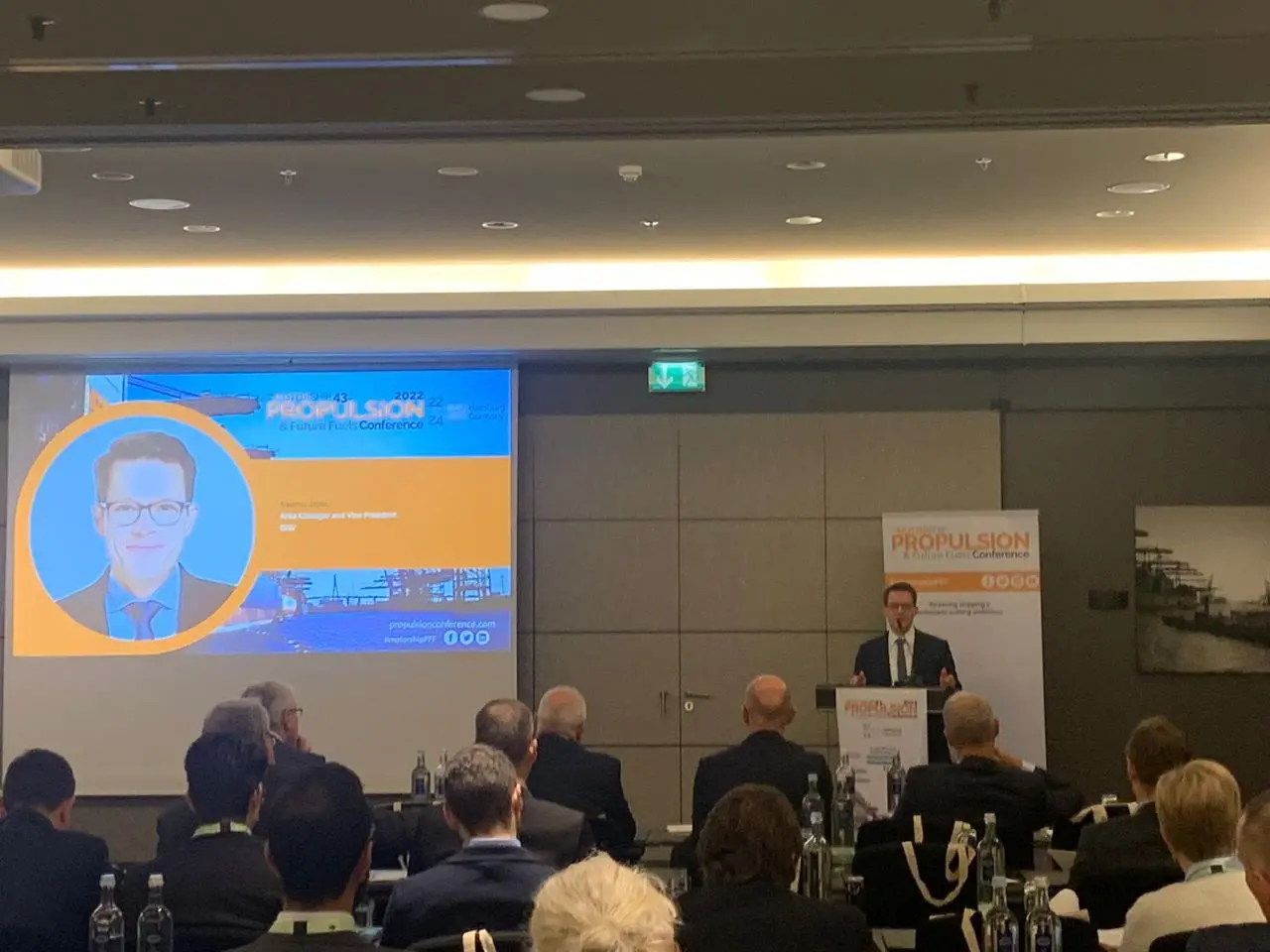
The conference opened with an upbeat welcome speech by DNV’s Area Manager and Vice President Rasmus Stute, in which he presented the conference’s themes in microcosm, ranging freely from decarbonisation, digitalisation and alternative fuels uptake through to the need for a global level playing field.
The day opened with a high-level discussion about the implications of the upcoming introduction of onshore power supply (OPS) requirements across the EU’s Core TEN-T ports by 2030. Ricardo Batista from DG Mobility and Transport in the European Commission provided an overview of the latest policy instruments, ranging from AFIR to FuelEU Maritime, and their expected impact on the market.
The most striking element of the discussion was the degree of uncertainty surrounding future energy demand at individual port levels, which is likely to complicate planning, particularly as the need to develop stronger grid connections between national electricity grids and ports was identified as a key obstacle. In response to a question from VDR’s Martin Kroeger, Batista confirmed that the scheme could be expanded to other vessel types, such as tankers, in the future.
The conference followed the panel on electrification with an in-depth panel looking at electricity. Wärtsilä’s Dr. Torsten Büssow opened his presentation with the provocative forecast that “in the future, all vessels will be hybrid”, and outlined the rapid advance seen in both hybrid-electric and hybrid-mechanical orders in recent years. GTT’s Natalia Zubenko discussed GTT’s recently launched new condenser concept, Recycooler. While the solution has initially focused on vessels using LNG as a fuel, GTT is planning to roll-out a version targeting the LNG carrier market. Accelleron’s Simone Bernasconi outlined the benefits that customers could obtain by overhauling turbochargers with new and upgraded components as a cost-effective means of reducing emissions for operational assets.
Digitalisation was the theme of the first session after lunch. Gregory Puckett, Head of Group Digital, MAN Energy Solutions offered a rallying call for the importance of digitalisation – and asked for delegates to recognise how far the industry has come, identifying a surprising number of digital natives in the audience. During the panel’s Q&A session, the panel turned to the issue of the development of introducing common ISO standards, with Lars Robert Pedersen noting that the IMO Standard Reference Model was open to additional contributions from interested shipowners.
Motorship Award
The final session of the conference saw presentations from five projects shortlisted for the Motorship Award. Competition was fierce, as each of the five nominees produced a strong argument for their inclusion. MAN Energy Solutions’ presentation highlighted their involvement in the development of a new class of vessels, modern liquid carbon dioxide carriers, which are likely to become a larger niche in the market in the years to come.
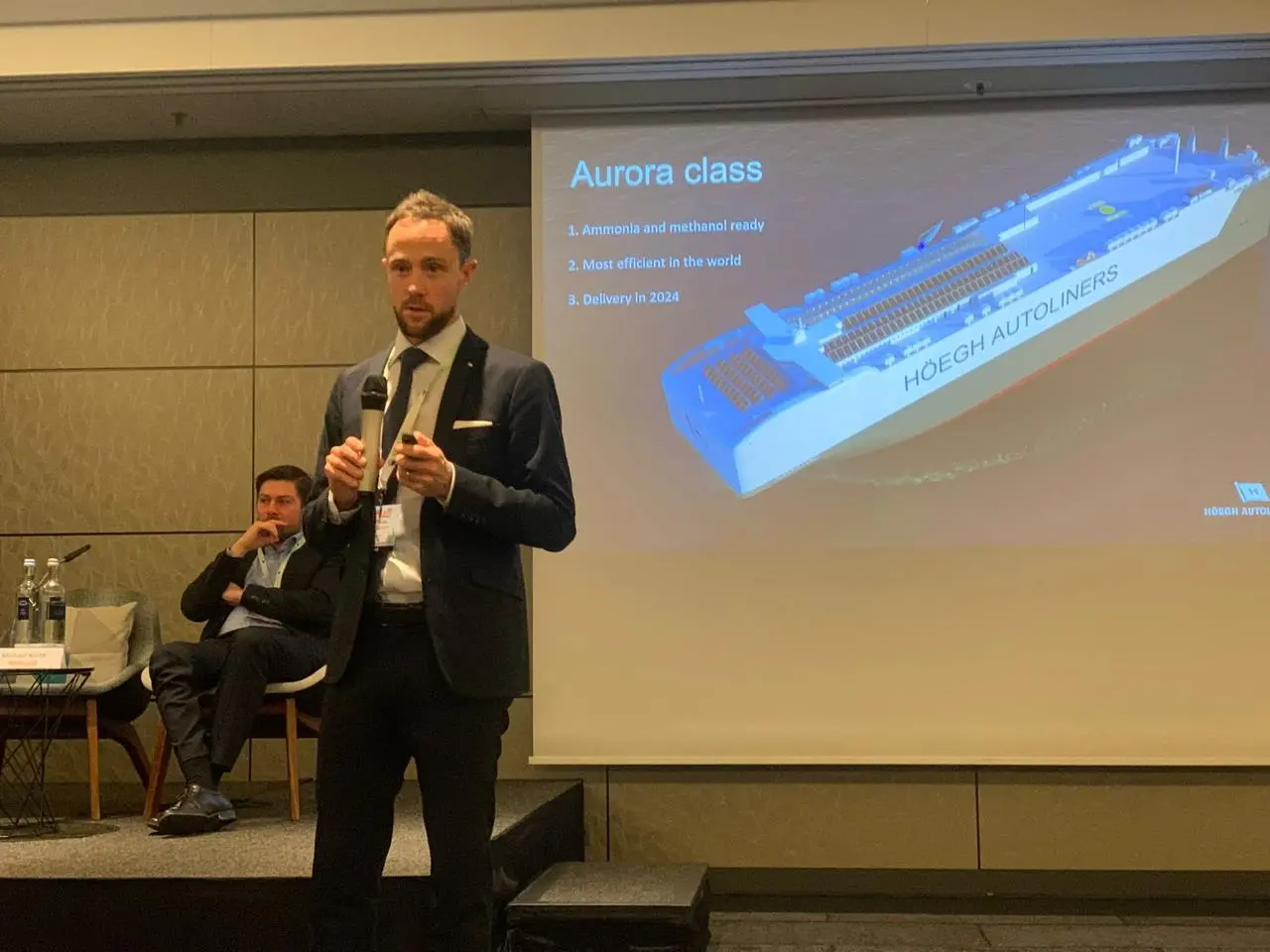
Two further presentations focused on the PCTC sector. WinGD presented its role in the development of NYK Line’s first LNG battery hybrid pure car and truck carrier (PCTC), while Hoegh Autoliners made a powerful case, presenting the world’s first ammonia-ready battery-hybrid pure car and truck carrier, Aurora. The vessel will be the largest and most environmentally sustainable PCTC in operation when it enters service.
A fourth nominee was Wärtsilä for a retrofit-optimised solution to convert existing 2-stroke electronically-controlled engines to run on either LNG, methanol or ammonia.
While the preceding four shortlisted projects were all powered by dual-fuel 2-stroke engines capable of operating on LNG, the fifth project, Egil Ulvan Rederi’s With Orca, represented a hydrogen-fuelled coastal vessel capable of operating mainly on the power generated by two Flettner rotors, when winds allow. The conference delegates voted for Egil Ulvan Rederi’s project, which saw off stiff challenges from Wärtsilä and Hoegh Autoliners’ Henrik Andersson to win the award. Lloyd’s Register’s Michael North accepted the award on behalf of the Norwegian project at the conference dinner.
Related Articles
 ALTERNATIVE FUELS & LUBRICANTS
 GENERAL NEWS
 GENERAL NEWS