



LNG has paved the way for new LH2 carrier containment system
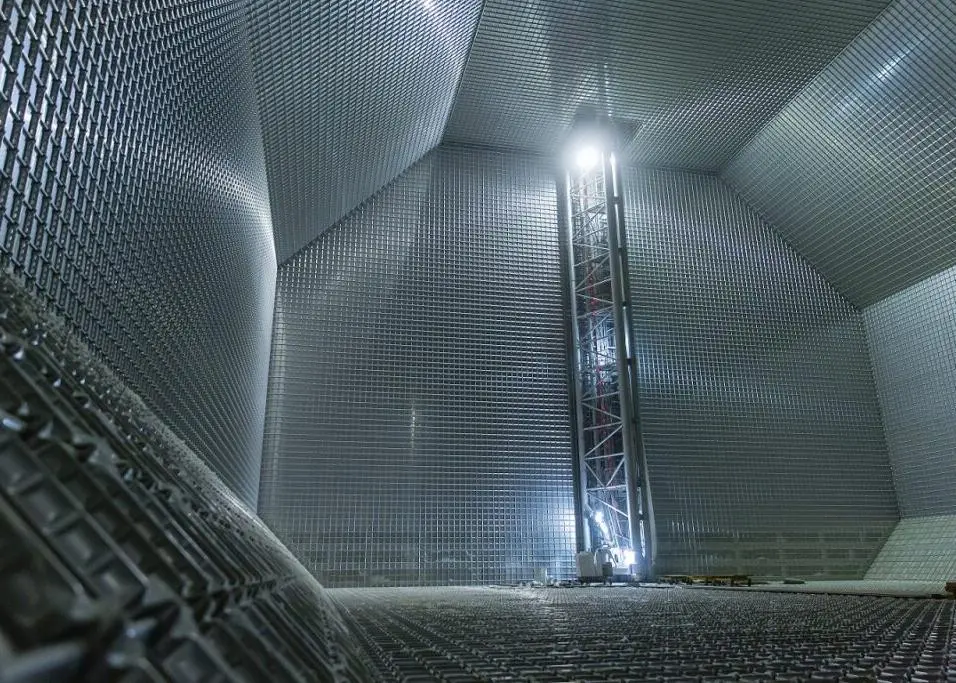
GTT, TotalEnergies, LMG Marin and Bureau Veritas (BV) are developing a 150,000m3 capacity LH2 carrier concept design which will be fitted with a membrane-type containment system from GTT. The ability to safely transport large volumes of hydrogen in liquefied form at -253°C (only 20°C above absolute zero) is one of the major technological challenges that the project partners aim to overcome to ensure a reliable, efficient, safe and competitive global carbon-free hydrogen value chain.
The ship design will be largely driven by the lightness of LH2. Its density is much lower than liquefied gases such as LNG, LCO2 or LPG. When H2 is liquefied at atmospheric pressure and at the necessary cryogenic temperature, its density is as low as 71 kg/m3.
Containment system development
Jean-Baptiste Boutillier, VP Innovations of GTT, says that technical challenges for the LH2 containment system include permeability, because hydrogen is the smallest molecule in the universe, thermal insulation, and safety.
LH2 transport technologies are required to demonstrate the same level of safety as LNG, which has a significant track record for safety. “The physical properties of hydrogen and its very low boiling point at atmospheric pressure require extremely efficient solutions,” says Boutillier. “To meet the technical challenges of LH2, new materials will be required, but most of GTT’s existing partners across the supply chain are in a position to offer components for the LH2 technology.”
The main advantage of the membrane type tank design is that the weight of the containment material is reduced compared to other thick plate solutions, he says.
GTT is carrying out multiple sloshing calculation and test campaigns to compensate for the differences between LH2 and LNG. The light weight of the LH2 means less sloshing than LNG. “This has two consequences. As the cargo is lighter, the shape of the hull will be different and therefore the movement of the ship will not be the same as for LNG carriers. The liquid response is also different, as well as the pressure on the containment system.”
The system’s boil-off rate will be designed to match the gas handling capacities on board the vessel. One of the options for powering the LH2 carrier is to use fuel cells which would consume the boil-off, but one of the industry’s challenges for LH2 carriers is to design fuel cells that meet the power demand of the vessels. Either way, fuel cells or combustion engines, boil-off will be consumed in the propulsion system, with a reliquefaction system required to handle the excess.
“GTT has all knowledge and skills to develop the technical solutions necessary to ensure the safe and reliable transport and storage of LH2 in large quantities and over long distances,” concludes Boutillier.
Regulatory considerations
Carlos Guerrero, Global Market Leader Oil tankers and Gas Carriers at BV Marine and Offshore, says the IMO IGC Code does not presently consider LH2 as a cargo. However, the IMO recently issued the Resolution MSC.420(97) “Interim Recommendations for Carriage of Liquefied Hydrogen in Bulk” which is a useful instrument for the assessment of this type of ship. It was produced, among other reasons, to support the development of the first seagoing LH2 carrier, the Suiso Frontier.
“This IMO document is currently being revised basically to try to incorporate the lessons learnt so far,” says Guerrero. The IMO subcommittee CCC9, to be held in September this year, is dealing with the revisions, and LH2 cargo will potentially be included in future amendments of the “International Code for the Construction and Equipment of Ships Carrying Liquefied Gases in Bulk” (IGC Code).
“Currently, classification regulations have been developed to cover liquefied gases in bulk similarly to the IGC Code, although it is worth noting that class societies were pioneers to implement such type of rules before any specific IMO regulation was developed,” he says. “Supported by risk analysis, the IGC Code, the MSC.420(97) resolution and the existing classification rules, a design of a LH2 carrier can already be assessed and the concept approved accordingly. Obviously, classification rules will also evolve in parallel with the IMO developments, and LH2 as cargo is to be incorporated in the service notation ‘Liquefied gas carrier’ that is currently granted for other type of liquefied gases such as LNG or LPG, for instance.”
Fire safety
Guerrero says the main safety risks for the carriage of hydrogen relate to its wide range of flammability and the low amount of energy needed to ignite an inflammable air/H2 mix. “The range of flammability of H2 is very large, from 4% to 75% in the air mix, compared to approximately 5 to 15% for CH4. This flammability means that there is an additional risk in case of a gas release on board of a LH2 carrier. Secondly, the energy required to ignite a flammable H2/air mix is very low, which means that there is a higher risk of fire or explosion on board in case of a LH2 leak or H2 release.”
A fire on board a LH2 carrier has a rapid burning rate, and the flame at a very high temperature is invisible. “Efficient gas detection and the necessary fire-protection and fire-fighting equipment on board will be a must, and a risk analysis will provide valuable insights to take into consideration in the ship design.”
Leak mitigation
Brittle fracture and consequently loss of containment could be a catastrophic scenario for the ship. The risk is applicable to tanks and cargo handling systems, i.e. piping, valves, etc. that are in contact with the cargo. “As for LNG, appropriate materials may be stainless steel or aluminium, for instance, and the IMO guideline Resolution MSC.420(97) makes reference to this specific topic and to existing standards.”
Due to the small size of the H2 molecule size, there may be a risk of diffusion into the cargo system material, potentially leading to micro-cracks or fractures and then potentially leaks. “Again, the type of material including composition, tensile strength, grain size and micro structure are important elements to take into consideration. Special surface treatment could also be proposed to protect the material against H2 absorption,” says Guerrero.
“Risk can be mitigated firstly by carefully managing the cargo to prevent leaks or releases. A thorough risk analysis is a critical part of the assessment of such innovative projects. The selection of materials for the cargo system is key but not only this. Since the cargo tanks may be small (in some cases, just a few thousand cubic meters), the boil-off rate is significant due to the fact that the cargo is continuously boiling and vapours generated inside the tanks have to be handled adequately to prevent a pressure increase which could lead to emergency gas release through the vent masts.”
He says that some systems that have been put forward consider highly performant insulation, including vacuum to reduce significantly the LH2 vaporization, i.e., to lower the boil-off rate. Other concepts propose “active” boil-off gas handling systems such as gas combustion units to burn the excess vapour in the tanks. A combination of techniques is also possible.
No compromise on safety
“It seems that the LH2 seaborn transportation model may follow trends that we observed with LNG, which has been up and running since October 1964. However, due to technical and commercial challenges, the feasibility must be demonstrated with practical projects. It is a fact that technical developments are much faster today than in the 20th century, but we cannot compromise safety so we will need to follow carefully the necessary steps to move forward with confidence,” says Guerrero.
“In the path to decarbonization, H2 is one of the key options and there will be a need to implement a global distribution network for large volumes of clean energy. Transportation by ship is the most efficient way and all the stakeholders have to work together in very close collaboration to address the necessary technical and commercial aspects.”
Related Articles
 ALTERNATIVE FUELS & LUBRICANTS
 GENERAL NEWS
 GENERAL NEWS