



MPA signs Silk Alliance MoU with LR
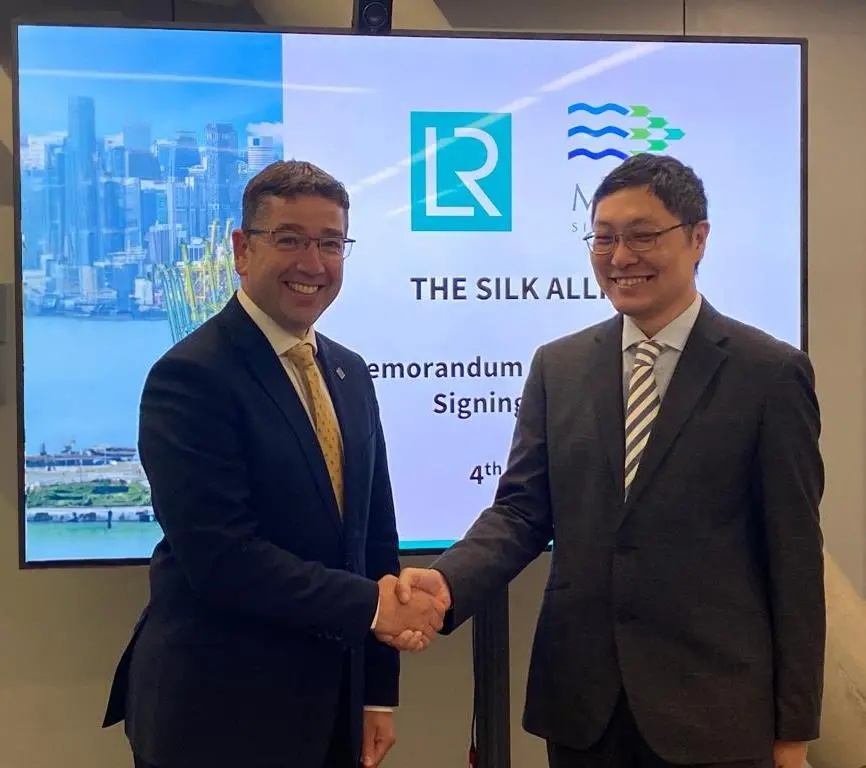
The Silk Alliance aims to cross-industry initiative to enable zero-emission shipping across the Indian and Pacific Oceans.
Through complementary technical skills and expertise, both parties will strengthen their commitment to developing partnerships in co-creating the green corridor to trial decarbonisation strategies for container ships operating primarily in Asia to achieve significant emission-saving impact.
The MPA’s entry into The Silk Alliance initiative is a significant step forward towards deeper public-private sector collaboration between global maritime industry players and Singapore’s port regulator. The agreement is focused on actions to unlock key investments across the Indian and Pacific Oceans region as the green corridor cluster moves into an implementation phase.
The collaboration includes driving investments into scalable fuel supply infrastructure to meet the demand aggregation signal of members of The Silk Alliance and potential wider regional bunkering demands for alternative fuels.
MPA’s contribution to The Silk Alliance complements efforts to establish the supply of low- and zero-carbon fuel options, and also its collaboration with other partners to develop Green and Digital Shipping Corridors.
Launched in May 2022 with 12 leading cross-supply chain stakeholders, The Silk Alliance brings together an integral group of organisations from both the private and public sector across the entire value chain of shipping. Inaugural members include port operator, PSA; shipowners, MSC Shipmanagement Ltd., Pacific International Lines (Pte) Ltd (PIL), Wan Hai Lines, X-Press Feeders, Yang Ming Marine Transport Corp.; shipyard, Seatrium; bunker logistical supplier, Singfar International; engine manufacturer, Wärtsilä; ship manager, Wilhelmsen Ship Management; and financial institutions, the Asian Development Bank and ING.
The Silk Alliance was initially focused on a baseline fleet that predominantly bunkers in Singapore and sails across Asia, East Africa, the Middle East, Australia, and the Pacific Islands. As the implementation phase rolls out, the baseline fleet’s demand is expected to eventually aggregate further to other regional hubs and deepsea routes, such as the Singapore-Rotterdam green and digital shipping corridor.
Related Articles
 ALTERNATIVE FUELS & LUBRICANTS
 GENERAL NEWS
 GENERAL NEWS