



Catalyst-free methane slip reduction trial on Angelicoussis Group LNGC
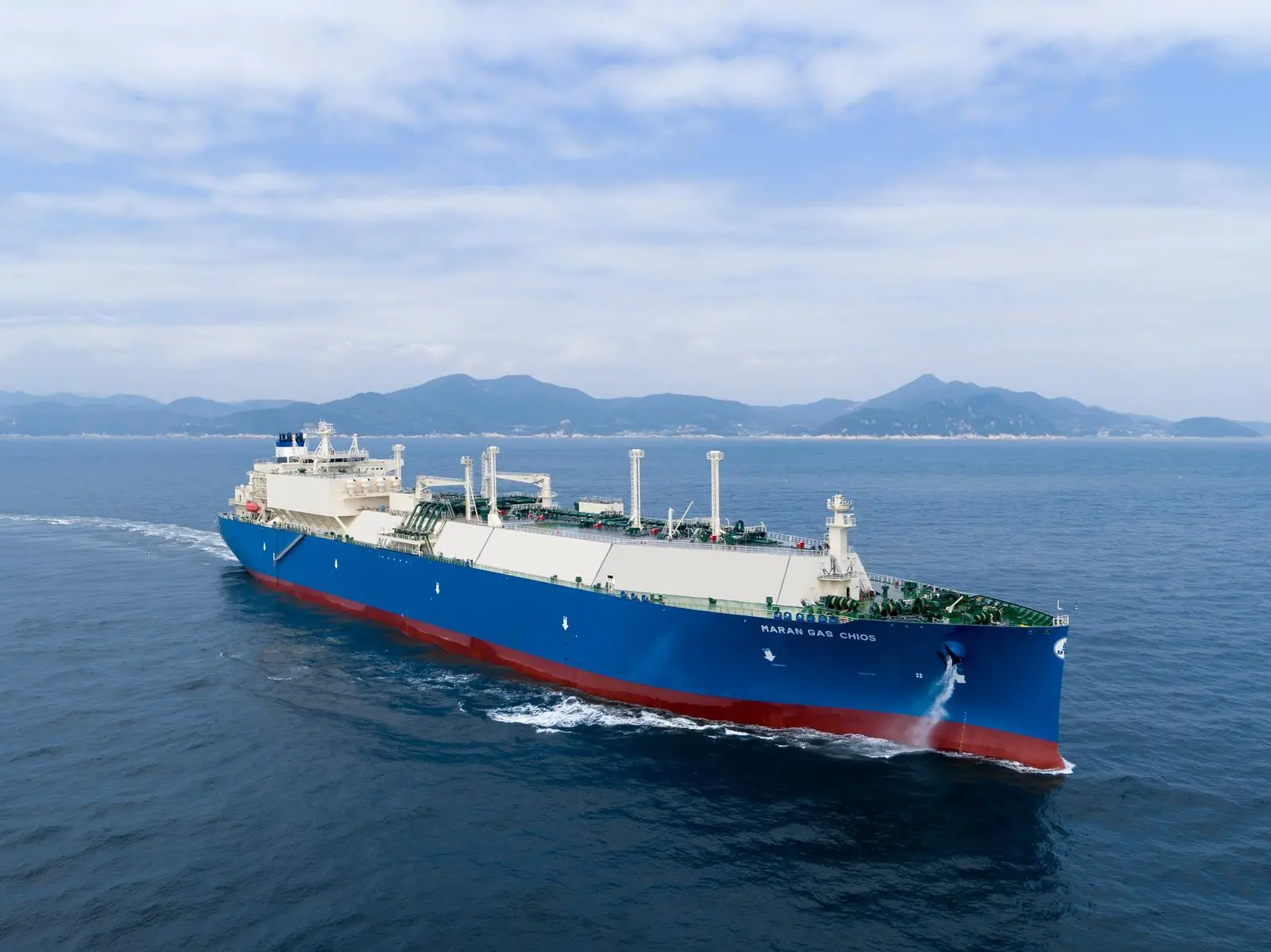
The project relates to the installation of Daphne Technology’s catalyst-free, electrical SlipPure system on board one of the Wärtsilä 34DF auxiliary engines on board the LNG carrier Maran Gas Chios.
The trial project is being supported by a consortium including the ship owner Maran Gas Maritime, the engine supplier Wärtsilä, the charterer Shell International Trading and Shipping Company Limited (Shell) and DNV, which will provide the class approvals. The consortium includes Lloyd’s Register, which will act as the independent auditor.
The trial will facilitate the technical assessment and system feasibility analysis on SlipPure technology, supporting maritime stakeholders involved in the gas sector to de-risk their assets. For the SlipPure solution, HAZID and HAZOP workshops have been completed by LR as part of LR’s Risk-Based Certification process.
Daphne Technology’s PureMetrics solution will also be installed onboard the Maran Gas Chios throughout the trial period, and LR will handle the dissemination of the data as an independent third-party verifier. PureMetrics is an advanced system that directly measures and reports real-time GHG emissions, eliminating the reliance on fuel consumption estimates and ensuring with EU MRV and IMO DCS. PureMetrics was awarded approval in principle from LR in June 2023 at Nor-Shipping.
The Motorship has previously reported on the the patented SlipPure system, which converts electrical energy to chemical energy, generating hydroxyl radicals and free electrons which then react to convert the methane to carbon monoxide and water. Methane reduction rates of 78% have been achieved in testing.
The technology is largely temperature independent (catering for exhaust temperatures of between 180oC and 450oC) and is also independent of sulphur content and humidity in the exhaust gas. It is suitable for Otto or Diesel cycle and 2- or 4-stroke engines, and can be installed in several orientations before or after an economiser. Back pressure is within the tolerance of engine manufacturers.
Steve Brown, Technology Manager at Shell, emphasises: “Reducing methane emissions is a top priority for the maritime industry, and this trial of innovative technology on an operational ship marks an important milestone. LNG is the lowest-carbon marine fuel available at scale today, and this project, combined with efforts to reduce upstream methane emissions, will help to enhance LNG’s decarbonisation potential even further.”
Grant Gassner, Director, lntegrated Systems & Solutions, Power Supply – Wärtsilä, says: “Investing in methane slip reduction technologies forms a very important part of our wider strategy, ensuring we can continually improve the environmental and economic performance of our customers. Cross-collaboration with stakeholders across the maritime industry is key to this, with projects such as this playing a pivotal role in developing potential solutions towards eliminating methane slip across the maritime industry. Wärtsilä is grateful for the opportunity to contribute to this initiative, and we look forward to the outcome of the project.”
Related Articles
 EMISSIONS REDUCTION TECHNOLOGY
 EMISSIONS REDUCTION TECHNOLOGY
 EMISSIONS REDUCTION TECHNOLOGY