



Crowley Makes A Move Into Nuclear Energy
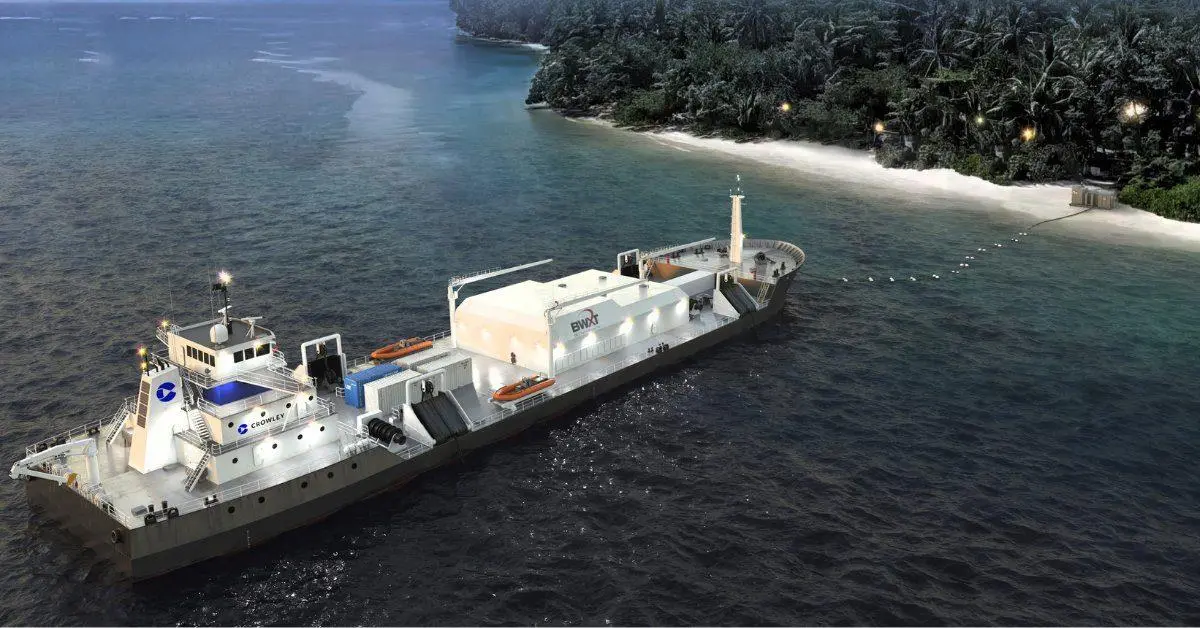
The memorandum of understanding signed with a subsidiary of compatriot BWX Technologies (BWXT) provides for the development of a concept of ship incorporating a microreactor to generate zero-carbon emission power for defence establishment needs and disaster or emergency situations. The provisional agreement allows both companies to jointly undertake the requisite design and engineering work, with the naval architectural focus on a shallow-draught form.
The technical project would make recourse to the latest advances in factory-fabricated microreactors, readily applicable to shipyard configurations and processes for ease of installation in vessels.
Present thinking envisages a 115m design of newbuild, drawing on Crowley’s logistic and marine expertise and long-time in-house capabilities as regards ship design, married with BWXT’s know-how as a supplier of nuclear components, fuel and services to the US Government.
The concept pairs traditional ship propulsion with the carriage of a modular reactor of anything between 5MW and 50MW power for activation upon arrival at the destination and deactivation and transportation immediately the power supply task has been completed. Buoyed power delivery cables will enable vessels to effect energy connections to the shore.
The emphasis on a shallow-draught hull affords flexibility and accessibility in meeting logistic requirements, whether of a military nature, such as supplying bases in remote locations, or in the event of a disaster scenario, as where port entry is restricted, or facilities and infrastructure have been damaged.
“Our cooperation with BWXT will move Crowley for the first time into the nuclear energy sector, a key part of our commitment to sustainable, alternative energy sources,” said Shiju Zacharia, Crowley Government Solutions’ senior vice-president and general manager.
“This concept supports the US Department of Energy’s goal of maintaining US leadership in nuclear energy technology as well as many of the US Department of Defense’s strategic goals for operational energy,” he added.
Related Articles
 ALTERNATIVE FUELS & LUBRICANTS
 GENERAL NEWS
 GENERAL NEWS