



Dredger Deal Plays To Dutch Strengths
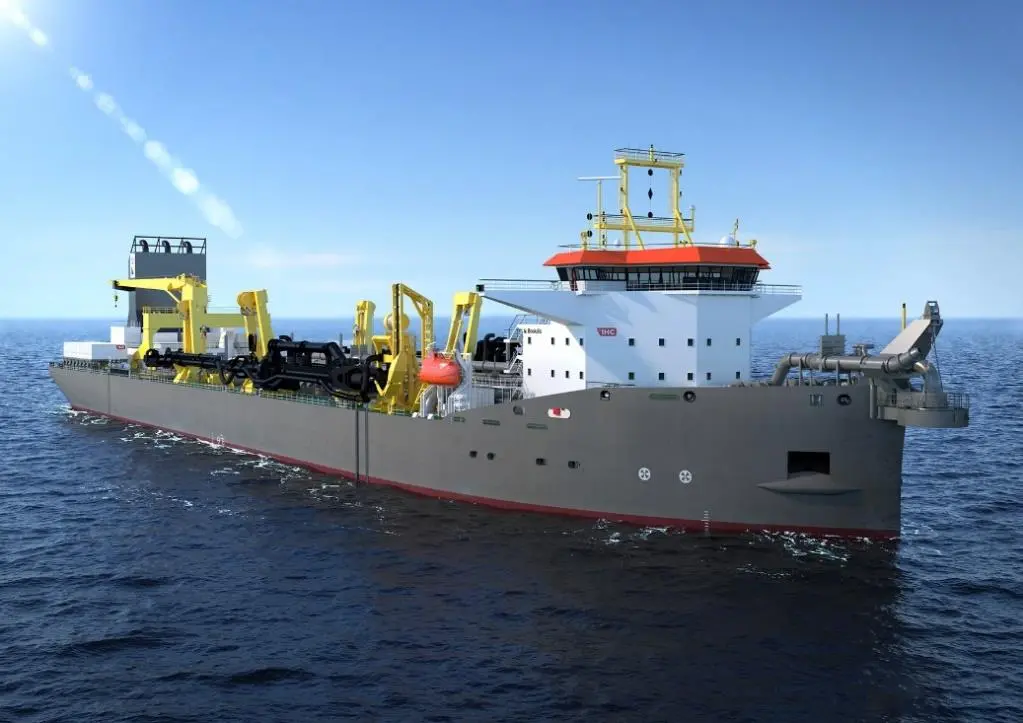
Incorporating a load capacity of 31,000m3, the newbuild will rank among the largest ‘trailers’ in the Boskalis fleet on scheduled delivery in mid-2026.
The diesel-electric installation combined with an optimised underwater hull form, customised to the intended operating profile, and an advanced automation system, will contribute to a significantly lower fuel consumption than previous vessels of comparable size. Twin Azipods, rendering a gearless, 360-degree steerable propulsion solution, will imbue the requisite manoeuvrability and low-speed track control.
The design features a double, trailing suction pipe configuration, one on each side of the hull, with integral, underwater pumps to draw sand or sediment up into the hopper. The 15,000kW combined power of two discharge pumps meets the needs of delivering material to reclamation sites at high throughput over comparatively long distances from the ship.
Besides unloading over the bow, either through pipelines running ashore or by the process known as rainbowing(spraying), the vessel will be fitted with bottom discharge doors.
In line with a corporate goal of achieving sustainability in the Boskalis fleet and its dredging operations, the vessel’s layout and engineering systems have been conceived to facilitate future adaptation to ‘green’ methanol fuel. The methanol plant and storage tank specified make a switch possible. The dual-fuel main engines will allow for other alternatives such as biodiesel, and will employ two-stage turbocharging technology.
Applications for the new vessel embrace the maintenance and deepening of port and fairway channels, coastal protection and land reclamation.
In addition to its significance for Royal IHC as a bespoke, high added-value project that will instigate the resumption of production at the covered Krimpen yard, the deal represents an important domestic order after a period which has seen a number of Dutch dredger newbuild schemes placed with Asian shipbuilders.
Related Articles
 ALTERNATIVE FUELS & LUBRICANTS
 GENERAL NEWS
 GENERAL NEWS