



Greener shore power derived from wastewater
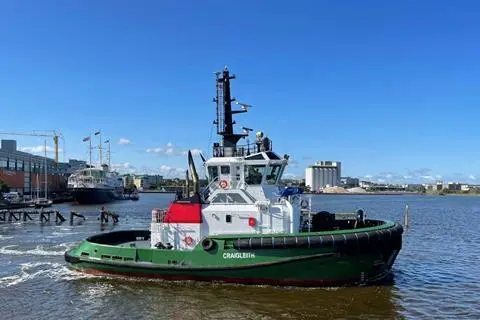
The £535,000 grant from the UK Government Department for Transport, will fund a highly innovative trial that will see large tugs operating out of The Port of Leith powered by green hydrogen at the quayside.
“This is an exciting project for Forth Ports and Targe Towing as we work towards our commitment to reduce carbon emissions across Forth Ports group operations by 2032, and becoming net zero by 2042,” said Alasdair Smith, commercial director of Targe Towing, part of the Forth Ports group.
“Our tug fleet currently uses diesel-powered generators to provide electricity when tied up in port. This new green hydrogen system shows how tugs or other vessels can be completely emission-free whilst berthed.”
UK first
This year-long trial, run by partners Forth Ports, Waterwhelm, Logan Energy and PlusZero, will deliver a state-of-the-art demonstrator system for green hydrogen shore power which marine vessels can use when they are berthed, removing the need for the diesel-powered systems which are currently in use on some quaysides.
The project draws together leading Scottish innovation and technology with sustainability expertise from the water, energy and transport sectors and will be the first of its kind to be demonstrated at a UK port – leading the way for a circular economy approach to port decarbonisation across the country, particularly in remote locations or areas where a connection to the main electricity grid is not available.
Using specialist water treatment technology provided by Waterwhelm, fresh re-use water will be made from wastewater from the treatment works site in Seafield, Edinburgh, which will then be used to produce hydrogen at Leith Port.
Then using electrolysis, East Lothian-based Logan Energy’s electrolyser technology will split the re-use water into oxygen and hydrogen.
The hydrogen will then be used as a clean fuel for PlusZero’s combustion engine which will generate green electricity to provide shore power for the tug boats when they are in port, replacing the need for polluting diesel generators.
The project, which will begin in the spring, is part of the Clean Maritime Demonstration Competition Round 4 (CMDC4), funded by the UK Department for Transport (DfT) and delivered by Innovate UK.
Related Articles
 ALTERNATIVE FUELS & LUBRICANTS
 GENERAL NEWS
 GENERAL NEWS