



WILL EU SHIP RECYCLING REVIEW MEAN CHANGES?

November this year saw the tenth anniversary of the adoption of the EU Ship Recycling Regulations (EUSRR) launched as a response to the poor uptake of the IMO’s Hong Kong Convention adopted in 2009 but not then entered into force. Under EUSRR provisions, end of life EU-flagged ships above 500gt have been required to be recycled in one of the facilities approved by the EU. In addition, there has been a mandatory requirement since December 2020 for an Inventory of Hazardous Materials for all existing EU flagged ships and non-EU ships calling at an EU port or anchorage.
With the main requirements having been in place for five years, the EU implemented a review of the regulation and its effectiveness earlier in 2023. A public consultation period ended in June with 16 documents and comments having been submitted.
Shortly after the consultation closed, the IMO announced that with ratification by Bangladesh and Liberia, the capacity requirements for the Hong Kong Convention had finally been met and that the convention would enter into full effect on 26 June 2025. At the end of November, Pakistan also ratified the convention meaning all three of the world’s largest recycling nations were on board. India had ratified in November 2019 as the first of the big three.
Between them, these three countries where ships are broken on beaches account for over 90% of all ships recycled annually. Turkey and China account for another 5% or so. Turkey ratified the convention in January 2019, but China has yet to grasp the nettle. Thus far only 23 states have ratified with most being shipowning rather than ship breaking states. Less than half of the 27 EU member states have ratified with Belgium, Croatia, Denmark, Estonia, France, Germany, Luxembourg, Malta, Netherlands, Portugal and Spain being those that have added their signatures along with Norway and Serbia. Japan is another signatory and by beneficial ownership but not flag, the only country in the top five to have done so.
The main requirements of the Hong Kong Convention are for ships to carry an Inventory of Hazardous Material as in the EU regulations and for recycling facilities to be approved subject to national law. In 2012 the IMO published guidelines for safe and environmentally sound ship recycling as MEPC.210(63). Under the Hong Kong convention (article 6 and regulations 9 and 17 to 25 of the annex to the Convention) the requirements for Ship Recycling Facilities require the 2012 guidelines to be taken into account but do not prevent nation states from imposing stricter requirements.
With few national laws in place – the EU SRR is the major exception, and it includes additional safety and environmental requirements – the various Statements of Compliance (SoC) issued by class societies such as ClassNK and LR have been issued based on facilities meeting the IMO Guidelines and/or the requirements of the EU SRR. However, although almost 60 Asian facilities have been issued with SoCs by class societies, none have yet been approved for inclusion on the EU list.
EU looks again at SRR
When the review of the EU SRR was announced by the EC in early 2023 the reasons for it were said to be:
- assessing how well the Regulation has been applied and its impact to date,
- assessing how well it contributes to the general policy objectives of the European Green Deal and the circular economy action plan,
- to identify shortcomings with its implementation and enforcement.
The EC also said that depending on the findings of the evaluation, it might then launch a revision process. As well as the main review of the regulation, the EU also published the 12th edition of its list of recycling facilities in early December 2023. The shorter list of 45 yards included renewals of the Turkish yards on the list and also International Shipbreaking but did not include any yards in India, Bangladesh or Pakistan.
In the event, no other new yards were added. Although the Hong Kong Convention is now expected to come into effect next year, there is no sign that the EU plans to sunset the EU SRR regulations. Speaking at a panel discussion during September’s European Shipping Summit, Christelle Rousseau, of the Directorate-General for Environment in the European Commission highlighted that unlike the EU SRR, the HKC lacks an oversight mechanism allowing enforcement should the provisions of the Convention not be met. She went on to say that EU sees the two sets of rules as complementary instruments, but the EU will need to review the SRR as well as to understand how the two interact with the Basel Convention.
Responses to EU SRR Consultation
When the public consultation period on the effectiveness of the EU SRR closed, just 16 responses had been submitted, ranging from the Danish Ministry of Environment, a Europe wide trade union, and two environmentalist NGOs. There were two submission from shipping bodies, IACS and the North German Maritime Cluster, and three from ship recyclers including one from Turkey. The remaining six were from European shipowners’ associations and A P Moller-Maersk as the sole individual shipowner.

Many of the responses welcomed the EU SRR as being an attempt to accelerate the coming into force of the Hong Kong Convention. There was much focus on the disparities and conflict between the regulation and the Basel Ban under the Waste Shipment Regulation for EU-flagged ships or end of life ships sold for scrapping to a non-EU flag. The WSR notably prohibited the export of hazardous waste from OECD and EU countries to non-EU and non-OECD countries effectively ruling out Asian yards for recycling of EU-flagged or owned ships.
EU opens door with planned changes to WSR
However, on 16 November, an agreement was reached between the European Council and the EU Parliament that could theoretically change that situation. The export of waste as a resource could soon become permissible under the EU WSR.
An agreement on waste shipments would help the industry to meet increasing demand for ship recycling in the future, particularly if it removes obstacles to the export of waste. Rakesh Bhargava, Chief Executive of Singapore-based ship recycling specialist Sea Sentinels said, “The latest EU agreement would represent a significant legal shift as it would open the way for many yards in non-OECD countries, which have applied for inclusion on the EU list and have been banging on the door for a very long time, to finally gain compliance with the EU SRR”.
Up to 32 recycling yards in non-OECD countries – including 27 in India and one in Bahrain – have applied for EU approval, of which some have been subjected to preliminary audits for compliance with the EUSRR, along with eight yards in Turkey and one in the US. While these non-OECD yards have upgraded their facilities to meet EU standards, their applications have been stymied by the Basel Ban that has effectively barred the way for their inclusion on the EU list, which currently comprises 48 approved yards.
Bhargava believes the pending Brussels directive, which apparently would only apply to EU-flagged ships trading in non-EU waters when the decision to recycle is made, would be a “game-changer” for the shipbreaking industry, by levelling the competitive playing field as EUSRR-compliant yards in both OECD and non-OECD countries would be subject to the same regulations.
Asian yards and the capacity argument
A P Moller-Maersk in its submission highlighted the fact that yards located within the EU are not audited and said this “does not heighten the standards at those yards. On the contrary, as the aim of the regulation is – as mentioned – to prevent, reduce and eliminate adverse effects on human health and the environment caused by ship recycling, yards located within the EU should not simply receive automatically generated approvals”.
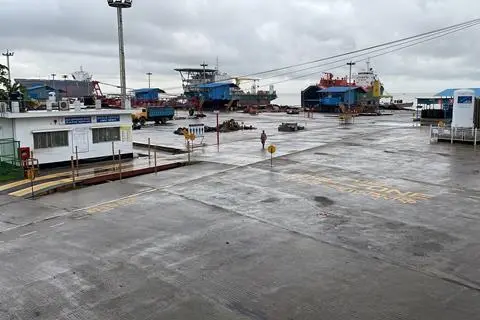
The submission went on to say that “this has led to a situation where a theoretical capacity list is updated every year, without any concrete hold in actual reality on the ground. A number of the yards included do not recycle vessels nor have the ambitions to do so”. That view was conceivably borne out by the deletion of two of the European yards on the approved list when the 12th version was published because they did not participate in recycling.
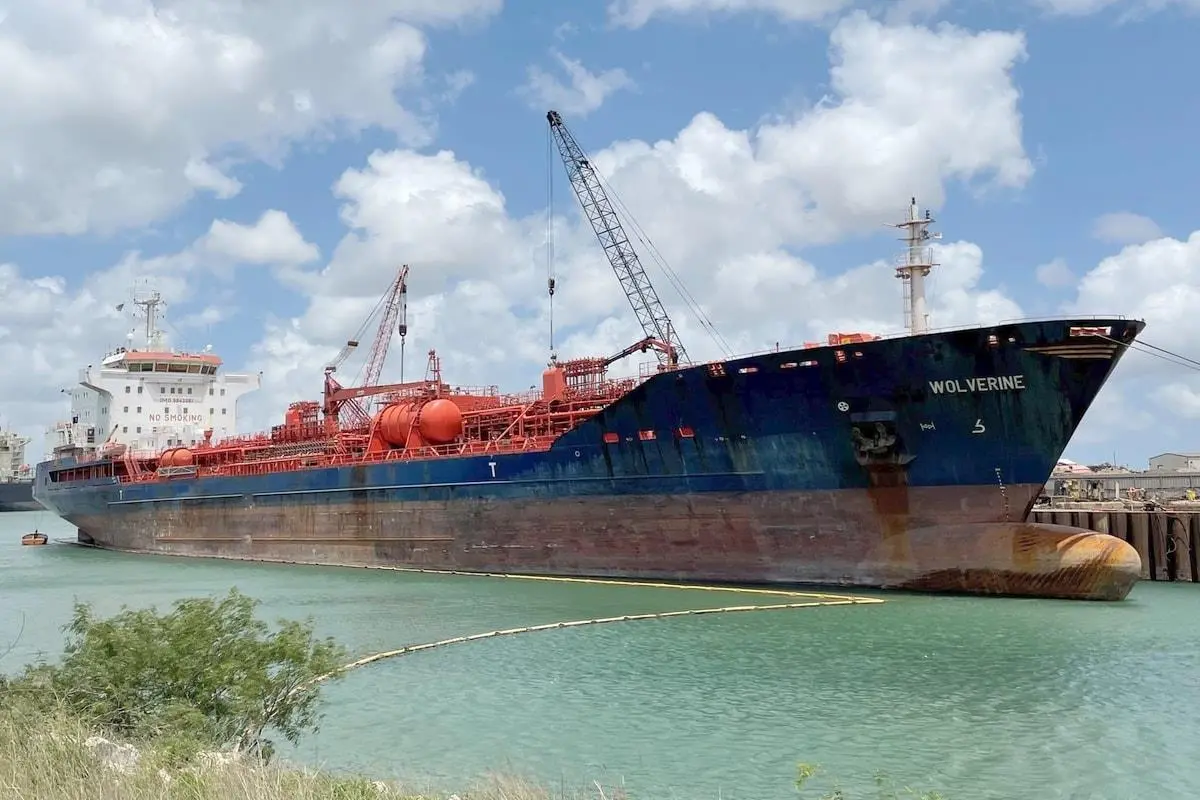
The question of capacity of yards on the EU-approved list was at the centre of many of the responses. All of the shipowner and shipowners’ associations listed this as a major stumbling block. BIMCO noted in a recent report that more non-EU yards need to be included on the list to meet the requirement for large-scale recycling of large ocean-going ships as the existing approved yards do not have sufficient capacity, given many are focused on niche recycling or offshore decommissioning.
Some NGOs raised dissenting voices, citing low capacity utilisation levels at several of the European facilities are operating under-capacity, and noting that they have the sufficient capacity to recycle all EU/EFTA flagged vessels.
Still room for dispute
Even after the recent developments of the Hong Kong Convention coming into effect and a rethink of the EU WSR, there is likely to be a wide gulf between the shipping industry and environmentalist NGOs. To expect all the South Asian breakers to discontinue breaking ships on beaches is probably asking too much. Building the facilities needed to prevent the type of pollution that does occur under this method would likely mean that the price they can pay to owners of end of life ships would reduce significantly.
That would remove their competitive advantage over other breakers and impact the other local industries that have come to rely on a ready supply of recyclable steel along with a lucrative second income stream from supplying ship spares. In turn that would increase costs for owners of older ships that make use of refurbished parts to keep their ships in operational condition.
If there remains scope for considerable disagreement and potential legal challenges for EU-flagged ships obviously at or very near the end of life, the same cannot be said of the ships sold on at an earlier stage in their working lives or even those which have never flown an EU-flag. The practice of flagging out even brand new vessels is perfectly legal and has been going on for around a century or more and will still continue. Furthermore, beneficial ownership of the world fleet has moved away from Europe to Asia especially for new vessels. While many of these newbuilding will be operating for European companies a very large percentage will be doing so under bareboat or leasing arrangements with only commercial operation being run by European concerns. Evidence of this is shown by Greece’s relegation to second place after China in the beneficial ownership stakes (by GT) earlier this year. That Greece still holds first place when speaking in deadweight terms is due to its fascination for bulkers and tankers.
Looking towards the future, the EU’s latest move on the WSR would seem to open up the possibility of Asian yards beginning to feature on the EU’s approved recycling facilities list. That must be a positive development for owners of EU flag ships, but the potential will only materialise if the governments of India, Bangladesh and Pakistan take the initiative in ensuring that some yards at least do meet the requirements of the EU SRR.
A role for innovation?
One of the ship recycling responders was a startup operation Leviathan based in Cuxhaven which is experimenting with emission-free cold cutting technology for recycling vessels.
The new engine version was trialled on Its comments suggested it did not believe that new technologies for recycling were sufficiently covered within the scope of the regulations. Leviathan was at the time recycling its first vessel using its new technology and had not yet been included on the EU’s approved list. Since the consultation it has signed a lease contract with the north German city, Stralsund, to open Germany’s first dedicated ship recycling facility.
Leviathan’s point of view was echoed by NGO Shipbreaking Platform which said in its submission “The elaboration of a Best Available Technologies (BAT) or Best Available Techniques Reference (BREF) document for the ship recycling sector would give visibility to best practice and encourage a move towards new, more sustainable and eff ective ways of conceptualising ship recycling. It would also be an opportunity to strengthen the requirements for related downstream sectors to enhance circularity and material recovery”
Related Articles
 ALTERNATIVE FUELS & LUBRICANTS
 GENERAL NEWS
 GENERAL NEWS