



MILESTONE IN CANADA’S ICEBREAKER RENEWAL
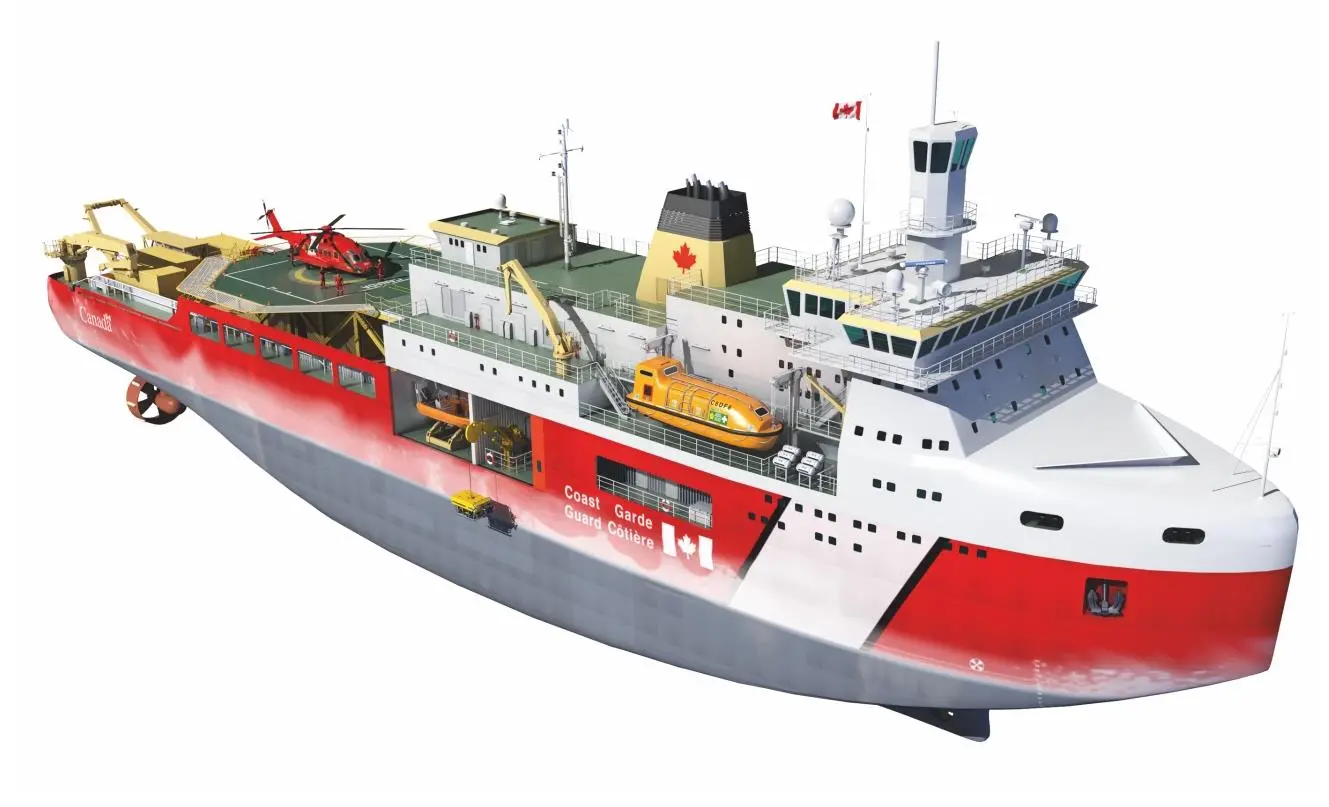
The deal represents the first stage in the realisation of the project for a new generation of vessels of some 100-110m in length, designated the Program Icebreakers, to serve throughout Canadian waters, including summer voyages in the Arctic. The future Program sextet, which will be constructed by Davie once build contracts have been formalised, is distinct from the two-ship Polar Icebreaker project, which is also under way in Canada.
Davie will establish a Program Icebreaker project management and design office, set a recruitment drive in motion, and engage critical subcontractors for vessel development and certification to requisite performance, safety, and environmental standards. The award by the Government of Canada marks the beginning of Davie’s National Shipbuilding Strategy(NSS) work package to replenish the country’s icebreaker capacity.
The envisaged Program ships will form the backbone of the Coast Guard’s icebreaker fleet, replacing the heavy and medium icebreakers that operate in Atlantic Canada, the St Lawrence waterways, the Great Lakes and Pacific Canada during the winter, and in the Arctic during the summer. The vessels are expected to have the capability to maintain three knots in 1.4m-thick ice, and are foreseen with a 20,000 nautical mile endurance at 12 knots.
The Davie yard at Levis, Quebec, is also in line for the second of the two Polar icebreaker newbuilds to be commissioned by the Canadian Coast Guard.
Group Davie’s market reach and know-how in the field of Arctic- and other ice-going tonnage is set for expansion following the acquisition last November of the assets of Helsinki Shipyard in Finland. It is understood that the Canadian government has looked favourably on the potential synergies resulting from the transaction for the construction of icebreakers under the National Shipbuilding Strategy(NSS).
Meanwhile, Seaspan Shipyards of North Vancouver recently completed the prototype block for the first of the 158m Polar icebreakers. Seaspan developed and fabricated the block to ensure full readiness on the part of its production teams for cutting steel on the ship towards the end of 2024.
Incorporating 34MW of propulsive power provided on a single shaft and two Azipod electric azimuthing units, the Polar Class 2 breaker will be able to open channels through 2.5m-thick ice. Primary missions will include protecting Canada’s sovereignty, Arctic science, environmental response, Northern re-supply, and search and rescue.
Related Articles
 ALTERNATIVE FUELS & LUBRICANTS
 GENERAL NEWS
 GENERAL NEWS