



The Motor Ship’s first 50 years
“Fifty Years,” they continued, “is perhaps not a long time in the history of shipping, but it does cover the period of greatest marine engineering a shipbuilding developments.”
That certainly rings true today. In many ways the magazine’s second decade has seen development and consolidation rather than complete innovation – in these pages we frequently see the germination of modern technological ideas that were being seriously considered half a century ago. It is not unreasonable to assume that the next 50 years will, out of necessity, prove somewhat more revolutionary than the last – maybe even more than the 1920-1970 period. With this in mind, it was fascinating to see how, in April 1970, one commentator viewed the development of marine fuels up to 2020.
The industry was aware of fuel cells in 1970, but felt there was no evidence they could be scaled up to marine energy demands. So oil was likely to continue to dominate the scene into the 21st century, ahead of gas turbines and, to a lesser extent, nuclear power. The oil industry was seen as having the capability and flexibility to meet all future fuel demands, at a low cost, and with a steady differential between residual and distillate fuel grades, with no chance of shortages of either type, thanks to ever-increasing world oil reserves. The increase in use of distillate fuels was correctly predicted, but this was mainly because the higher quality fuel would permit higher power outputs, and hence faster ships, while reducing ‘out of service’ time and enabling unmanned machinery rooms – emissions to air were not considered. The writers were aware that LNG had technical attractions, but fundamental storage and handling problems meant it was unlikely to be adopted on any significant scale. Unspecified ‘alternative energy sources’ did at least get a mention, but it was unlikely we would see any of these becoming viable until the first quarter of the 21st century – until then, petroleum products, albeit with ever-more refinement to enhance fuel quality and efficiency, would dominate.
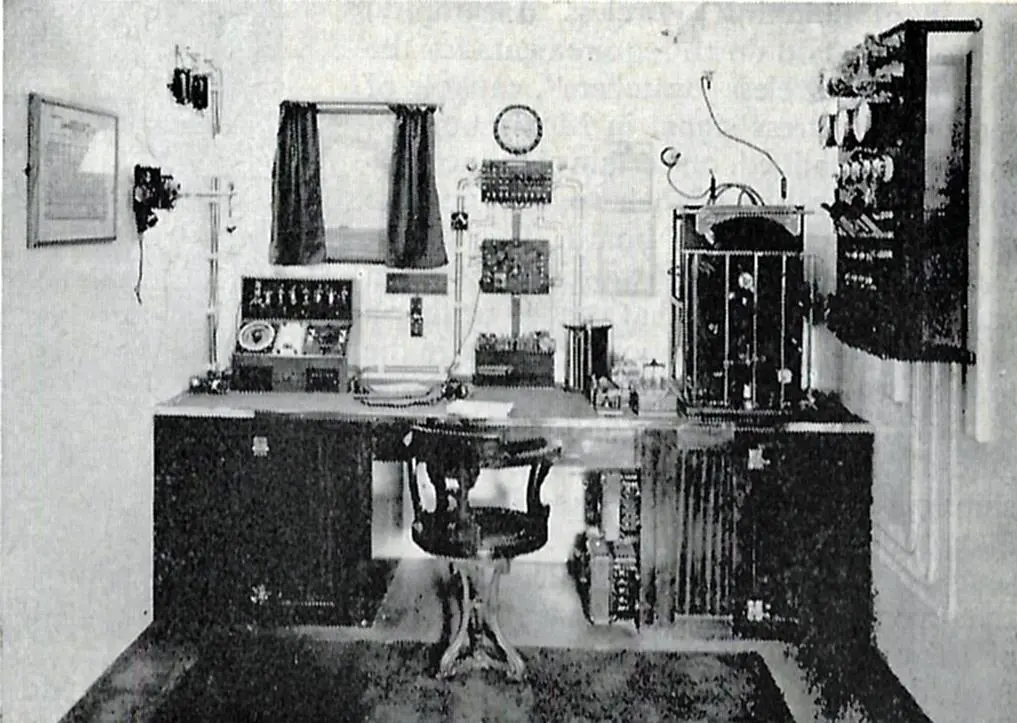
As the April 1970 issue was devoted entirely to looking back, there was no news of current vessels or technical developments. But the nostalgia did not concern only the Motor Ship’s main raison d’être, i.e. ship propulsion – though there was plenty of that to consider, such as the Doxford engine which was still popular in the 1970s but today is regarded affectionately, but as something of an oddity. One article pointed out that April 1970 was not just The Motor Ship’s 50th anniversary, but marked 70 years of marine radio. But it was not until 1916 that radio became mandatory, a necessity rather than a luxury. That move was prompted not only by the beginning of WW1 and the consequent dangers for commercial shipping, but by the Titanic, Volturno and Empress of England disasters in 1912-14.
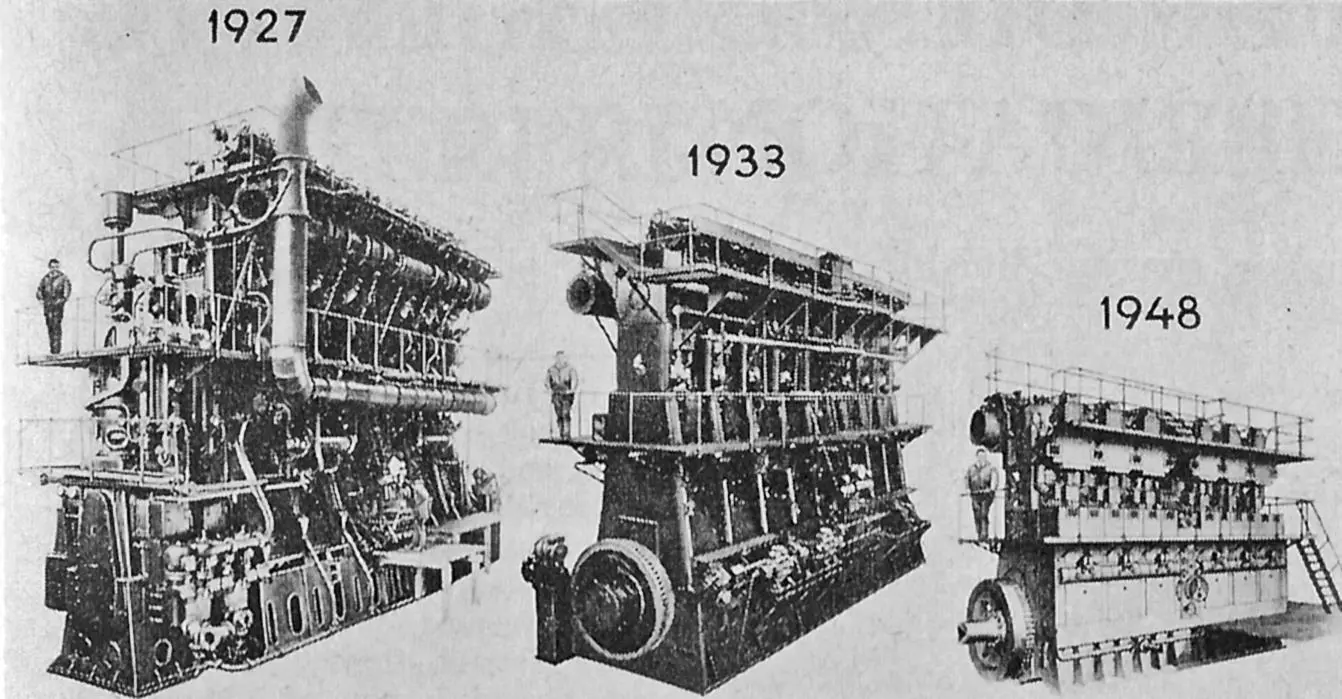
Perhaps the most significant development in the marine diesel engine over those 50 years was the way that output power increased while size decreased. The output of the ‘super large bore’ engines of 50 years ago, at just under 4,000bhp per cylinder, is indeed modest in comparison with later developments, but the power-to-weight and power-to-size ratios were impressive when compared to engines from the 1920s. An article from the Dutch Werkspoor company was illustrated by a picture featuring three of the company’s engines, each rated at 3,000 bhp, showing how size and weight had reduced over just 20 years.im
Related Articles
 PROPULSION
 GENERAL NEWS
 GENERAL NEWS