



Schottel to power zero-emission ferries in Norway
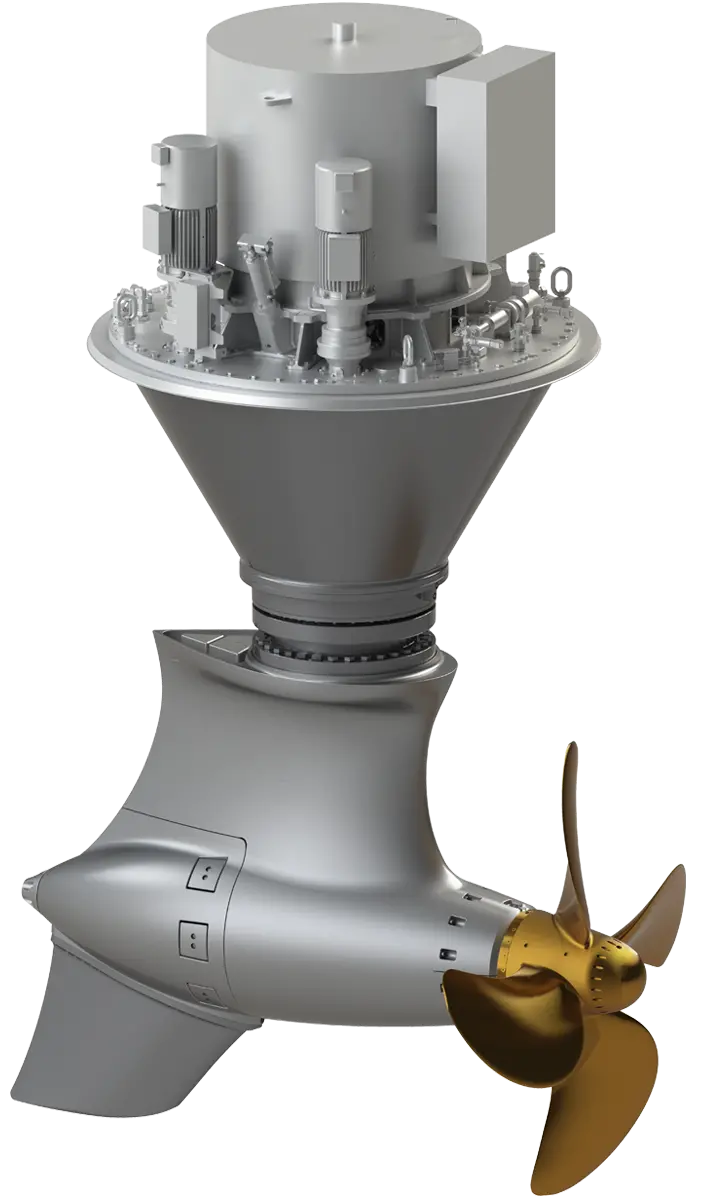
These double-ended vessels, the first of their kind worldwide, will be powered by Schottel EcoPellers. Norwegian HAV Design will provide the vessel design and engineering package for the 120-metre long, 18.6-metre wide ferries.
Each ferry will be equipped with two Schottel EcoPellers type SRE 340, featuring an L-Drive configuration that reduces the installation height by eliminating the upper gearbox. This design cuts mechanical losses, enhances hydrodynamic efficiency, and significantly lowers energy consumption. In turn, this reduces the required battery capacity, cutting both operational (opex) and capital expenditure (capex) costs. These features align with Fjord1’s commitment to efficiency, sustainability, and continuous innovation.
The omission of the upper gearbox also reduces vibration and noise levels, greatly improving passenger comfort. Each EcoPeller unit will have a 2,100 mm propeller diameter and 1,200 kW input power. Additionally, the thrusters will be fitted with Schottel’s MariHub condition monitoring system to enable condition-based maintenance, ensuring smooth and efficient operation.
The new autonomous ferries, built by Tersan Shipyards in Turkey, will serve the Lavik-Oppedal route across the Sognefjord starting in September 2026. Each vessel will carry up to 399 passengers, including crew, and 120 passenger cars. The ships will initially operate with a high degree of autonomy, with full autonomous navigation expected by 2028. A land-based control centre will monitor and potentially remotely control the ferries, ensuring a seamless travel experience for passengers.
The deployment of these zero-emission vessels marks a significant step forward in the decarbonisation of ferry operations in Norway. Automated systems such as autocrossing and autodocking will be implemented in 2027, paving the way for fully autonomous navigation a year later. Positioned approximately 60 miles north of Bergen, the Lavik-Oppedal route will soon be at the forefront of maritime innovation, connecting communities while reducing environmental impact.
Related Articles
 NEWS
NEWS
 ALTERNATIVE FUELS & LUBRICANTS
 ALTERNATIVE FUELS & LUBRICANTS