



Retrofit or replace? Calculating the value of green investments

Gaining a deep understanding of available technologies is crucial to navigate these changes. Shipowners need insights into the operational aspects, crew preparation, and design implications for their specific ships, not just generic assumptions. Without these insights, ensuring a satisfactory return on investment or building the trust necessary for cooperation with charterers becomes challenging.
As technological advancements continue to progress, it’s worth noting that certain new solutions cannot be implemented on existing ships, and in some cases, retrofitting can be more expensive than initially anticipated. In these situations, a detailed cost-benefit analysis provided to a shipowner by specialist consultancies will prove to be an invaluable resource.
Who’s affected?
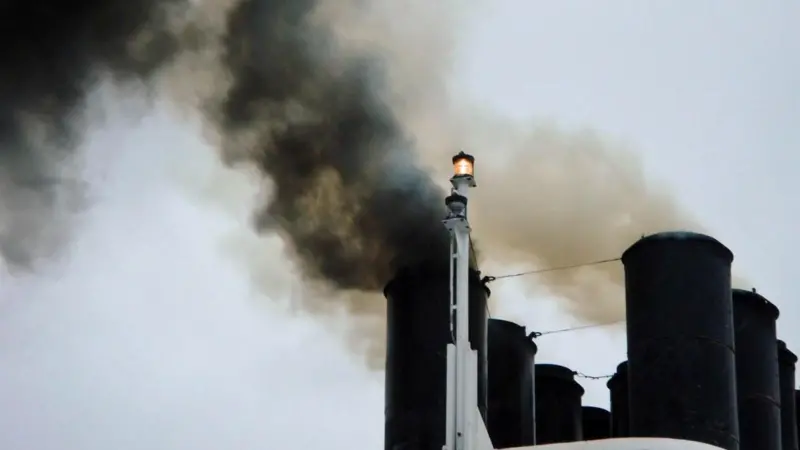
An overwhelming majority of the current fleet, exceeding 90%, relies on fossil fuels, excluding LNG. These ships won’t comply with the FuelEU Maritime law, for example, and similar regulations are likely to emerge in other regions. Significant improvements in energy efficiency across the industry are essential.
Retrofits benefit some trades more than others. The container ships that benefit most from energy efficiency retrofits, in our experience, were constructed prior to 2012 and generally have a capacity below 12,000 TEU.
In the container sector, the effects of stricter carbon regulations are perhaps most visible in the feeder segment. These vessels typically operate on shorter routes between hub ports and secondary terminals, making frequent port calls. Such operations aren’t favoured by the CII equation, which considers distance sailed multiplied by ship capacity.
Many experts we’ve spoken to expect that feeder ships will fall into the lowest categories of the CII. Compounding this challenge, the feeder fleet is characterised by older, smaller ships with suboptimal fuel efficiency and minimal speed adaptability. Certain energy-saving technologies, such as wind-assisted propulsion, are less feasible for these ships due to their constant port calls.
What can be done?
The shipping industry will meet the 2030 environmental targets by optimising the performance of current vessels, while reaching the 2050 targets will require vessels burning sustainable fuels. To meet ambitious emissions reduction targets, shipowners will need to invest in green technologies and innovative retrofit solutions.
Many of the quickest improvements are continuations of traditional best practices. The friction generated between the hull and the water accounts for ~70% of the energy required for propulsion. By maintaining a regular cleaning schedule for both hulls and propellers, it’s possible to improve hydrodynamic drag and reduce a vessel’s daily CO2 emissions by several tons. Similarly, as any naval architect will tell you, substantially better trim can be achieved by shifting weights and minimising ballast water, as higher displacement leads to higher resistance and fuel use.
To increase your vessel’s competitiveness for 2030 and into the medium-term, wind-assisted propulsion has a bright future. Projects we’ve worked on have realised fuel efficiency gains of 20-35% when used on the right routes. Similarly, air bubble lubrication reliably achieves improvements of 6-9%.
As we approach 2025, scrubber installations have become a more complex calculation. Washwater discharge is banned in more than 40 countries, and a growing list of prominent NGOs wants them banned entirely. It’s also noticeably more expensive to retrofit scrubbers than install them on a newbuild. A VLSFO-HSFO price spread of at least $100 per tonne is a good benchmark for evaluating the investment. Given that the spread is currently approaching 25% less than that breakeven mark, scrubber investments are unlikely to merit strong consideration without a solid TC to support them.
For the 2050 goals, retrofits will play a vital role, partly because the emissions generated by constructing a new ship can easily total a decade’s worth of a ship’s operational emissions. Consultants with expert experience will be essential in directing clients to the most productive and cost-efficient solutions, especially as retrofitted ships compete with newbuilds at the cutting edge of performance.
One LNG shipowner we’ve heard from estimated that his newbuilds were USD 5,000 a day more efficient than the first generation of two-stroke designs. In our experience, a standard design ship from a quality yard at the beginning of this century will, in general terms, be 9-13% less efficient than a newbuild. Well-targeted retrofits can reduce that gap by up to 7%.
Dual-fuel conversions to LPG and LNG have achieved a 15-20% reduction in emissions, but only with the ability to transition to zero-emission fuels will a vessel’s long-term future be secured. We would be hesitant to advise a client to retrofit a vessel to burn ammonia, hydrogen, or other future fuels unless: a) the ship had a newbuild cost of at least USD 50m, b) the total cost of the retrofit is less than 20% of the purchase price, and c) analysis shows there is or soon will be sufficient fuel supply on the vessel’s likely trading routes.
What next?
The first few percentage points of gains can be achieved relatively easily and will help achieve regulatory compliance with the early stages of most environmental legislation. However, to achieve double-digit gains and comply with increasingly strict requirements from the end of this decade will require major technological upgrades.
What should that look like in practice? Informed decision-making and targeted investments that reduce costs and improve outcomes.
High-quality consultancy enables shipowners to operate more cost-effectively and enhance vessel resale value. In contrast, a partner lacking experience and domain expertise could lead to an expensive wild-goose chase, leaving you in your competitors’ wakes.
Related Articles
 METHANOL
 MONITORING, CONTROL & DIGITALISATION
 MONITORING, CONTROL & DIGITALISATION