



First fully electric ferry hits tenth anniversary
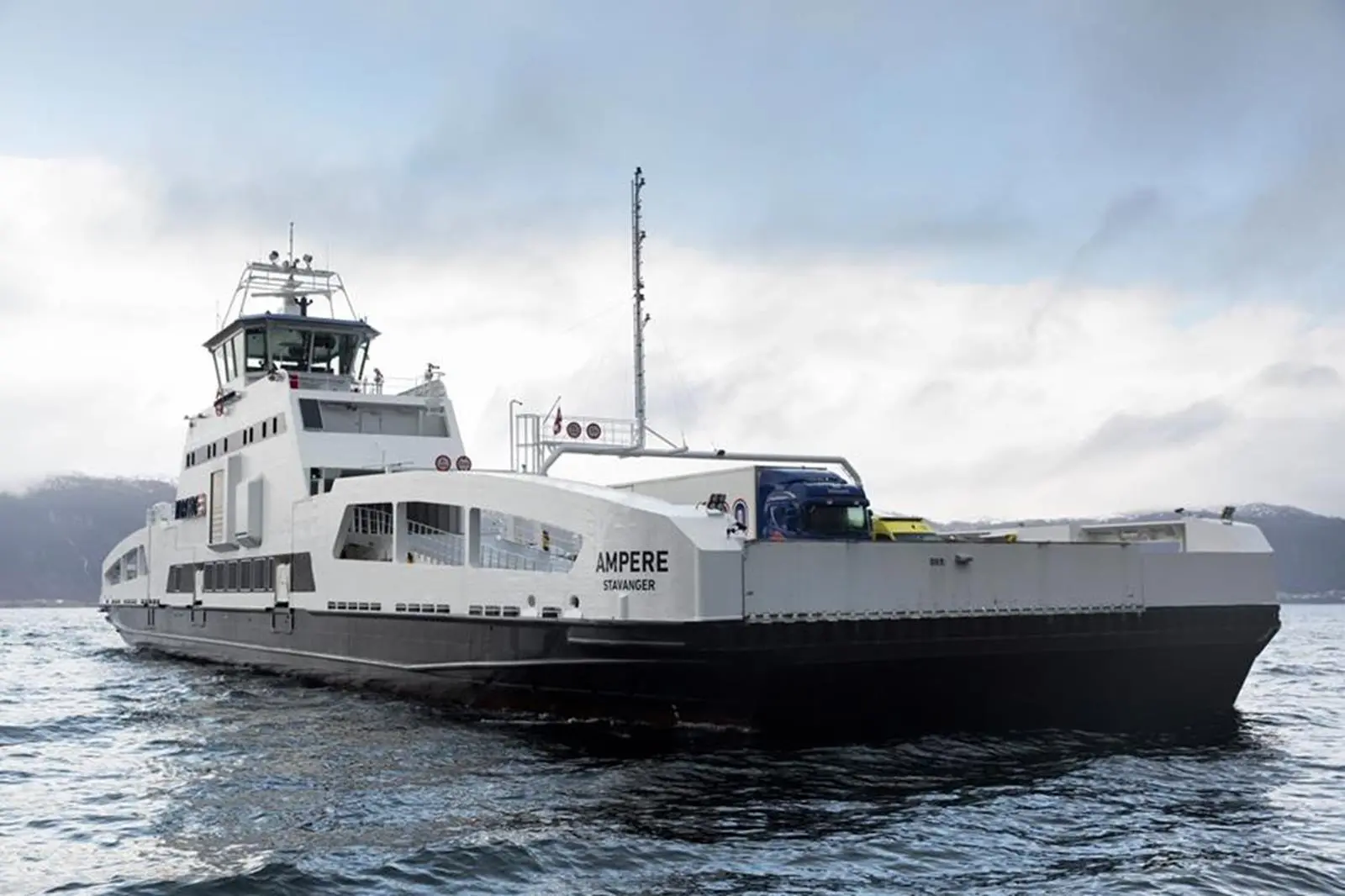
A decade on, the Ampere remains a striking case study in the transformative power of electric propulsion. Initially dismissed by sceptics, the project has since become a blueprint for ferry electrification, influencing the deployment of battery-electric solutions in fleets across the globe.
Norway has entrenched its position as a global leader in green shipping, its ferry electrification programme stretching from the fjords of the south to the Arctic north. The shift can be traced back to a defining moment when the Norwegian Public Roads Administration made sustainability a core requirement for the new ferry crossing the Sognefjord. Ferry operator Norled, recognising an opportunity, turned to Fjellstrand Shipyard to explore an electric alternative. The result was the Ampere, an industry-defining design that secured Norled’s contract and redefined expectations for ferry operations.
“When Fjellstrand first considered electric ferries in 2010, we saw the challenges—distance, power demands, and infrastructure constraints. But when Norled pushed for an all-electric solution, we revisited the concept and found ways to make it work,” said Edmund Tolo, R&D and sales manager at Fjellstrand. “We leveraged proven vessel designs, lightweight structures, and optimised energy use to deliver a ferry that wasn’t just efficient but future-proof.”
Tolo conceded that the project was a step into the unknown. “Nobody had done this before. Battery lifespan was uncertain, and regulatory frameworks didn’t yet exist. But by working closely with Siemens as integrator, battery supplier Corvus Energy, shipowner Norled, and regulators including the Norwegian Maritime Authorities and DNV, we brought the concept to life.”
For Norled, the Ampere was just the beginning. “This project demonstrated that electric ferry operations make financial and environmental sense,” said Norled CEO Heidi Wolden. “When we launched the Ampere, zero-emission vessels made up just 4% of our fleet. Today, nearly 50% of our vessels have low or zero emissions, and we are continuing to expand this further.”
Deployed on the Lavik-Oppedal route, the Ampere has delivered substantial environmental and economic returns. Its electric propulsion system has cut CO2 emissions by 5,700 tonnes annually, reinforcing Norway’s efforts to decarbonise its transport sector. The financial case is just as compelling—operational costs per crossing have been slashed by 85% to 90%, amounting to nearly USD 15 million in savings. To put it in perspective, the cost of powering each journey is now roughly the same as buying a waffle and a cup of coffee.
“Since its launch, the Ampere has completed more than 124,000 crossings of the Sognefjord, proving that electric vessels can be both economical and scalable,” said Fredrik Witte, CEO of Corvus Energy. “Its impact has been profound—its cost and emissions savings directly contributed to the electrification of another 80-90 ferries in Norway. Technological advances have also accelerated. The Ampere operates with 1 MWh of our first-generation batteries, but the latest system powering the Incat ferry in South America will boast nearly 42 MWh of our lightweight Dolphin batteries. Without the Ampere as our pioneer, the marine electrification landscape would look very different today.”
The Ampere’s success has rippled across the industry, fast-tracking the adoption of electric ferry technology in coastal cities and island communities worldwide. It has become a beacon for sustainability-led innovation, inspiring new approaches to maritime transport.
With additional batteries now installed to extend its operational lifespan, the Ampere is set to continue its service until the next leap in technology arrives. That moment may not be far away—by 2026, four autonomous ferries are expected to take over the route, marking yet another step forward in maritime innovation.
Related Articles
 NEWS
NEWS
 ALTERNATIVE FUELS & LUBRICANTS
 ALTERNATIVE FUELS & LUBRICANTS