



Floating nuclear power: CORE POWER’s vision for maritime energy
The urgency for change is clear. Thousands of vessels will need replacing by 2040, by which time international shipping will have to be 70% of its way to net zero, the final deadline for which is 2050. With the average ship lifespan being around 25 years, new builds will need to meet stringent emissions regulations, making conventional fuel-powered vessels obsolete.
According to Bøe, alternative fuels such as ammonia and methanol present significant energy inefficiencies and prohibitive costs. Instead, CORE POWER’s floating nuclear technology offers a high-energy-density solution that can ensure long-term sustainability and efficiency for global shipping and beyond.
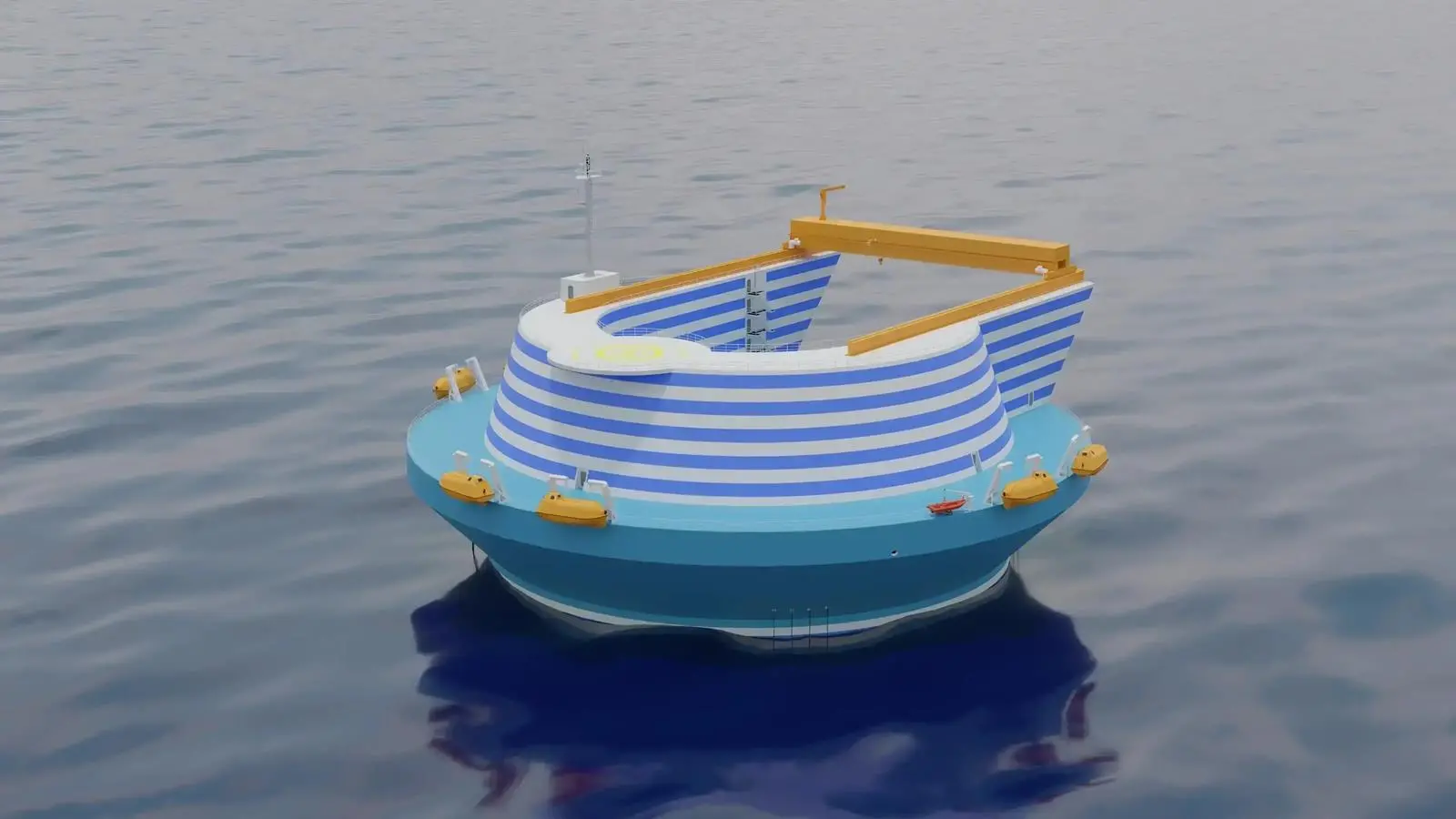
At the heart of CORE POWER’s innovation is the molten chloride fast reactor (MCFR). Unlike conventional solid-fuel reactors, MCFRs utilise a fuel comprising a liquid solution of uranium and chloride salts. This design eliminates meltdown risks and ensures safer operations compared to traditional nuclear power. The reactors, on Floating Nuclear Power Plants measuring 160 metres in length and weighing 25,000 tons, will generate between 170-250 GWh of electricity annually—far surpassing the efficiency of existing hydrocarbon-based fuels.
The case for nuclear in shipping
Bøe is a vocal advocate for nuclear power, challenging public perception and regulatory hurdles that have historically hindered its adoption. There are many misconceptions about nuclear power that have their roots in groups that wanted nuclear weapons to be disarmed. .
The current drive for nuclear power is because of the global imperative to decarbonise shipping and this technology is the ‘silver bullet’ that can help deliver that goal
CORE POWER’s Liberty program envisages a two-stage approach to maritime decarbonisation. The first stage will focus on building floating nuclear power plants (FNPPs) in shipyards. FNPPs will operate in a similar way to existing power barges, being centrally manufactured then towed to wherever they are needed. Initial smaller-capacity designs will be able to be moored in ports, while later larger-capacity FNPPs will be anchored further offshore.
“Rolling out FNPPs will create the regulatory environment and operational expertise necessary for the second stage of the Liberty program – nuclear propulsion for civil ships,” Bøe says.
The fundamental driver behind nuclear adoption, Bøe contends, is its unparalleled energy efficiency. “Every single substantial change in human development, in human prosperity, is directly linked to how effectively we use energy,” he explains. “The way that we live today is entirely because of our immense ability to harness energy from fossil fuels in an efficient way.” The challenge, then, is to transition from fossil fuels to an energy source that is equally, if not more, effective—hence the shift towards nuclear.
While nuclear energy has come with high initial costs in the past, the advanced technology CORE POWER will be deploying will mean that these costs are far lower than for conventional nuclear technology. Also, nuclear energy’s economic model is the inverse of traditional bunkering models: while fossil-fuelled ships may have a relatively low capex but substantial operational costs over time, the high capex costs of nuclear are significantly offset by its minimal operational costs. A ship using an advanced nuclear reactor will not need refuelling for its entire 25-year design life, Bøe says.
Compared to alternative fuels, nuclear energy density is staggering. “Ammonia and methanol have an energy density of between 17 and 19 megajoules per kilo, while bunker fuels range from 42 to 44 megajoules per kilo,” Bøe explains. “You would have to use between two and two and a half times as much fuel in order to get the same amount of power.” Given shipping’s main purpose is the transport of people or goods, larger tanks would mean less cargo space therefore future fuel adoption has a fundamental problem.
Overcoming industry challenges
The Liberty program is addressing the key barriers to nuclear adoption, including public opinion, regulatory concerns, and insurance. “Liberty is developing a new nuclear technology, which is the one that solves the liability, that solves the port access, which solves the public opinion piece,” says Bøe. Encouragingly, the International Maritime Organization (IMO) is revising its nuclear safety codes, and the International Atomic Energy Agency (IAEA) is setting up specific initiatives to facilitate floating nuclear power.
Market potential for floating nuclear stations is vast, with an estimated addressable value of $2.6 trillion by 2060. CORE POWER’s model is built on a modular approach, ensuring reliable and timely delivery. Large technology companies, such as Google and Meta, are also eyeing floating nuclear power to support their energy-intensive data centres, which cannot afford the delays and costs associated with traditional nuclear plants.
When it comes to safety, CORE POWER’s long fuel cycle model eliminates the need for refuelling, thereby removing risks associated with spent nuclear fuel. “We’re not trying to impose a technology that doesn’t fit shipping,” Bøe states. His confidence in the technology’s viability is unwavering: “We see the industry standing up and realising that this is not a question of if, it’s a question of how we do it.”
As the UK government considers legislative changes to support nuclear-powered shipping, CORE Power stands at the forefront of an energy revolution. Bøe remains sceptical about competing alternatives, particularly green ammonia. “The fact of the matter is physics and chemistry matter; you can’t break the rules of nature. The laws of nature apply whatever you do,” he asserts.
Ultimately, CORE POWER’s floating nuclear solution offers an opportunity to redefine maritime energy, ensuring long-term sustainability and cost-effectiveness. With the support of leading shipyards in Japan and South Korea, as well as growing regulatory acceptance, the Liberty program is well-positioned to drive the next generation of zero-emission shipping. For any of us still wavering over persistent fears regarding nuclear, Boe says: “The fact of the matter is, it’s really the absolute safest thing there is.”
Related Articles
 NEWS
NEWS
 ALTERNATIVE FUELS & LUBRICANTS
 ALTERNATIVE FUELS & LUBRICANTS