



Regulatory uncertainty hinders bunker industry transformation
As it says in the OCIMF, IPIECA, and IBIA submission to MEPC 83: All participants in the marine fuel supply chain will see their business change significantly as the 2023 IMO GHG Strategy advances.
MEPC83 could provide some certainty about mid-term GHG reduction measures which build on previously adopted short-term measures. To come is a goal-based marine fuel standard that will phase in the mandatory use of fuels with less GHG intensity and a global maritime GHG emissions pricing mechanism.
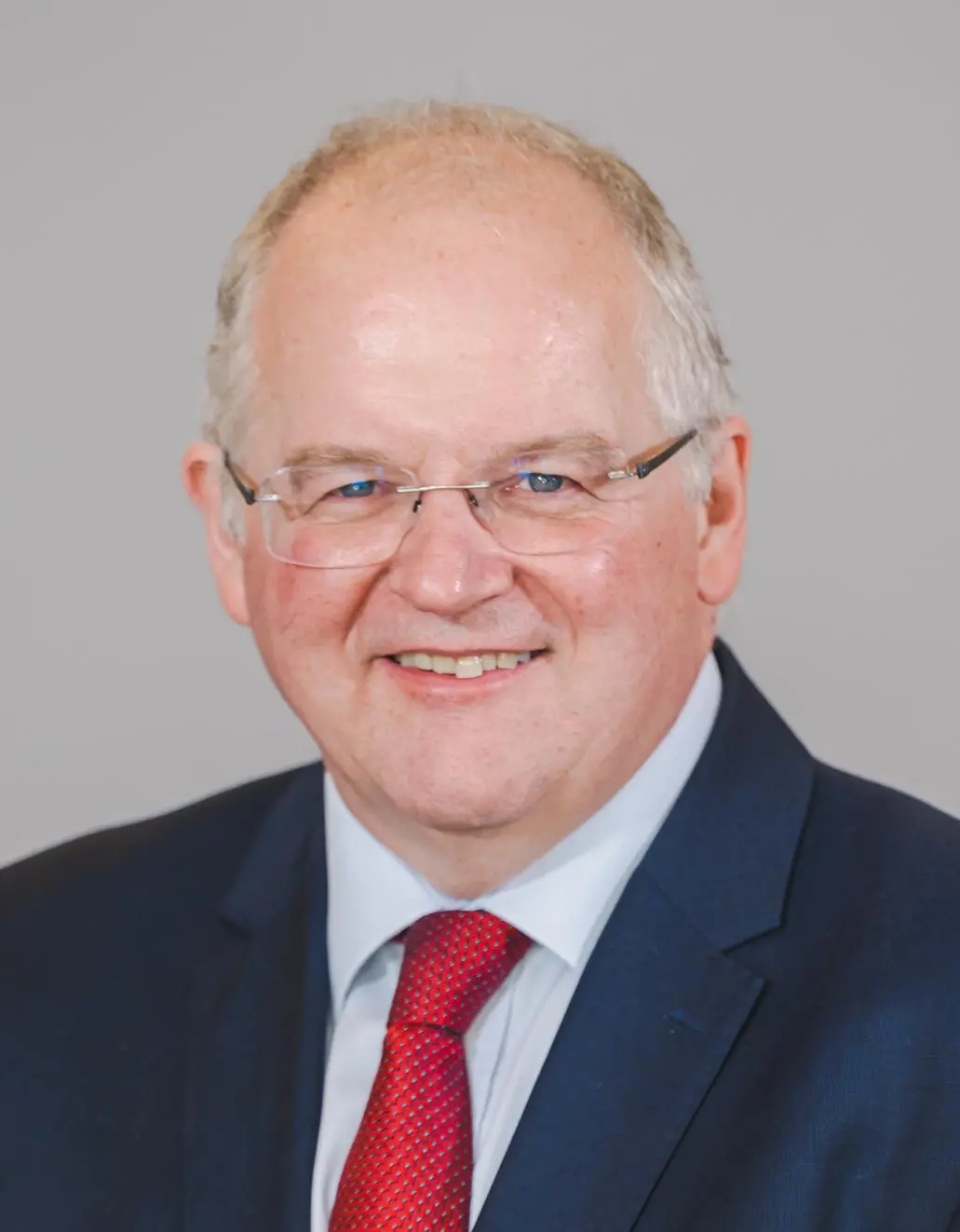
“Net zero by or around 2050 won’t be delivered without a revolution in the marine fuel supply chain,” says Dr Edmund Hughes (pictured), IBIA’s IMO representative. IBIA’s membership includes members across that supply chain including producers, traders, brokers, physical suppliers, and buyers.
“To achieve the IMO’s goals, we’re going to have to have not just different fuels, but a different governance regime, because the whole concept of well-to-wake is completely new to shipping,” he says. The information on fuels will have to be transferred down the marine fuel supply chain, something that will require digitalization. “Historically, all that’s ever done is transfer of the bunker delivery note to the ship.”
Hughes sees enforcement issues due to the new complexity created by well-to-wake regulations. “One of the problems is that you’re dealing with an international sector, but a lot of the decision making has to happen at a country level. Each country needs policies, because ports come under national jurisdiction. So, each port, each terminal even, will have to reconfigure its relationship with ship operators.”
The MEPC 83 submission notes that building the required new supply chains for lower GHG emissions fuels covering production, distribution, and bunkering will require significant time and investment. Large production projects take several years before new infrastructure is developed. A production unit is typically designed to produce a specific fuel category and cannot be retrofitted in a cost-effective manner to produce other types of fuels as the production processes are not comparable (e.g. steam methane reforming to produce hydrogen, Haber-Bosch for ammonia, Fischer-Tropsch for e-diesel). This creates a significant risk of stranded assets, a gamble that is unlikely to be made by investors in the absence of long-term predictability.
During the transition there will be a need to continue to store and supply conventional petroleum fuels to ensure continuity of supply, so bunker fuel suppliers will likely require significantly more tankage ashore, both number (for additional segregations) and also volume (as new fuels have lower energy density).
IBIA therefore sees a clear international shipping well-to-wake GHG reduction pathway with non-reversibility of ambition as critical. To get a final investment decision (FID) on big production projects can take around five years, says Hughes. “Even if we agreed this year on regulations, it will probably take until the end of this decade before we start seeing what impact the regulations will have and how they will set up the industry for future decades.”
InterManager has also voiced concern in an MEPC 83 submission. Highlighting that roughly 20% of the global fleet is operated by a third-party technical ship manager as the ISM Manager, the submission asserts the need for further refining to make it applicable in practice and to avoid future national implementing acts being open to inevitable and avoidable litigation by ship managers.
Passing the buck
InterManager president Sebastian von Hardenberg says: “We ship managers are fully committed to playing our part in shipping’s journey to net zero. However, when it comes to the GHG intensity of a ship, ship managers have no say whatsoever in any of the decisions that result in material impact; they are not even consulted.”
As the submission states, the matter is negotiated between the shipowner and the charterer and agreed in the charter party agreement for the ship, together with speed and consumption, the remaining significant parameters impacting on its GHG intensity.
However, the current proposed draft amendments to MARPOL Annex VI on the IMO net-zero framework suggest making ship managers the sole responsible entity for penalties related to GHG emissions. InterManager says this clearly misidentifies the ship manager as the polluter to be held responsible and penalised which, as well as being factually wrong, could lead to legal challenges.
Further, by assigning liability for compliance fees to the ship manager, they in turn are forced to ask shipowners to provide upfront financial security to cover potential risks of insolvency or defaults. This forces significant amounts of equity to be tied up in security, limiting cash flow available for growth or investment in new ships.
For their part, shipowners are building new relationships to derisk their fuel choices and consolidate their buying power. In February, Maersk celebrated the name-giving of its newest dual-fuel methanol container vessel in Mumbai, a sign of how important the nation is expected to be in fuel production.
In February, Furetank completed its first bunkering of 200 tonnes of ISCC certified Bio-LNG, in collaboration with environmental commodity trader STX Group and Molgas. Bio-LNG is a mass balanced product where biomethane of certified origins is purchased and injected into the gas grid, while the corresponding amount of gas is withdrawn from the grid and liquefied into bunker fuel.
Other collaborations are underway. Cargill’s Ocean Transportation business and tanker shipping company Hafnia have joined forces to launch marine fuel procurement company Seascale Energy. The joint venture aims to offer shipowners and charterers improved transparency and scale and access to sustainable fuel innovations.
“Bunker operations are becoming more transparent,” says Philippos Ioulianou, Columbia Group Director of Energy and Renewables. “Digital tools now track fuel quality, emissions, and compliance in real time, making data-sharing a key industry trend. Companies are being pushed towards greater openness, and those that fail to embrace transparency may find themselves at a disadvantage.”
Tech solutions
Technology is also playing a crucial role in easing the fuel transition, he says, with platforms like EmissionLink, member of Columbia Group, using real-time data analytics to help shipowners assess fuel choices, monitor compliance, and optimize operations. AI-driven forecasting and blockchain-based fuel tracing are further enhancing efficiency and accountability, making digital solutions essential for navigating the complexities of a multi-fuel future.
The number of digital solutions is increasing across the many links in the fuel supply chain. Per Funch-Nielsen, director of AuctionConnect, says a mind-set shift is needed for shipowners to recognise that digital tools can provide significant support to procurement teams when it comes to negotiating fuel prices. “While, over the past few years we have seen a significant increase in the use of digitalisation across the bunkering supply chain, its adoption in fuel procurement process and the fixing of prices has lagged behind. Interpersonal relationships can be key to securing the best possible price, and this has led to entrenched ways of working that have kept procurement teams from adopting automated online auctions for price negotiation.”
Rob Mortimer, MD of fuel additive company Fuelre4m, asks if AI could help solve new fuel logistical challenges. For bunkering companies, the issue is predicting which fuel will be required by which vessel, and where, something that his company is solving using an AI powered, blockchain verification driven ordering and supply solution. A vessel operator will forward forecast quarterly requirements through the AI platform, placing a covering purchase order for supply anywhere in the world. The portal tracks each enrolled vessel’s fuel consumption and estimated time of arrival at the next destination. The product can then be despatched to meet the vessel. An AI-powered, virtual pool and virtual distribution model something like that could work for new fuels, he says.
There are already some potential lessons to be learned about digitalisation from problems experienced with the implementation of the EU ETS. Digital solutions provider OceanScore points to a lack of harmonized data formats between shipping companies and verifiers, significant discrepancies between commercial voyage definitions and the handling of off-hires. Odd errors in reporting systems and inconsistent data formats underscore the need for standardized practices across the board.
Transparency has emerged as a significant concern in managing EU Allowances for the EU ETS, says OceanScore. Invoicing for EU Allowances has become a labour-intensive task, with diverse format requirements, varying request frequencies, and interim statements complicating the process. Many shipping companies struggle to track whether invoices have been accepted, EU Allowances delivered, or payments made without a centralized system.
The introduction of FuelEU regulations could bring similar challenges, as could IMO’s expected economic, carbon-pricing measures. These will be some of the considerations for MEPC 83 between 7 to 11 April 2025.
Related Articles
 NEWS
NEWS
 ALTERNATIVE FUELS & LUBRICANTS
 ALTERNATIVE FUELS & LUBRICANTS