



Alfa Laval in world’s first marine boiler system for ammonia waste incineration
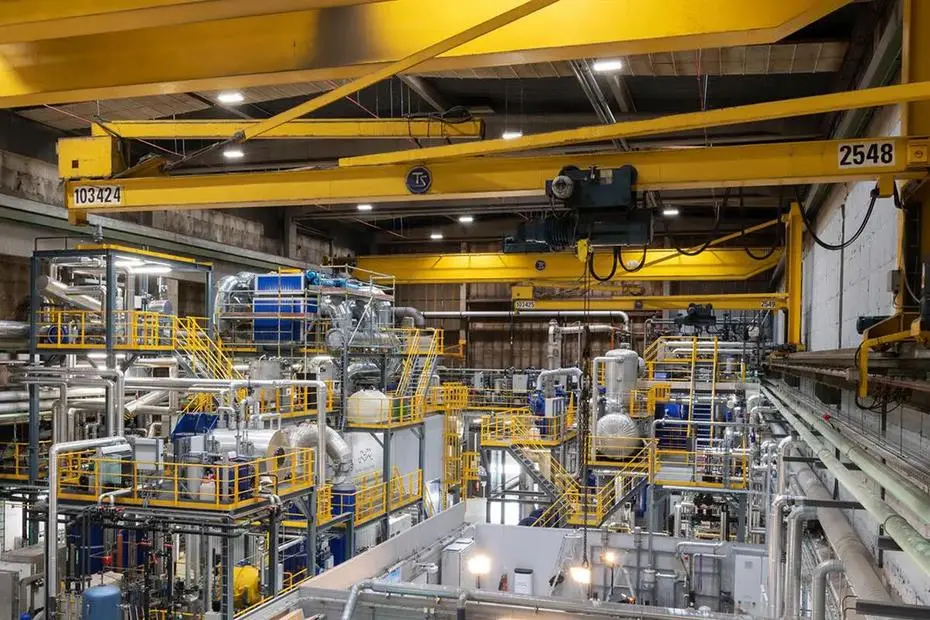
The technology, set for installation on four 45,000 cbm multi-gas carriers owned by global commodities trader Trafigura, is expected to be delivered between 2027 and 2028. The vessels, which will be built by HD Hyundai Mipo in South Korea, are designed to carry LPG and ammonia and will be equipped with ammonia dual-fuel engines.
The boiler system forms part of a joint development project between Alfa Laval, WinGD, and HD Hyundai Mipo. It will function as an Ammonia Release Mitigation System (ARMS), addressing one of the critical technical challenges associated with the use of ammonia as a marine fuel—namely, the safe disposal of purge gases and other residual ammonia-based emissions.
As the maritime sector pivots towards alternative, zero-carbon fuels, ammonia has emerged as a key candidate. However, its toxic nature and the need for strict emission control measures have presented obstacles to its broader adoption. Alfa Laval’s solution integrates emissions management into the boiler system, allowing for safe and efficient combustion of waste ammonia gases generated by engines and fuel supply systems.
Anders Lindmark, president of Alfa Laval’s Heat & Gas Systems business unit, noted that the company’s experience with LNG and methanol systems positioned it well to lead on ammonia. “This pioneering boiler system shows how Alfa Laval is shaping the transition to alternative marine fuels through innovation,” he said. “We are proud to be at the forefront of delivering technology that balances environmental responsibility with operational efficiency and safety.”
Andrea Olivi, global head of shipping at Trafigura, welcomed the collaboration. “This landmark project addresses one of the key hurdles in deploying ammonia as a marine fuel,” he said. “Alfa Laval’s innovative boiler technology enhances both safety and environmental performance, enabling the shift to lower-emission operations.”
In addition to enabling ammonia waste incineration, the system also offers substantial operational advantages by consolidating multiple functions. According to Alfa Laval, it eliminates the need for separate equipment for managing ammonia purge emissions, boil-off gas, and tank emptying operations, leading to cost and space savings onboard.
Dong-jin Lee, Head of Initial and Detailed Design at HD Hyundai Mipo, stated that the system’s compact, integrated design would deliver clear benefits for shipyards and operators alike, serving as a reference for future ammonia-fuelled vessels.
Alfa Laval has been conducting research on ammonia combustion since 2021, beginning with concept development and laboratory testing. Large-scale trials commenced in 2024 at the company’s Test & Training Centre in Aalborg, Denmark. These efforts have laid the foundation for what will be the first commercial deployment of a marine boiler designed specifically for ammonia incineration.
David Jung, business development manager at Alfa Laval, said the innovation demonstrated the company’s ability to translate advanced R&D into practical maritime solutions. “These vessels will be the first to deploy a fully integrated system for ammonia waste management,” he said. “It is a defining step forward in enabling the safe use of ammonia in marine applications.”
Related Articles
 AMMONIA
 AMMONIA
 AMMONIA