



Anemoi harnessing the winds of change
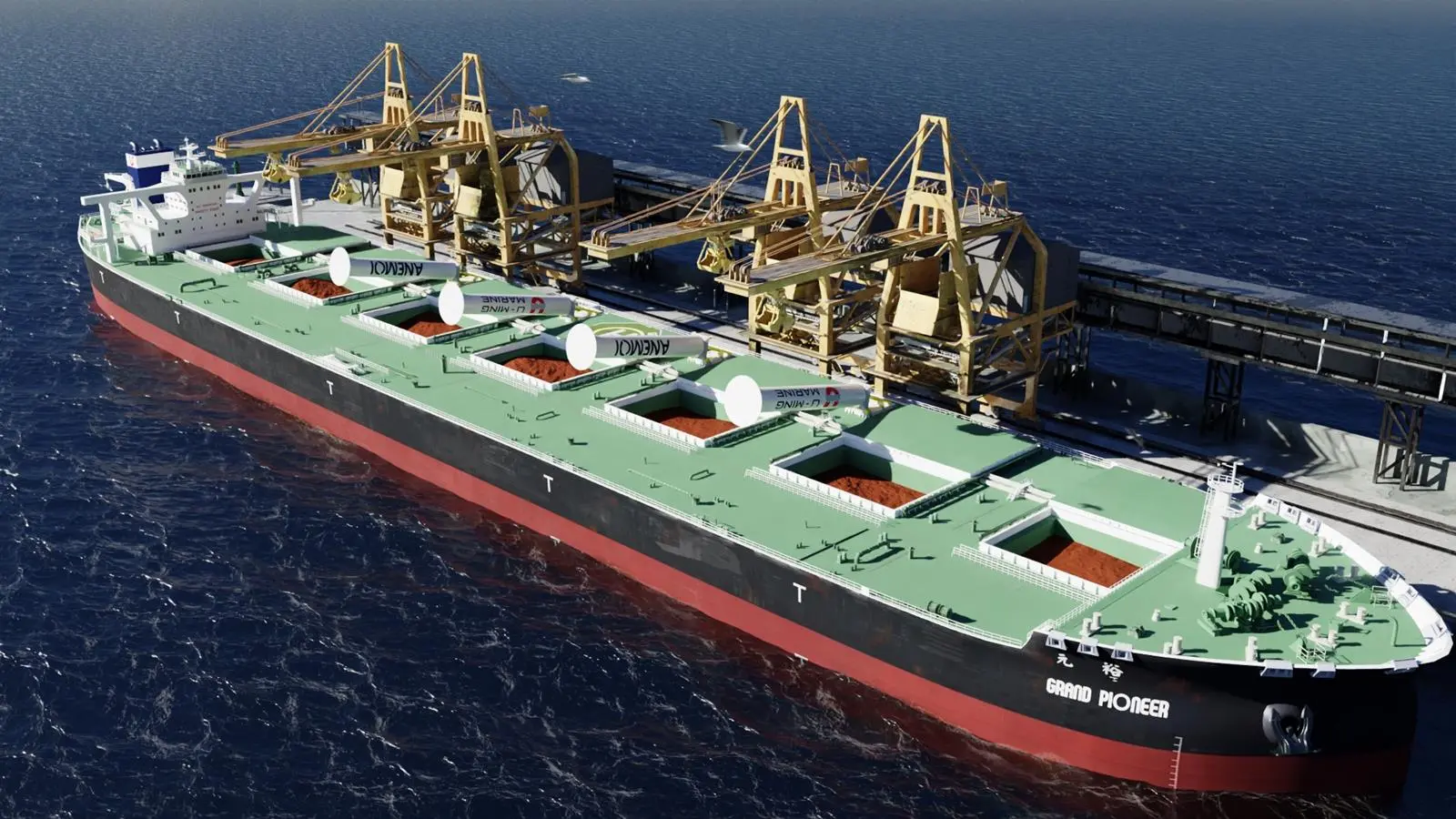
Originally based on the 1920s-era innovations of Anton Flettner, rotor sails harness the Magnus effect to provide forward thrust from wind energy using tall, spinning cylindrical sails. Though early experiments such as the German vessel Barbara demonstrated the principle nearly a century ago, commercial viability was undermined at the time by low fuel prices. “The fuel price was a lot lower when Barbara, the first vessel with rotor sails, was actually out sailing,” reflects Claes Horndahl, commercial director at Anemoi Marine Technologies. “And of course, we’ve seen the fuel prices come up a lot since then. But I think we’re also quite sure, all of us in the industry, that the fuel prices, no matter what the fuel will be in the future, will just be more expensive.”
Fast forward to the 21st century, and Anemoi’s rotor sails are emerging as a serious contender for decarbonising maritime transport. Since the company’s first major commercial installation aboard the ultramax bulker Afros in 2018, the technology has steadily gained momentum. According to Horndahl, the operating expenses for these pilot sails has been modest: “And when it comes to the OPEX for our rotor sails, since the first installation we did on the Afros, we’ve seen that the annual maintenance cost is only $7000 per year.” This figure includes routine inspections, bearing lubrication and minor servicing, making rotor sails one of the most cost-efficient wind propulsion systems available.
Despite their size—often towering up to 35 metres—installation is relatively straightforward. “Perhaps not as simple as just sticking it on board,” Horndahl concedes. “But our rotor sails are quite lightweight, so it’s actually not that big an addition on the displacement. And with the software we provide, the management system of the rotors, we also individually control the rotors so they help to stabilise the core of the ship and also assure that individually they are optimised depending on how the wind looks.” These control systems are key, allowing each rotor to respond independently to wind conditions and contributing to both fuel efficiency and vessel stability.
Strategic partnerships are a core part of Anemoi’s success. “One of our partners, Manta Marine, is looking at integrating other propulsion systems with the sails. It’s all about fine-tuning and optimising the whole system of a vessel with wind propulsion and making sure that the savings you get from your rotor sails are actually banked as either fuel savings or used as a way of increasing your speed.” This systems-based approach helps owners not only reduce emissions but potentially increase vessel productivity.
As the sector evolves, Anemoi sees competition as a positive sign. “We’re really glad to see that there is an increased competition within the industry. Competition is a sign that wind is coming up and there is wider acceptance in the market and recognition that it works.” Market growth has been stimulated by environmental regulations such as the IMO’s carbon intensity targets and the EU’s FuelEU Maritime package, which have pushed shipowners to invest in energy-saving technologies.
Looking ahead, Anemoi is focused on continuous innovation. “We are continuously working to improve the product, take care of our staff and take the next step when it comes to R&D,” says Horndahl. Plans are already underway to scale up production and improve delivery logistics. “We assemble our rotor sails in China, and they are made up of components coming from both Europe and Asia. So that means that we are well positioned to the shipyards where owners typically either do their ten-year docking, or their newbuilds.”
By combining lightweight composite design, intelligent automation and a global production footprint, Anemoi Marine Technologies is transforming a 100-year-old concept into a leading solution for modern green shipping. It’s also a concept that is crossing shipping segments with everything from tankers to ferries using the world’s oldest propulsion system to varying degrees. The company seems adept at harnessing the winds of change which in today’s regulatory quagmire is not a bad position to be in.
Related Articles
 NEWS
NEWS
 ALTERNATIVE FUELS & LUBRICANTS
 ALTERNATIVE FUELS & LUBRICANTS