



Crew skills lag behind tech
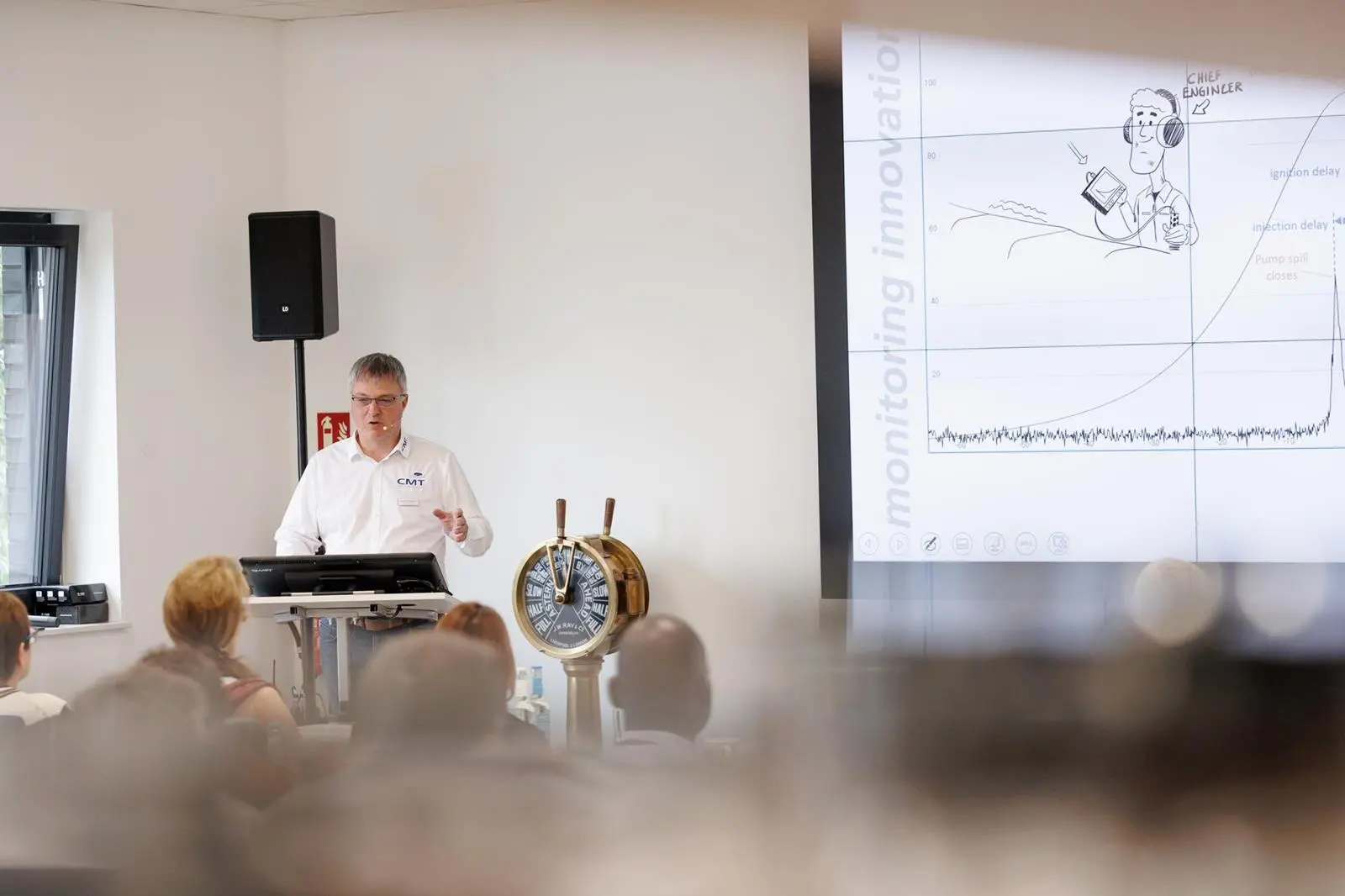
Condition Monitoring Technologies (CMT), a provider of engine analytics and training, warned that while investment in sensors and predictive maintenance tools is growing, many crews remain under-prepared to make informed decisions based on the data provided.
“Ship operators are buying monitoring equipment,” said CMT managing director David Fuhlbrügge, “but crews are being asked to make critical engine operation and maintenance decisions based on diagnostic outputs they don’t fully understand.”
Fuhlbrügge pointed to a sharp decline in onboard expertise over recent decades. “Thirty years ago, a crew of 30 might have several engineers who knew how to interpret pressure curves, vibration patterns or scavenge air temperatures. Today, crews are half the size, and a lot of that knowledge has disappeared.”
Several academic studies echo these concerns. A 2023 paper by Gdynia Maritime University warned that a lack of skilled personnel could hamper maritime data analysis, while research from Taiwan and China stressed that even the most advanced machine learning systems still depend on human interpretation to be effective.
While some operators are moving analysis to shore-based teams, CMT argues this is no substitute for competent decision-making onboard. “You can’t outsource everything,” Fuhlbrügge said. “When a problem emerges at sea, the person onboard needs to know what to do.”
CMT provides training through its academy but says few clients integrate training into tech procurement. “There’s a reluctance to spend on people. And yet without trained personnel, even the best technology can’t prevent failure.”
He concluded: “We’re not short of technology. What we’re short of are crews that know how to use it.”
Related Articles
 ALTERNATIVE FUELS & LUBRICANTS
 GENERAL NEWS
 GENERAL NEWS