



Scrubbers – saviours or polluters?
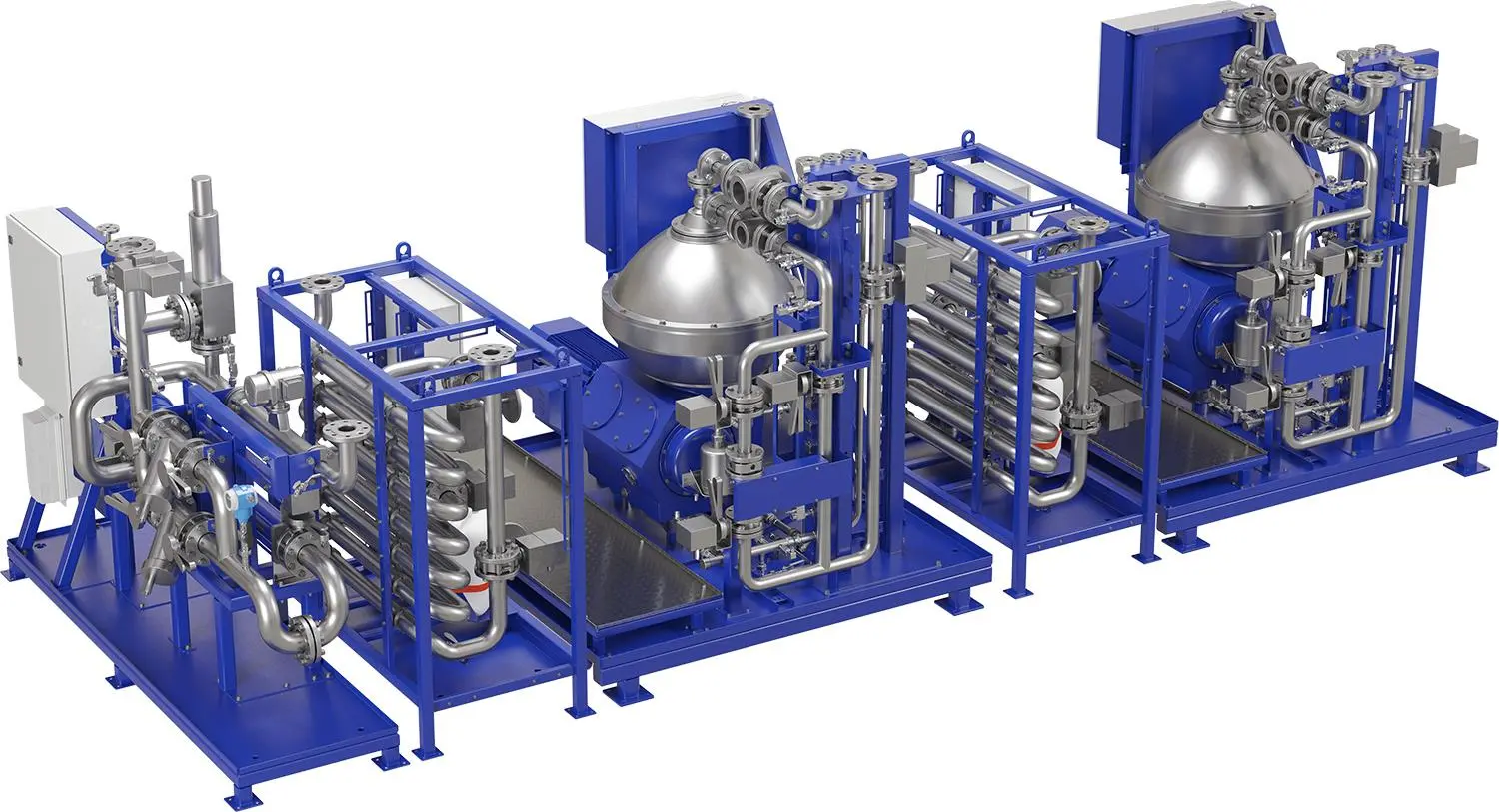
The perceived side effects of scrubber use, however, are a different matter. Even in the earliest days of EGCS, adapting established land-based technology for maritime use, the idea of pumping sulphur residues into the sea rather than the air was called into question. The EGCS industry’s response was that sulphur compounds occur naturally in sea water, and any pollution resulting from scrubber use was likely to be negligible. The industry addressed the question by developing ‘closed-loop’ scrubbers, where the wash water was treated and residues stored onboard for subsequent discharge, as well as hybrid scrubbers which could operate either in ‘open-loop’ or ‘closed-loop’ mode. Additionally, a few ‘dry’ scrubber types have been commercialised for marine use, using sodium bicarbonate or similar powder as the desulphurisation medium, avoiding the use of wash water altogether.
However, the problem has not gone away. As the use of scrubbers increased – accelerating after the IMO introduced limits on fuel sulphur content, alternatively allowing ships with EGCS to continue use of higher-sulphur fuels – environmental bodies raised concerns about possible high levels of water contamination in ports from wash water discharge. In response, various states and port authorities introduced limitations on scrubber use, resulting in banning of discharge from open-loop systems in most major port areas.
But arguments resurfaced about pollution in the open sea. The Clean Arctic Alliance had previously sought to ban the use of HFO fuel in Northen waters, so the use of scrubbers, considered to encourage the use of HFO, was a logical target. CAA Technical adviser Eelco Leemans wrote: “…the pollutants are then dumped into the ocean, transferring the problem to the marine environment, allowing vessels to continue burning fuels such as high-sulphur fuel oi!.”
A response from Anders Valland, Sintef Ocean, Tor Oyvind Ask, Solvang and Stian Aakre, Wartsila, pointed out that scrubbers transform the sulphur oxide emissions into sulphates which occur naturally in seawater. The global average sulphate concentration in the water is in the order of 2,700 ppm, and it has been calculated that even if the entire global fleet were to use HFO with scrubbers, it would take about 150 years to raise that concentration by just 1 ppm. The respondents acknowledge that some pollution is an unavoidable by-product of shipping, and even with the so-called ‘very low sulphur’ fuel oils, there will still be emissions, equivalent to, or even slightly greater, from scrubber-equipped, HFO burning, vessels.
Debate ongoing
Despite the industry’s denials, scrubber restrictions continue to be debated. To date, most of the initiative has come from individual ports areas. However, in June 2025, OSPAR (the Convention for the Protection of the Marine Environment of the North-East Atlantic) agreed to initiate a ban on the discharge of scrubber wash water in ports and inland waterways controlled by its member states. The OSPAR contracting parties are Belgium, Denmark, Finland, France, Germany, Iceland, Ireland, Luxembourg, the Netherlands, Norway, Portugal, Spain, Sweden, Switzerland, the UK and the EU.
Under the agreement, made in June 2025, there will be a ban on open loop scrubber wash water discharge from 1 July 2027, followed by a ban on all discharge from 1 July 2029. Contracting parties are able to delay the implementation by up to three years. OSPAR has additionally recommended extending the ban to each state’s territorial waters, i.e. up to 12 naut mile offshore. A working group will be established to review this territorial water recommendation with the possibility of turning it into a mandatory regulation.
OSPAR is, in effect, adopting the practices already enacted by its member states Finland, Sweden and Denmark; additionally, France and Spain may extend the ban to the Western Mediterranean.
The Clean Shipping Alliance, an alliance representing users of marine exhaust gas cleaning systems, is, understandably, opposed to OSPAR’s stance. CSA Chairman Capt Mike Kaczmarek describes the move as “unfortunate and unnecessary”.
Kaczmarek said: “Of course this will have an impact, including further complicating today’s already complex map of environmental restrictions for shipping operations in Europe, but above that we are very disappointed in the low level of credible science used by OSPAR to support this decision, including a total lack of evidence of any harm to the marine environment.”
He added: “Even more surprising is that almost no environmental risk assessments — we only know of one or two, which showed little/no risk — have been conducted by the OSPAR members for the operations of these systems in their own waters, as is recommended by the IMO before considering any restrictive actions.”
He pointed out that all the members have the technical ability to carry out scientific assessments, including Denmark, Sweden, and Finland, which had imposed their own restrictions.
CSA believes that the studies referenced by OSPAR do not carry sufficient scientific credibility, while there is a growing body of credible studies, from various sources, that fully evaluate discharge water quality, the potential for accumulation, and the risk to the environment, including in ports. It is not clear to CSA whether these had been considered by OSPAR.
The class view
Classification society DNV has taken a practical view, recognising that restrictions are bound to be introduced on scrubber wash water. DNV points out that ships able to operate EGCS in zero-discharge mode should have no issues with the upcoming OSPAR ban on discharge water. However, for many ships, holding tank capacity may prove a limiting operational factor. Vessels with an open loop or hybrid EGCS without sufficient holding tank capacity should plan for a zero-discharge upgrade ahead of the relevant compliance deadlines. If upgrading to a more advanced hybrid or zero-discharge configuration is not feasible, then switching over to compliant fuel while in port areas will be the only viable option.
DNV additionally states that any modification to existing systems to make them OSPAR-compliant will probably mean new approvals, with documentation updated and systems submitted for re-testing in accordance with the latest standard, such as MEPC.340(77) and the relevant parts of the EU Marine Equipment Directive (MED). Such processes are likely to become even more complex should a different company other than the original manufacturer be engaged to carry out the necessary upgrades or conversions, as could well be the case.
In short, DNV recommends that ship owners and managers with vessels trading in the north-east Atlantic and relying on open loop scrubbers for SOx emissions compliance should prepare for stricter discharge water regulations. Practical solutions include, as well as switching to compliant fuel, upgrading to a hybrid scrubber system enabling zero-discharge. But in that case, modified systems must comply with the latest revision of the guidelines, such as MEPC.340(77).
Despite the campaigning by organisations like Clean Arctic Alliance, the OSPAR agreement falls some way short of the feared outright ban on the use of scrubbers in ports, coastal and inland waters. Any system which allows wash water or other potentially polluting residue to be stored onboard for safe disposal onshore should be acceptable under the new rules. Scrubbers however, cannot be regarded as a long-term solution; this can only come with the advent of future, zero-carbon, non-polluting fuels, still seen as many years in the future, and long after the current generation of ships have been to the recycling yards.
Related Articles
 METHANOL
 MONITORING, CONTROL & DIGITALISATION
 MONITORING, CONTROL & DIGITALISATION