



Maritime emissions fall 4.5% in Q2 2025 despite fleet growth, VesselBot data shows
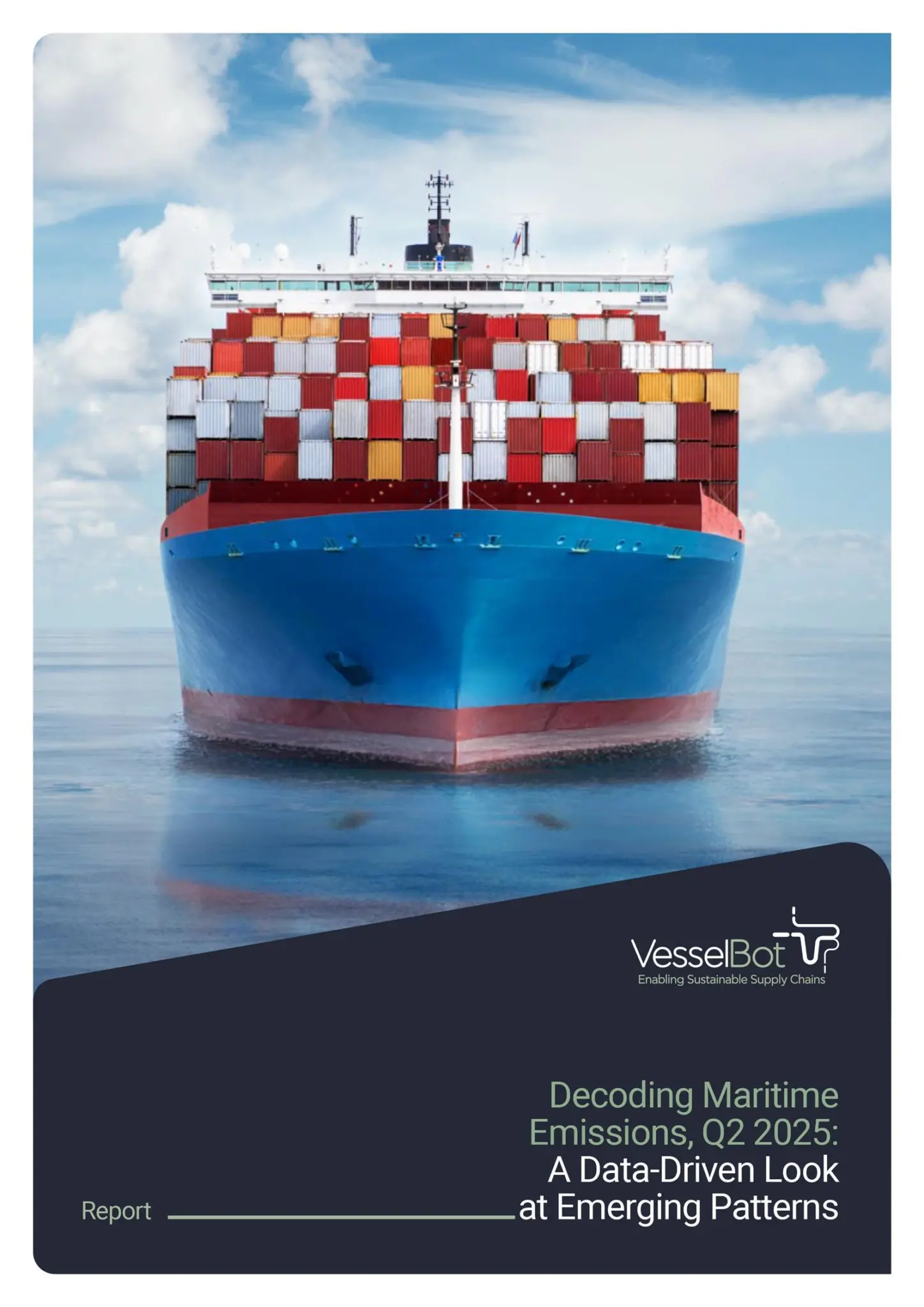
According to the findings, total emissions fell to 46.8 million tonnes, a 4.5% reduction compared with the same quarter in 2024, despite an 8% increase in overall fleet size. Voyage counts declined marginally by 0.3%, while emissions intensity improved alongside higher vessel utilisation.
The data reveals notable differences between vessel categories. Smaller ships, such as feeder vessels, recorded average emissions intensity of 253.5 gCO₂e/TEU km, 29% higher than the fleet-wide average. Larger vessels, including VLCS units, averaged 60.4 gCO₂e/TEU km, 69% below the overall figure.
A closer look at the 943 most emissions-intensive voyages, defined as those above 800 gCO₂e/TEU km, shows that they were generally undertaken by smaller ships carrying relatively little cargo – on average 407 TEU compared with the overall quarterly average of 2,660 TEU per voyage. Other factors, including speed, load factor and time in port, also play a role.
Vessel age is shown to have a marked impact on efficiency. Ships over 20 years old recorded the highest average intensity at 234.7 gCO₂e/TEU km. By contrast, the fleet segment of vessels up to five years old grew by 51% and delivered significantly lower intensity levels, underlining the role of fleet renewal in improving environmental performance.
The analysis also points to differences linked to shipbuilding origin. Among vessels less than five years old, 53.3% were built in China compared with 22.4% in South Korea. South Korean-built ships displayed the lowest emissions intensity, attributed to larger average capacities and longer-distance operations.
Trade lane comparisons highlight further disparities. Asia–North Europe services generated the highest average emissions per voyage at 13,185 tonnes, while simultaneously achieving the lowest well-to-wake intensity at 57.35 gCO₂e/TEU km.
Commenting on the findings, VesselBot chief executive C. Komodromos noted that vessel and carrier performance can vary significantly over time depending on market and trade lane dynamics. He added that near-real-time analysis at vessel level helps stakeholders identify operational inefficiencies, assess sustainability alongside cost and reliability, and make more informed decisions.
The report provides a detailed assessment of voyage emissions patterns, the effects of fleet age distribution, shipbuilding origin, and route-specific intensity, offering a snapshot of the evolving environmental performance of the global fleet in the second quarter of 2025.
Related Articles
 METHANOL
 MONITORING, CONTROL & DIGITALISATION
 MONITORING, CONTROL & DIGITALISATION