



Ensuring cleaner operation amid regulation
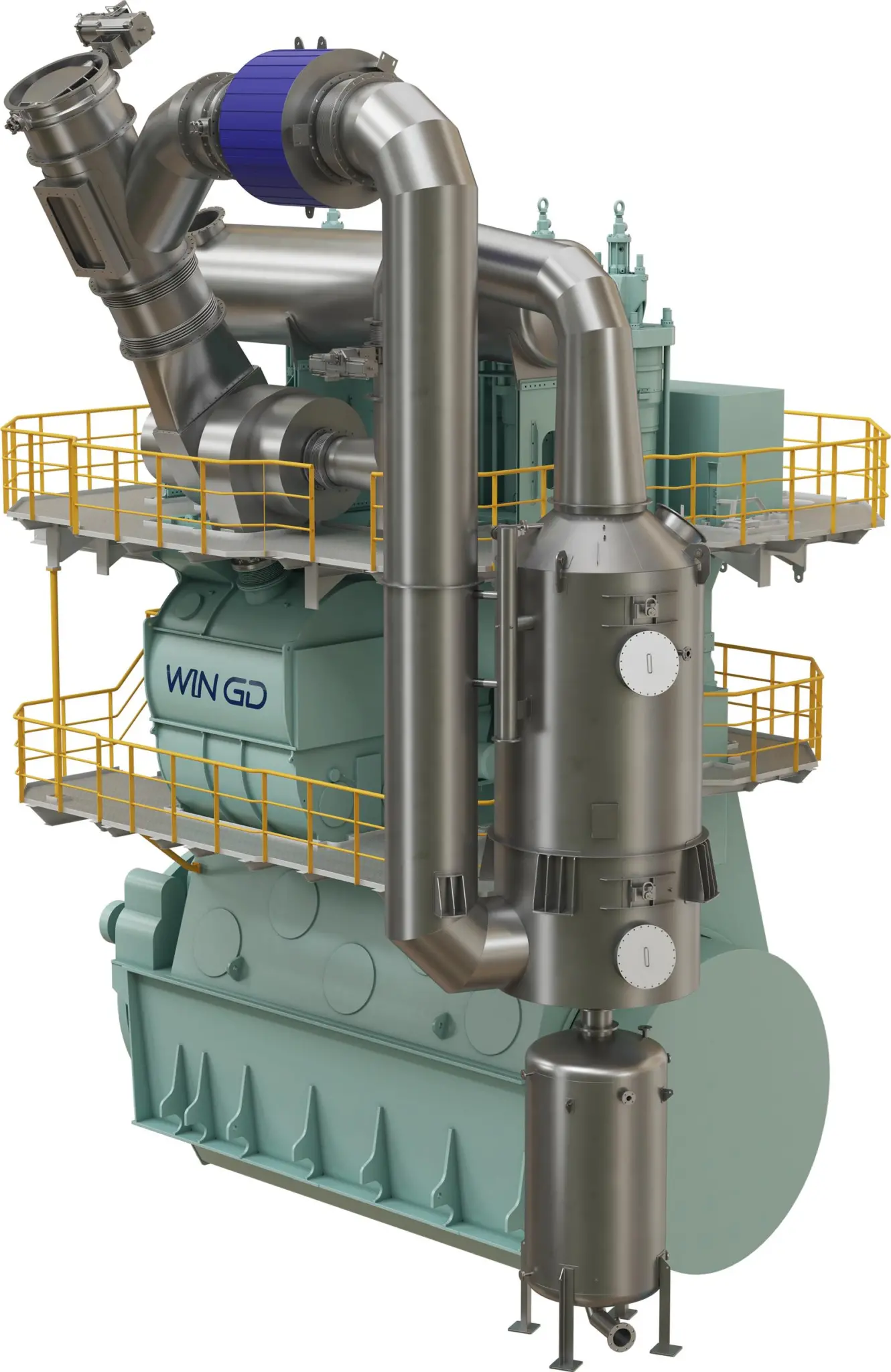
It is difficult to imagine that just twenty-five years ago – the average lifetime of a modern ship – shipowners and operators did not have to worry about what mix of gases and compounds was being discharged into the atmosphere from the exhaust stacks.
For sure, the IMO had promulgated the first regulations on NOx in 1997, but they only applied to ships built after 1 January 2000 and had been well trailed so that most engine makers had developed engines that could meet them without any additional technology. The Tier II NOx regulation limits only became effective in 2011 and are currently in force globally except where NOx ECAs have been established and where Tier III levels will apply in accordance with the various coming into effect dates.
So far meeting the various NOx limits has been met by various means including modifying engine parameters with methods such as Selective Catalytic Reduction (SCR), Miller timing and Exhaust Gas Recirculation (EGR). And while these technologies will still allow some of the new fuels appearing to also meet NOx regulations, subtle changes in how the technology is used may be needed.
SOx emission regulations followed in 2005 and at first were only achievable by using compliant fuels with the sulphur level as set out in MARPOL regulations. In ECAs this generally required a switch over from HFO to distillate fuels. By 2010 trials were being carried out on Exhaust Gas Cleaning Systems (EGCS) commonly referred to as scrubbers which had been permitted by the IMO as a means of achieving the same level of SOx in exhaust streams as would be allowed by using a fuel with the appropriate sulphur content.
The 2020 SOx level reduction to 0.5% in open waters and 0.1% in ECAs led to a boom in scrubber installations which are now around the 6,000 ship mark. The scrubbers though have attracted some adverse reaction – especially when operating in open loop mode – and efforts are underway at the IMO to mitigate perceived pollution potential of scrubber wash water.
In April this year a study involving Oldendorff Carriers, MIT and Georgia Tech concluded that when accounting for well to wake emissions of various pollutants, burning heavy fuel oil with scrubbers was the least harmful option using 10 environment impact factors measured. With particular regard to washwater, researchers onboard an Oldendorff bulk carrier spent a week in Chinese waters collecting both seawater and washwater samples. The results showed that for more than 60 chemical parameters, including nitrogen, phosphorus, polycyclic aromatic hydrocarbons and 23 metals concentrations in the washwater were well below IMO requirements. For unregulated chemicals, the researchers compared the concentrations to the strictest limits for industrial effluents from the US EPA and European Union. Most chemical concentrations were at least an order of magnitude below these requirements.
In the meantime, as reported in the last issue of Motorship, scrubber technology is also evolving and as well as SOx emissions, some offerings on the market are also enabling onboard carbon capture reducing the levels of CO2 emitted from burning fossil fuels.
Ammonia brings new tech to meet new challenges
Aside from a small amount of pilot fuel, ammonia burning engines will essentially be carbon-free as ammonia has only nitrogen and hydrogen as its molecular elements. Since air comprises 78% Nitrogen and 21% Oxygen with only a few other trace gases, The products of combustion are Nitrogen, NOx, H20 (water) and a small amount of N2O.
This year both WinGD and Everllence have been factory testing their first commercial ammonia-fuelled two stroke engines and in June WinGD became the first to bring an ammonia-fuelled two-stroke marine engine to market following the delivery and installation of its X52DF-A engine on a 46,000m3 LPG/ammonia carrier being built for EXMAR.
George Lymberopoulos, general manager product management at WinGD explained how the emissions from the engines are managed. He started by saying N2O production was negligible in the X DF-A Otto cycle engines and went on to highlight that in NOx Tier II mode no abatement is necessary to meet the requirements. To meet Tier III requirements SCR is used.
Lymberopoulos also explained that ammonia slip – where unburnt ammonia can be present in the exhaust due to suboptimal combustion conditions or incomplete mixing of ammonia with air – is avoided by way of running the SCR without injection of urea when operating in Tier II mode. In Tier III mode the SCR will be running and so eliminates any ammonia slip in any case.
He also mentioned that methane slip – which was considered more of a problem for Otto cycle engines than for the higher-pressure Diesel cycle units – has been halved by its Variable Compression Ratio (VCR) technology on its Dual-fuel engines. VCR relies on a hydraulic unit that allows the piston rod to be extended when in diesel mode or in LNG mode under part load conditions. The concept has been positively received and is now installed on 168 of the 490 engines in service.
It is known that when using urea in an SCR unit some CO2 is produced but Lymberopoulos points out that when using ammonia as a fuel, the NOx production is some 40% less than the same engine running on diesel. This means that 40% less urea is needed so the potential for CO2 production is further reduced. In consequence an ammonia engine properly tuned produces 90% less greenhouse gases than the same engine running on oil.
For its part, Everllence’s first ammonia fuelled engine will be a MAN B&W 7S60ME-LGIA (-Liquid Gas Injection Ammonia) Mk 10.5 built by Mitsui E&S at the Tamano Factory in Japan. It is due to be installed on a 200,000dwt bulk carrier being built at Imabari Shipbuilding for a joint venture between K LINE, NS United and ITOCHU. It is a diesel cycle engine and features Everllence’s proprietary HPSCR (High Pressure Selective Catalytic Reduction) system for IMO Tier III compliance.
In early November, Everllence showcased its progress on ammonia engines at an event at its research centre in Copenhagen. In most respects the situation around emissions from the first commercial engine and Everllence’s 4-cylinder ME-LGIA test engine were similar to those described by its rival engine designer.
With regard to N2O, Everllence highlighted that it is a very potent GHG with a GWP of 298. The company said that combustion of ammonia results in very low N2O emissions, typically below 5 ppm and these will be engine tuning alone. It believes that the ME-LGIA engine will have an N2O emission impact less than 2% GHG equivalence of a fuel oil engine.
As for ammonia slip, Everllence says this is influenced by injector design and injection technology. It is working on perfecting the injector design and is further developing a number of innovative technologies able to achieve very low ammonia slips with testing on identifying the correct technology that balances NH3 slip and NOX being on-going.
Regulatory changes
Arguably the most innovative advance in the development of the diesel engine was the introduction of electronically controlled systems replacing the mechanical systems of earlier years. However, the full benefit of this change has never been made available to ship operators because the NOx Code was devised based on mechanically controlled engines and requires that engine parameters influencing NOx emissions, including injection/ignition timing and associated components like injection pumps and fuel cams/timing valves, are documented in an approved onboard Technical File.
There has been a near decade long battle to get the IMO to accept the benefits of multi-mapping or multiple operating profiles that is allowed by electronic engine controls. An example of the benefits are for an offshore vessel that has at least two different modes of operation. Travelling between the shore and working areas be they rigs or wind turbines, the ship will be operated much like an ordinary cargo ship but then it will switch to dynamic positioning work that places much higher demands on engines. It would be advantageous for the ship to have two different maps for the engine and allowed switching between them.
AT MEPC 83 in April this year, the IMO adopted resolution MEPC.397(83) that has finally allowed the idea to be put into practice. The amendments to the NOx Code will enter into force on 1 March 2027 and will apply no later than 1 January 2028 to a new single engine or a parent engine of an engine family or group that has not been previously certified.
At MEPC 83 the IMO’s 2025 Guidelines on SCR systems were amended slightly, adding further details on monitoring of catalyst degradation and how this is documented in the NOx technical file, with additional guidance for surveys and inspections. Much of this was already covered in existing IACS Unified Interpretations and so does not entail many changes.
Also at MEPC 83, the IMO thought it had made considerable progress on its GHG reduction plans and called a special meeting (MEPC ES2) for October where it was intended they would be finalised and adopted. However, that was not to be. The one year pause on progressing the IMO’s GHG framework following the MEPC ES2 meeting in October, has for the moment effectively paused any further global regulation of CO2 emissions.
Related Articles
 ALTERNATIVE FUELS & LUBRICANTS
 ALTERNATIVE FUELS & LUBRICANTS
 ALTERNATIVE FUELS & LUBRICANTS