



EXCLUSIVE: Foreship reimagines future ship design
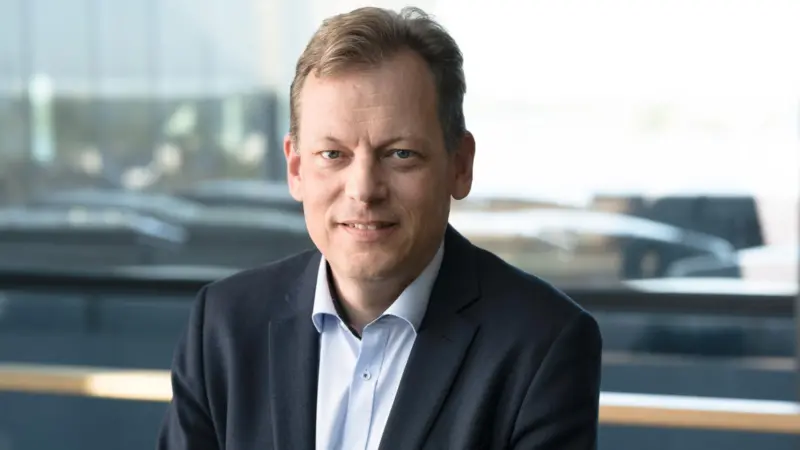
Speaking exclusively to The Motorship, Shaun White, managing director of Foreship UK, says the industry is moving beyond isolated technology upgrades towards a more holistic approach to ship technology and lifecycle optimisation.
“We’re trying to make sure that if we are looking at embedding multiple technologies, that they work together and don’t compete,” says Mr White.
“If we’re saving energy over here, but creating penalties elsewhere, then we’re not optimising the ship as a whole.”
Integrated approach
Part of RINA, Foreship has built its reputation on large-scale cruise and ferry projects, but Mr White says the consultancy is increasingly focused on helping owners navigate uncertainty around alternative fuels, electrification and long-term vessel lifecycle strategy.
The company’s approach centres on integrating hull form, operational profile, electrical load balance, HVAC systems, propulsion and fuel selection from the earliest concept stage.
According to Mr White, the goal is not simply to install new technologies, but to understand how every onboard system interacts throughout a vessel’s operational life.
“We’re dealing with floating power plants here in ships,” he says. “As a self-contained power generation and distribution system, any improvement we make should ultimately reduce the vessel’s overall electrical demand.”
That philosophy is influencing both retrofit and newbuilding projects across Foreship’s portfolio. Mr White says many ships have drifted significantly away from their original design parameters after years of operational changes, itinerary adjustments and onboard modifications.
“Ships typically over five to ten years are not operating how they were originally designed,” he says. “The world is changing, the way the ships are being used is different and therefore the plant is maybe no longer optimised.”
As a result, Foreship increasingly advocates continuous operational analysis supported by digital modelling and long-term performance monitoring.
Digital future
Mr White believes digital models and advanced operational data analysis will become central to future vessel design and optimisation strategies.
“When we have a digital representation of a ship and the ships systems,” he explains. “We can understand how that ship’s performing today and predict how it will perform tomorrow using its operational data.”
Foreship typically requests at least one year of operational data at the start of any major optimisation work. This allows engineers to model vessel performance under varying weather conditions, itineraries and operational modes.
According to Mr White, that data-driven methodology is becoming increasingly important as shipowners attempt to balance compliance, operational efficiency and future fuel readiness.
“Electrification really does help us because you can modularise the energy system,” he says. “You can swap in and swap out different energy sources.”
Award-winning design
One of the clearest examples of this strategy was Foreship’s award-winning ammonia-fuelled container ship concept developed with Seaspan Corporation and partners at the Mærsk Mc-Kinney Møller Center for Zero Carbon Shipping.
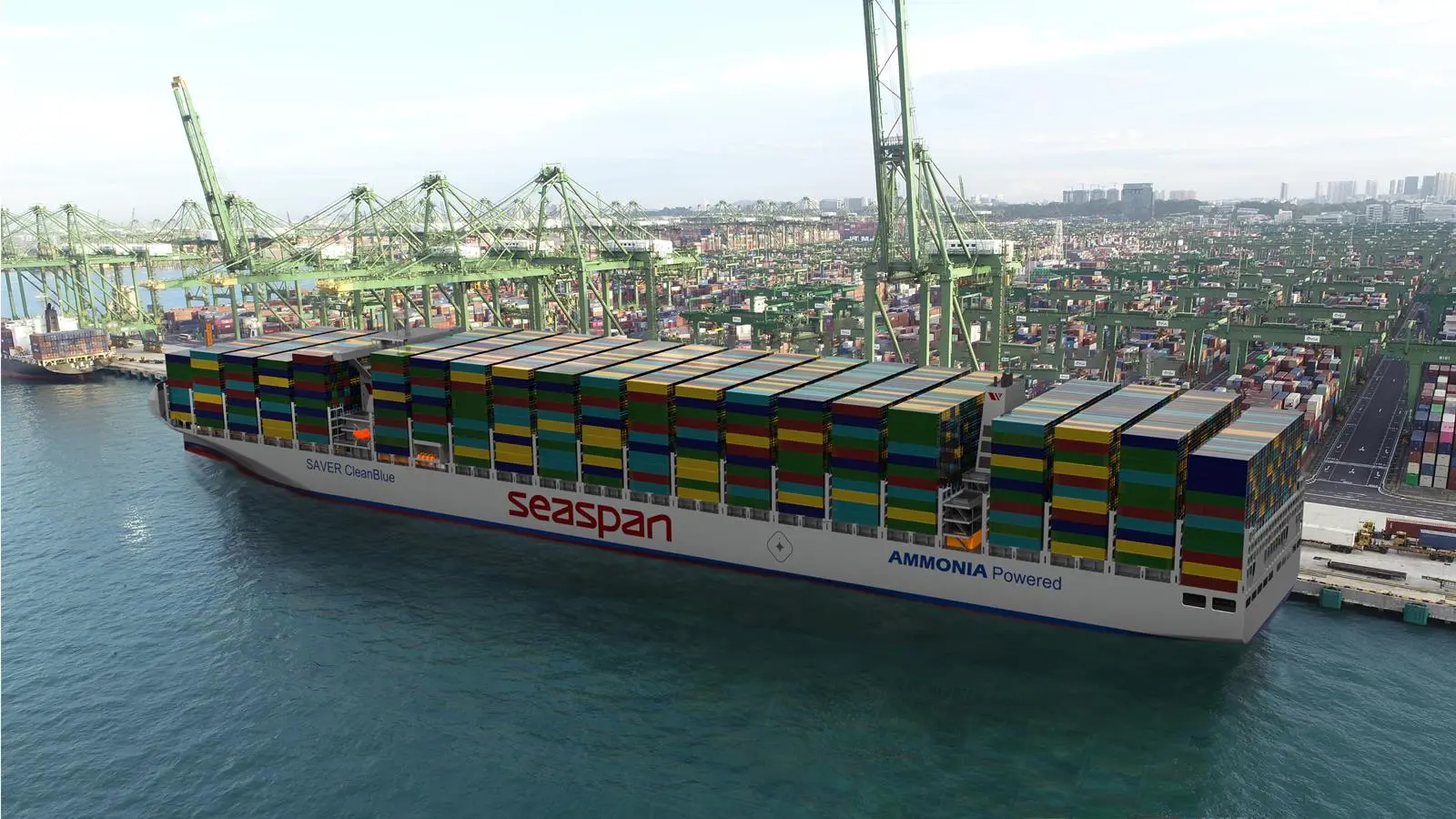
The project examined the feasibility of using ammonia as the primary fuel for a deepsea container vessel operating between Singapore and Northern Europe.
Mr White, who led the project from Foreship’s side, says the work highlighted the complexity of integrating alternative fuels into conventional commercial ship designs.
“Alternative fuels have a major impact on the traditional design of these vessels,” he says. “Their energy density is generally less than conventional fuels and therefore they need more storage capacity.”
The design process involved extensive iteration around fuel tank sizing, safety zoning, range/endurance requirements and cargo optimisation.
Foreship evaluated multiple fuel storage arrangements, including positions below the deck house, adjacent to the engine room and and split-tank configurations, while maintaining commercial cargo capacity.
Safety as paramount
Crucially, the project was not intended as a purely conceptual exercise.
“This wasn’t about creating a 3D rendering that was futuristic,” Mr White says.
“This was about creating a design that actually could be taken forward by a shipyard.”
The vessel eventually secured Approval in Principle from ABS after approximately one year of development work, supported by detailed naval architecture studies, electrical load analysis and extensive safety case assessments.
Safety, Mr White stresses, must remain central to any future-fuel vessel design strategy.
“With any alternative fuel, safety becomes a primary driver,” he says. “It’s not just a compliance afterthought. It needs to be in the essence of the design right from the beginning.”
That included detailed hazard studies examining bunkering operations, high-pressure fuel systems, fuel processing equipment and potential environmental risks associated with ammonia handling.
Despite the technical success of the project, Mr White acknowledges that infrastructure uncertainty continues to slow commercial adoption of many alternative fuels.
“We need to look at not just the vessel, but also the shoreside infrastructure as well,” he says. “That’s going to be a common theme with a lot of future fuels.”
The importance of conversion
Alongside newbuilding concepts, Foreship is also heavily involved in retrofit and conversion projects, particularly around electrification and ship energy management.
Mr White says hybridisation is now well established in the ferry sector, while battery integration and energy management architectures are becoming increasingly sophisticated.
“Energy management is becoming more and more important in terms of supervising and managing all of those interacting systems,” he explains.
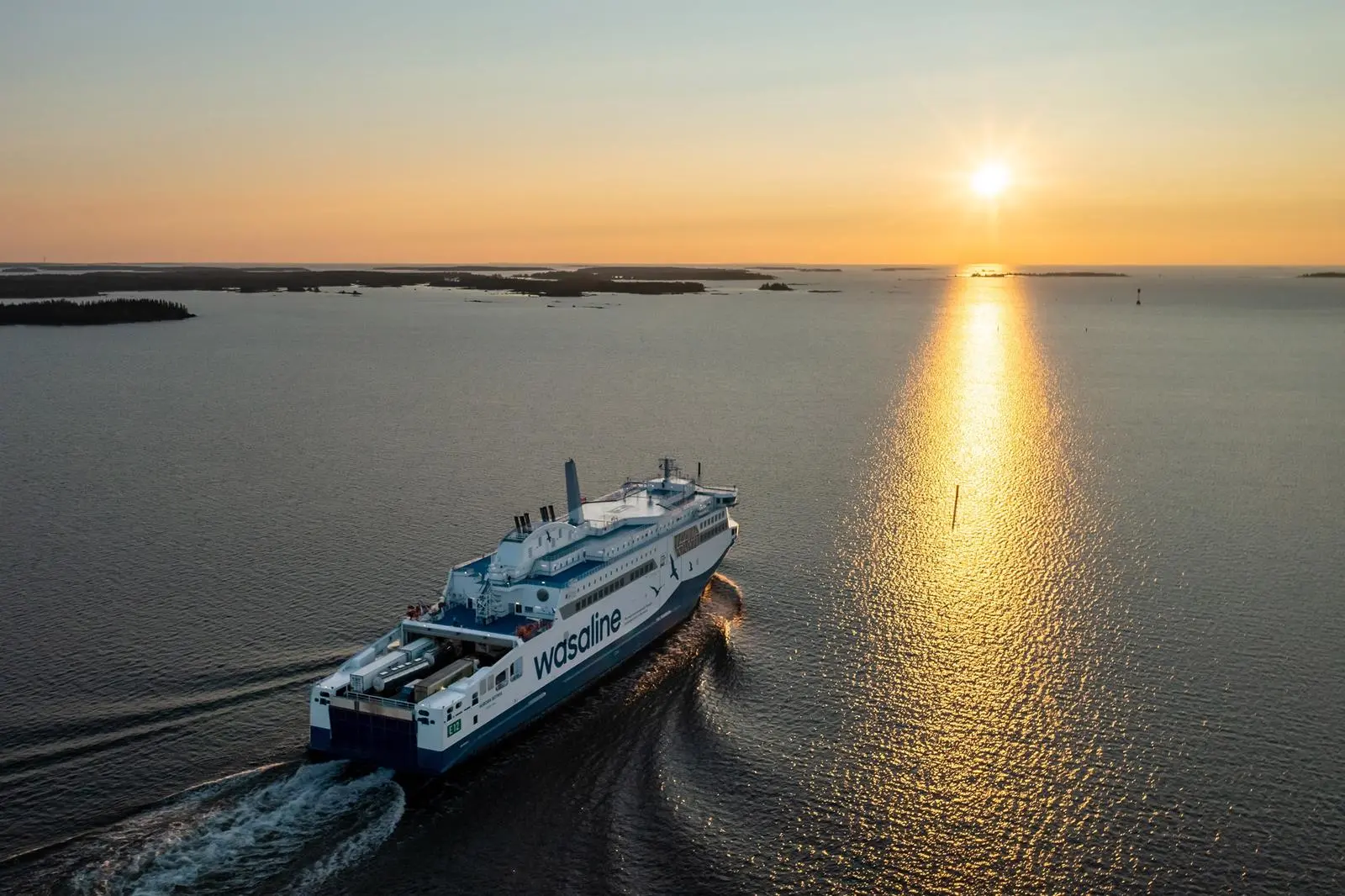
A key example is the Aurora Botnia ferry operated by Wasaline, where Foreship supported one of the world’s first dual-chemistry marine battery installations.
The project integrated different battery chemistries alongside conventional prime movers through an advanced ship energy management system capable of optimising how each energy source is deployed.
The project required close coordination between the owner, battery supplier AYK, energy management specialist Wärtsilä and Foreship’s naval architecture team.
Mr White says integration remains one of the biggest challenges facing ship technology deployment today.
“You can have a great technology and if it’s not integrated properly, it will not function as intended,” he says. “These batteries need power, cooling and space and you can get that part very wrong.”
Foreship sees ferries as a particularly valuable proving ground for future ship technology because their operational profiles are predictable and data-rich.
“Ferries are a really good use case because they tend to be point to point and therefore the itinerary and operational profile is really well understood,” Mr White says.
That operational consistency allows energy management systems to optimise battery charging, shore power integration and engine loading with far greater precision.
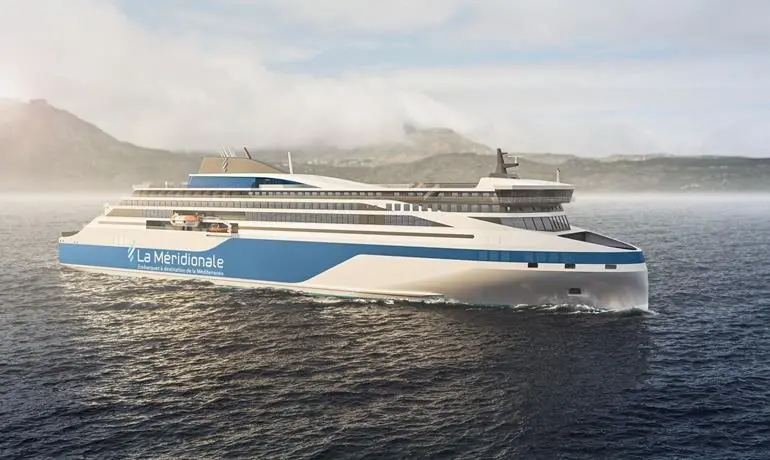
Foreship is also applying similar principles to dual-fuel ferry projects such as La Méridionale’s ropax newbuilding programme, where battery energy storage systems are being used to support zero-emission port operations.
“We can charge the batteries at sea, use excess power from the engines, then shut the combustion system down in port,” Mr White explains.
Lessons learned
According to Mr White, the wider commercial shipping sector is beginning to adopt lessons learned from ferry electrification, particularly around port emissions reduction and energy optimisation.
Cruise shipping remains more challenging due to highly variable itineraries and inconsistent shoreside infrastructure, particularly in regions where grid infrastructure remains a challenge.
However, Mr White says operators have already made major gains by reducing hotel load requirements and improving onboard energy efficiency.
Foreship is also heavily involved in shore power retrofit projects for existing cruise vessels as European regulatory pressure intensifies ahead of planned 2030 shore connection mandates.
Beyond technology integration, Mr White says one of the industry’s biggest challenges remains balancing short-term retrofit decisions with long-term fuel pathway uncertainty.
For retrofit projects, the priority remains immediate compliance with regulations such as Carbon Intensity Indicator (CII) reporting requirements, combined with commercially viable efficiency upgrades.
“What owners want is proven technology that already complies with class and regulations and gives an immediate benefit in reporting, taxation and fuel cost,” he says.
For newbuildings, however, owners are increasingly forced to make strategic long-term decisions despite ongoing uncertainty around future fuels.
“On a newbuild, you really are making long-term decisions,” Mr White says. “Adaptability becomes critical.”
That adaptability, he argues, will increasingly depend on modular ship technology architectures that allow future fuel solutions and energy systems to evolve over time.
“We may build ships with modular packages that can be swapped in and swapped out,” he says. “That’s going to be really interesting for future vessel design.”
Widening the net
While Foreship remains closely associated with cruise and ferry sectors, the company is now expanding into wider commercial marine markets following its acquisition by RINA.
Mr White says the company used this year’s Seawork exhibition to strengthen engagement with the UK maritime sector and target emerging electrification opportunities in workboats, service operation vessels (SOVs), crew transfer vessels (CTVs) and fishing vessels.
“We have a very ambitious plan to expand beyond traditional cruise and ferry markets,” he says.
“These vessels are electrifying very quickly, so a lot of what we’ve talked about around batteries, electrification, shore power and energy management systems is happening in that market now.”
Foreship also plans to expand further into the yacht sector, complimented by RINA’s broader classification and advisory capabilities.
Mr White adds that the company is actively growing its UK engineering presence to support future demand and is significantly increasing the size of its UK team this year.
Related Articles
 CONVENTIONAL FUELS & OILS
 GENERAL NEWS
 INTERVIEWS