



Bionic coating could make ships more efficient
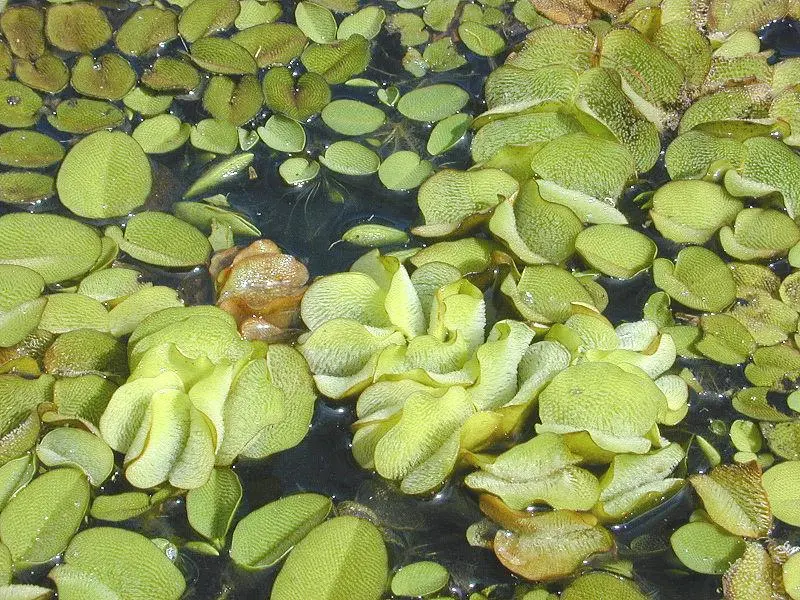
Now, a group of German material research scientists have unlocked a secret that could radically improve fuel consumption and it’s all down to the marvellous properties of one small plant. Their results could possibly be used for the construction of new kinds of hulls which glide through the water in an envelope of air resulting in lower fuel consumption due to decreased friction.
The work by researchers at the Universities of Bonn, Rostock and Karlsruhe centres on the water fern salvinia molesta. This plant fern surrounds itself by a layer of air that enables it to remain dry when underwater. While it has been understood for some time that this is a result of tiny hairs on the plant’s leaves which trap air, the problem in mimicking this phenomenon has been to make the layer stick. When replicated, this superhydrophobic surface disappears after a couple of hours in moving water but salvinia molesta can stay ‘dry’ even when submerged for weeks.
What the researchers have now discovered is how the plant manages to keep this air filled layer in place using nature’s version of a staple. “We were able to show that the outermost tips of these whisks are hydrophilic, i.e. they love water,” professor Wilhelm Barthlott from the University of Bonn explains. “They plunge into the surrounding liquid and basically staple the water to the plant at regular intervals. The air layer situated beneath it can therefore not escape so easily.”
This property is of interest for many applications such as rapidly drying swimsuits, highly efficient raincoats or simply for fuel-efficient ships. The possible applications for this bionic technology are enormous, particularly in shipping where low-friction hulls could be modelled on the water fern.
The huge technical potential of such a product could be realised on container ships where more than half of the propulsion energy is lost through hull friction. With an air layer this loss could be reduced by ten percent according to the researchers’ estimate. Since ships are huge fuel guzzlers, the total effect would be enormous. “Probably one percent of the fuel consumption worldwide could be saved this way”, is professor Barthlott’s prognosis. “Surfaces modelled on the water fern could revolutionise shipbuilding,” professor Dr. Alfred Leder from the University of Rostock concurs.
“After the solving of the self-cleansing of the lotus leaf twenty years ago, the discovery of the salvinia effect is one of the most important new discoveries in bionics,” professor Thomas Schimmel from the University of Karlsruhe says.
Related Articles
 ALTERNATIVE FUELS & LUBRICANTS
 GENERAL NEWS
 GENERAL NEWS