



NPCC to build derrick-lay vessel
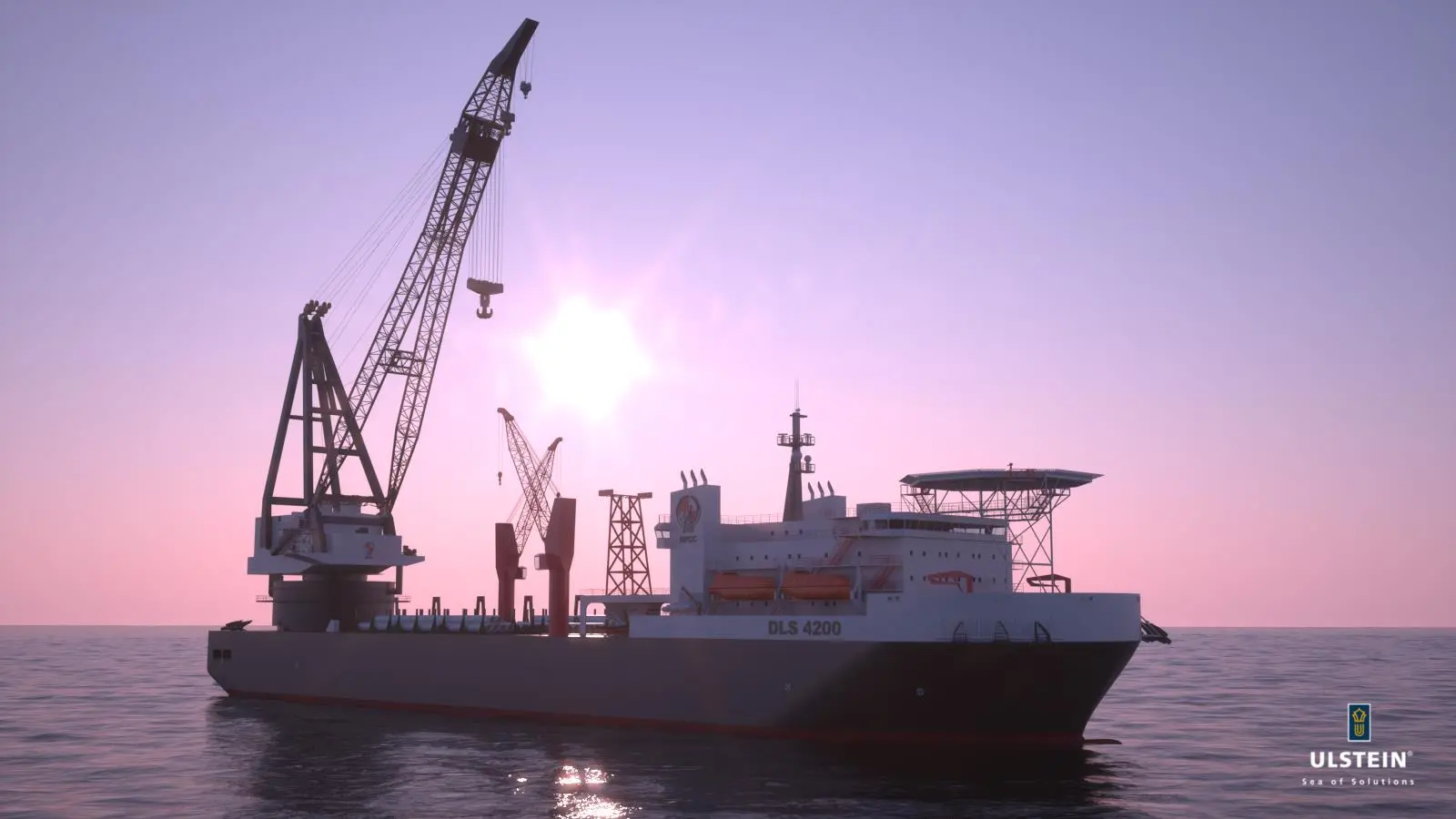
DLS 4200 combines double joint S-lay capabilities with a 4,200 short ton (3,800 tonnes) lifting capacity and is designed to operate worldwide and is equipped with a 10-point mooring system to operate in the Arabian Gulf and India. To meet future market requirements, the design has already been prepared for DP2 upgrade to minimize the technical impact and shorten the upgrade process.
“After closely working together with NPCC in the design of the vessel, it is very rewarding to see the design now being put into reality by awarding the construction contract to ZPMC. We are confident that the vessel will prove to be a very competitive and valuable asset to NPCC to meet their strategic goals”, says Bob Rietveldt, managing director at Ulstein Sea of Solutions.
The DLS 4200 is designed aiming for maximum efficiency and cost effectiveness and features a center double joint firing line to optimize pipelaying operations that are not hampered by vertical motions due to roll. USOS’ distinctive feature of separating the pipelay functionality from lifting operations is also incorporated in the DLS 4200. The firing line and the double joint fabrication areas are located on the freeboard deck, which is completely covered by the main deck. This provides a clean and dry environment for the pipelay equipment and an unobstructed main deck for lifting operations.
The Amclyde Model 80 main crane is capable of lifting 3,800 tonnes at a 125 ft radius over the stern in tie-back mode and 3,800 tonnes at 95 ft without tie-back. In full revolving mode the crane is able to lift 3,300 tonnes with an outreach of 130 ft.
The 196.9m long, 43.4m wide vessel features two fixed pitch shaft driven main propellers of 5,500kW each which will allow for a cruising speed of 13 knots. The diesel electric power plant will comprise four 5,530kW gensets. To upgrade the vessel to DP2, two additional 5,530kW gensets will be required to drive five retractable azimuth thrusters of 3,500 kW.
Related Articles
 ALTERNATIVE FUELS & LUBRICANTS
 GENERAL NEWS
 GENERAL NEWS