



Small high speed range has SOLAS approval
The SOLAS range, with additional US EPA and EU MED approvals, comprises three base engines, available in 14 output ratings from 110 bhp to 435 bhp. All are in-line turbocharged, aftercooled, four-valve-per-cylinder diesels with common rail fuel systems and electronic management modules. The engines are suitable for conventional inboard, sterndrive, and waterjet propulsion.
The SOLAS engines are based on the standard D3, D4 and D6 engine designs with a SOLAS kit mounted and tested in the factory before delivery to boat builders. The kit includes a shut off valve for crank case ventilation and a tilt switch, to be mounted on the engine room bulkhead.
The 5-cylinder D3 is the smallest in the range with 2.4 litre displacement, and a variable diameter turbocharger for increased torque throughout the speed range. Its low weight, of only 260 kg, makes it particularly suitable for lifeboat and rescue craft use. The 4-cylinder 3.7 litre D4 is available in a standard turbocharged version and a high-power version with a mechanical compressor. The D6 is the same basic engine as the D4, but with six cylinders offering the same features in a larger 5.5 litre displacement.
All engines complying with IMO, EU RCD and US EPA tier 2 emissions regulations (R5 and/or R4).
Volvo Penta says that it has delivered over 1,000 SOLAS approved engines for various rescue, MOB lifeboat and RIB applications; the company says the latest range will continue to add safety and functionality to the standard smaller high speed engines.
The D5 engine is now being made available in a fully ATEX certified version for use in hazardous oil and gas industry applications. Conversion and approval of the engine is carried out by Pyroban.
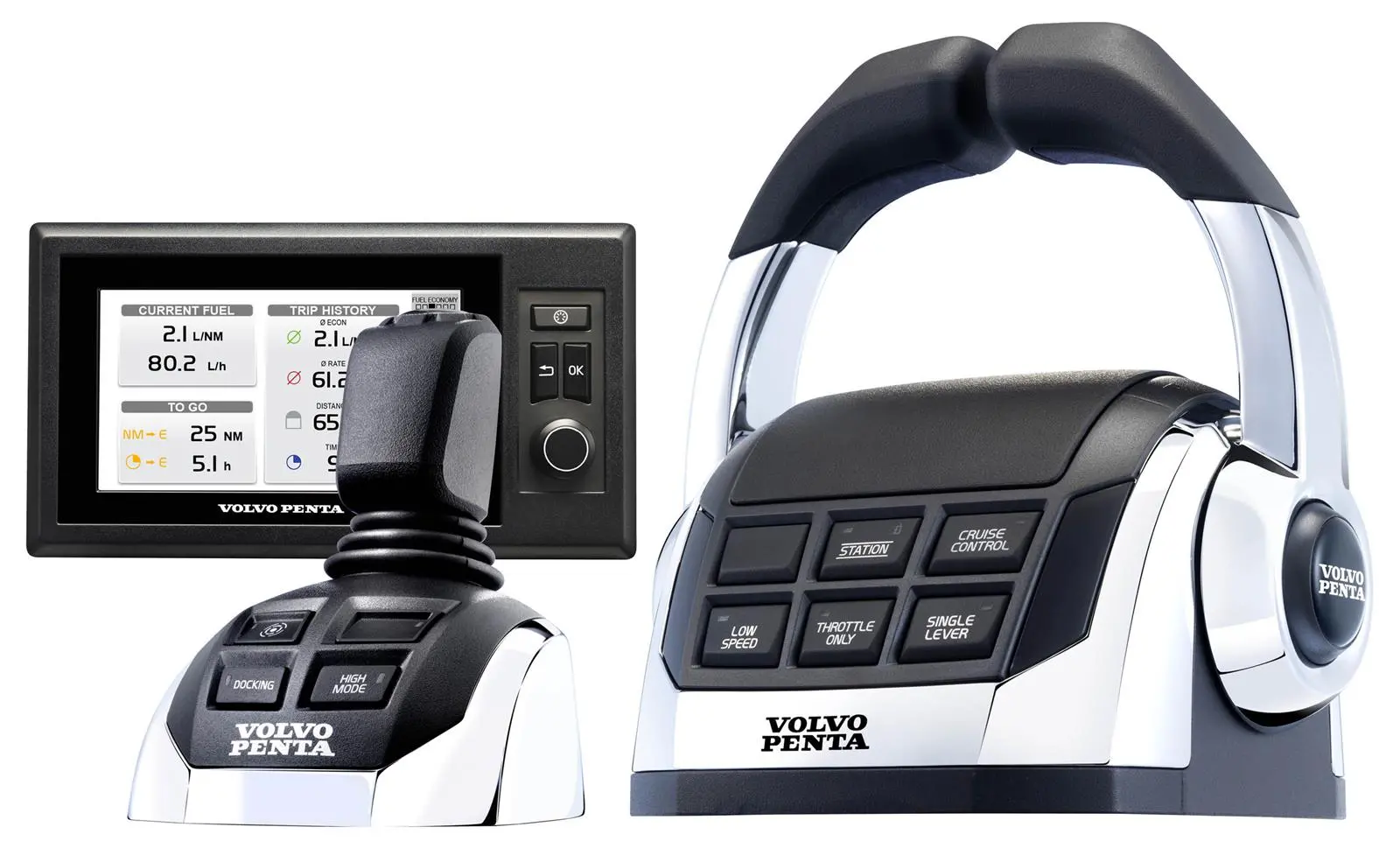
The Volvo Penta range of engines and propulsion units is supplemented by the new EVC-D, described as the fourth and latest version of the company’s electronic control system for throttle, shift and other functions.
The new controls have been designed for robustness, with ergonomic styling. From the push-button panel, the helmsman can select the cruise control, single-lever mode, low-speed mode, power trim assistant, or throttle only mode. With multiple helm stations, each control station can be activated and locked, preventing erroneous activation of another station.
The main control lever is designed for easy access to the buttons on the back of the control head: fine tuning of speed while in cruise control and (for twin sterndrive) individual starboard and port trim buttons. The system is compatible with all Volvo Penta IPS, sterndrive and inboard shaft systems. For multi-engine installations, a single lever mode allows all engines to be handled with one lever, making it simpler to fine-tune engine speed, and automatically synchronise engine rpm to reduce vibration and noise. This feature is available at any engine speed and is easily turned on or off via a function button on the control.
In cruise control mode, all engines are automatically synchronized to run and hold the same rpm. The driver can then change the chosen rpm in small increments with a +/- button on the front of the control. This allows simple adjustment to the exact speed limits, while at high speed, the driver can fine tune for maximum economy – checked via the trip computer – or comfort.
The EVC-D is fully classified and approved for commercial operations, and is designed for easy installation with the electronics integrated in the control unit, reducing wiring and improving reliability.
Related Articles
 PROPULSION
 GENERAL NEWS
 GENERAL NEWS