



Sinopacific applies LTV shipbuilding concept
To meet this objective, Sinopacific Shipbuilding Group in Shanghai recently proposed a new load-to-value (LTV) concept, a load efficiency factor that indicates such trend in the shipbuilding industry. The LTV indicates the relationship between load capacity, fuel consumption, price, emissions and the operating costs of ships. This indicator plays a significant role in comparing load efficiency of different kinds of ships.
“While implementing our recent projects, we found that the LTV indicator corresponds to the expectations of a growing number of clients and is being integrated into their selection criteria for deciding on ship purchases. More factors related to fuel consumption and emissions will be taken into considerations as the shipbuilding sector marches forward to low-carbon innovation,” said Simon Liang, CEO of Sinopacific Shipbuilding Group.
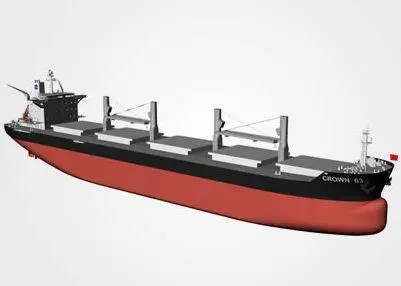
Crown 63, a new type of bulk carrier designed and built by Sinopacific, embodies the perfect application of the LTV concept in shipbuilding as the world’s new generation of Supramax bulk carrier. Compared with existing 58,000 dwt Supramax bulk carriers, Crown 63 delivers a 9% increase in load capacity and 13% saving in fuel consumption, and is capable of maintaining the same speed, thereby delivering maximum loads with minimum fuel consumption.
Crown 63 shows its reduced emissions and environmentally-benign nature by having received BV’s Green Passport and fulfilling the requirements of the latest rules and regulations from IMO, such as PSPC, ballast water management, and the revised MARPOL 73/78 for NOx emissions and the EU SOx control. These advantages of the Crown 63 are reflected in the comprehensive LTV assessment which, the shipbuilder claims, is rapidly gaining recognition as a powerful indicator to measure the load efficiency of ships.
Sinopacific has finished the detailed design for Crown 63 and has already 16 vessels on order. The steel cutting for the first unit is expected to start in March 2011 and is scheduled for delivery in the first quarter of 2012.
Related Articles
 ALTERNATIVE FUELS & LUBRICANTS
 GENERAL NEWS
 GENERAL NEWS