



Popular engine upgraded
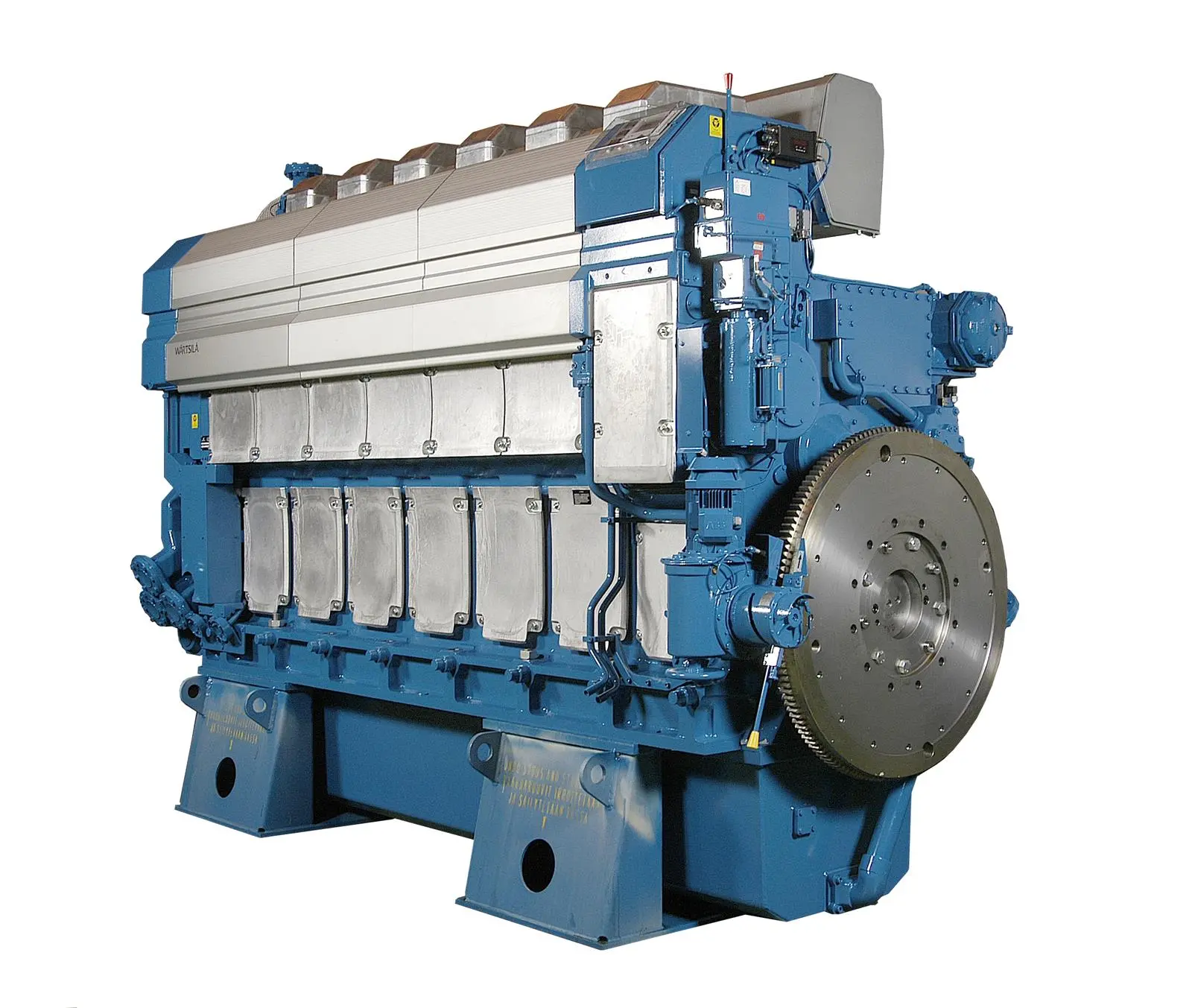
First introduced in the 1980s, and with more than 4000 units sold to the marine industry alone, the engine, known as the Wärtsilä 32, has, according to the company, proven to be a highly efficient and reliable solution for a wide range of vessel applications. Wärtsilä believes that the latest version should expand the application range further still.
The engine has been widely used in both the marine and land-based power plants markets. In the marine industry the engine is used for both main engine and auxiliary engine applications. Wartsila points out that it is typically selected to power different types of tankers, container vessels, and offshore support and drilling vessels, while in the cruise and ferry sector, the Wärtsilä 32 is the most favoured engine of its size. In auxiliary electric production, the Wärtsilä 32 is widely employed in all vessel categories where high auxiliary load is needed.
The new upgraded version is available with an increased power rating of 580 kW per cylinder at 750 RPM (50 Hz version). This represents a 15% increase in power output over the earlier 32 engine, with no change in external dimensions. This increased output means that the Wärtsilä 32 now covers a power range from 3,000 kW to 9,300 kW. One area where the company believes that this new power output will be of particular interest is in the offshore drillship market. It is felt that in combination with Wärtsilä’s Low Loss Concept, the new engine can offer a powerful yet compact package for diesel electric propulsion.
Wärtsilä says that the 32 engine is fully equipped with all essential ancillaries, and has a thoroughly planned interface for the ship’s control system, which simplifies installation and aids reliability in operation.
The engine is able to operate efficiently and economically on low sulphur fuels (<0.1% S), making it suitable for operation in emission-controlled areas. It can be equipped with a SCR catalyst, such as the Wärtsilä NOR (nitrogen oxide reducer), which is claimed to reduce NOx emissions by as much as 95%. This means that the machinery already complies with the IMO Tier 3 emissions limits. Without the SCR, the standard Wärtsilä 32 will fulfil the IMO Tier 2 regulations. Fuel consumption efficiency is claimed to be “consistently excellent” with all fuel types and grades over a wide load range.
Announcing the introduction of the upgrade, Juhani Hupli, vice president, ship power technology, Wärtsilä Ship Power commented: “The Wärtsilä 32 engine has been the preferred choice of yards, owners and operators for several decades already. However, in order to ensure that our leading position in propulsion technology is maintained and strengthened, Wärtsilä is constantly seeking to improve and further develop its engine portfolio. This on-going development work enables us to offer our customers around the world, the very latest solutions. These solutions enable them to meet the challenges posed by rising fuel and operating costs, and increasingly stringent environmental legislation.”
Meanwhile, Wärtsilä has been awarded a contract to supply the propulsion equipment for a new research ship for the UK’s Natural Environment Research Council (NERC), which is to be built at the C.N.P. Freire shipyard in Spain.
The contract calls for Wärtsilä to supply a complete Low Loss Concept diesel electric system, including four 8-cylinder in-line Wärtsilä 20 generating sets, two main propulsion steerable thrusters, and a retractable bow thruster. The majority of the Wärtsilä equipment is due for delivery by the end of 2011, and the ship is scheduled to be launched before the end of 2012.
Wärtsilä claims considerable experience and market leadership in supply of propulsion systems for research and naval ships with low underwater radiated noise (URN) requirements.
The NERC co-ordinates research projects into major environmental questions. The new research ship will provide a platform for researchers to address pressing issues, by taking measurements from the oceans to provide critical data regarding climate change, marine ecosystems, and underwater seismic activity.
Special attention is to be paid to noise related issues on the main steerable thrusters in order to comply with low URN requirements. According to Wärtsilä, these include the modification of the shank and pod to give a more hydrodynamic shape, and a special fixed pitch propeller design adapted to the specific wake field of the vessel. In addition, the generator sets will be double elastic mounted to ensure low vibration transmitted to the ship structure. The Wärtsilä Low Loss Concept diesel electric system will reduce electrical losses, which in turn reduces the power requirement, and hence CO2 emissions. The main steerable thrusters are to be Ice Class 1D compliant.
NERC’s existing vessel, RRS James Cook, delivered in 2006, is also fitted with Wärtsilä propulsion equipment, and the ship’s silent propellers were supplied by Wärtsilä in France. The successful performance of this equipment was considered a key factor in the award of the latest contract.
Another application foreseen for Wärtsilä’s medium speed engines is the US riverboat industry, which the company says is facing challenges as the result of progressively severe restrictions being imposed on engine emissions. Further reductions will be needed when the ECA regulations take effect in August 2012.
Wärtsilä says that its dual-fuel engine technology would enable towboats used for this river traffic to meet current and future environmental legislation, while creating operational cost savings for the operators.
The key driver to this need for change is the lower US EPA (Environmental Protection Agency) limits in sulphur content levels in fuel used. The EPA’s limits are tighter than the global standards, and now call for a maximum sulphur content of 1%. The bottleneck to the adoption of these standards is the limited refining capacity for low-sulphur fuel. Not only is this creating a shortage of supply, but the demand is leading to substantially higher fuel prices, which in turn is impacting the operational revenues of the operators. Fortunately, the USA is rich in natural gas resources. This means, says the company, that natural gas is abundant, secure, available, and affordable at relatively low prices.
John Hatley, vice president, ship power, Wärtsilä in North America, notes that: “This is an exciting time of change for the towboat industry, with natural gas powered engines providing a huge step forward. Wärtsilä is very pleased to be working to make this key player in America’s transportation system, both ‘greener’ and more economically viable.”
Wärtsilä has co-operated with US naval architecture firm Ship Architects to develop a new concept of towboat design that employs Wärtsilä 20DF and 34DF dual fuel engines for propulsion. The inland river towboats of North America have been built to essentially the same design for the past 65 years or more. The accepted norms for propulsion, hull design characteristics, engine, and particularly fuel selection, have continued unchanged from one decade to the next. That is, until now, says Wärtsilä.
Related Articles
 PROPULSION
 GENERAL NEWS
 GENERAL NEWS