



System automates regulatory form-filling
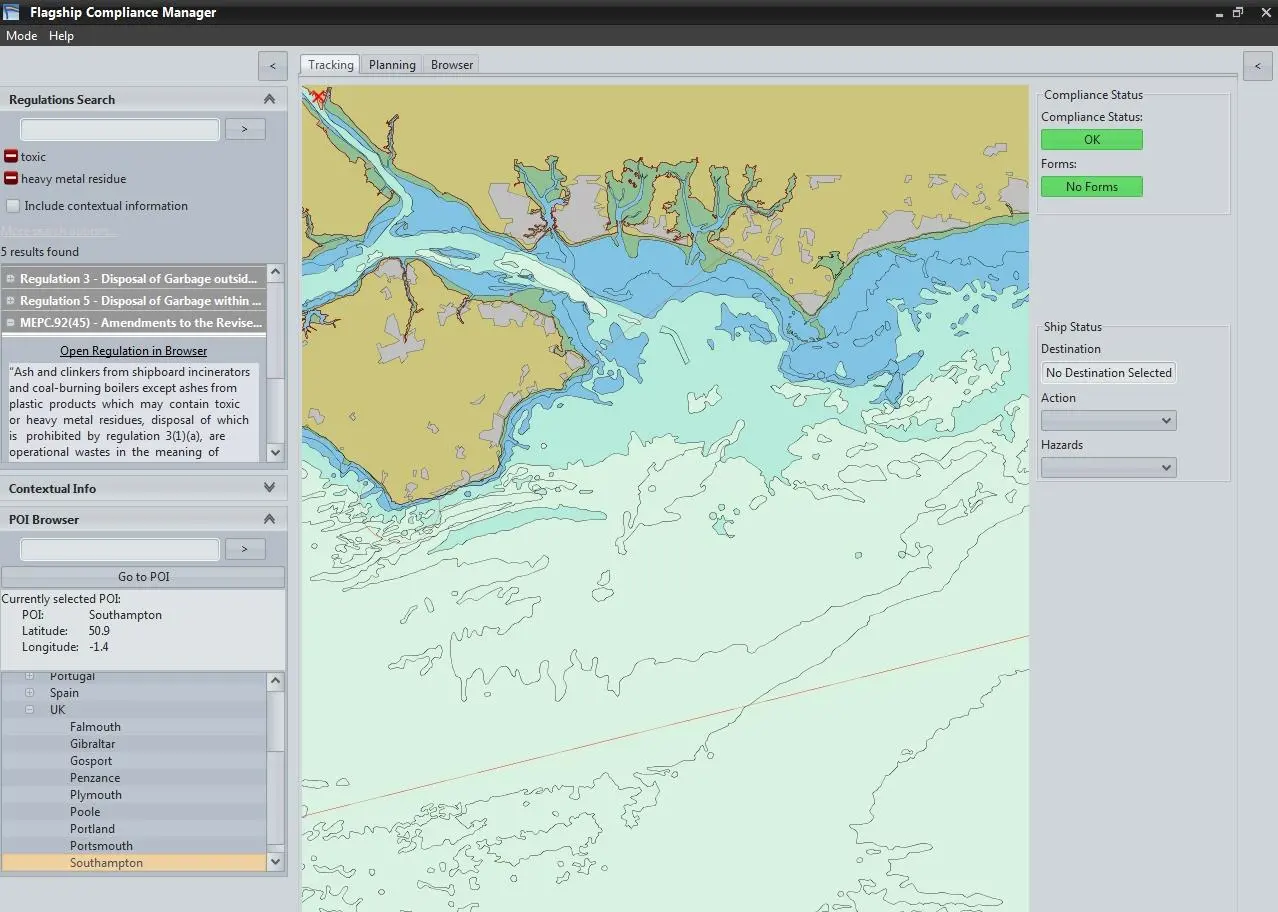
The BMT-led, part EU-funded Flagship project has developed Flagship-RCS (regulatory compliance support) in order to reduce the current administrative burden on ship owners and operators. BMT estimates that use of the system could save 50% of time, compared with conventional text based search methods, which if universally adopted by European ships would represent a total cost saving of €8.94 million per year. Other partners in the project included Regs4ships in the UK, Danaos and NTUA in Greece and TEMIS in France.
At the core of Flagship-RCS is an electronic regulations database, supported by a regulations search system, regulation suggestion, automated compliance checking, form filling notification and assistance, and a lexicon of maritime terms. The system enables an individual vessel to call down only the regulations that are directly relevant to its classification and location. Searches are based on meaning rather than on the individual word so, for example, a search on the word ‘environment’ would deliver regulations relating to pollution, hydrocarbon and oil, as well as those under the generic ‘environment’ description. Based on the course that has been plotted for a vessel, Flagship-RCS will identify and flag imminent changes in regulations as a vessel approaches and enters waters under different jurisdiction.
The system will highlight if a vessel is definitely breaking a regulation, for example a speed limit, and can advise against certain actions for example: ‘don’t clean bilge tanks here’. It has been designed to automatically complete relevant docking forms and to recognise information that is entered repeatedly over sequential voyages, allowing it to auto-suggest a partially completed form for the captain to check, amend and sign-off.
Luke Speller, senior research scientist at BMT Group Ltd and project leader explains: “There are currently hundreds of thousands of shipping regulations including class, territorial and local variations that ship owners and operators must comply with. Being caught in breach of these regulations can cost a ship owner tens of thousands of pounds in fines. The current regulatory framework makes each ship owner or operator responsible for assembling and complying with all the regulations related to the voyages and stop overs that any of its ships make. Compliance can be a very onerous and expensive process.”
Flagship co-ordinator Herman de Meester said: “The shipping industry always works hard to meet the twin objectives of reducing the risk and the environmental impact of the world’s commercial fleet, whilst generating the opportunity for real commercial benefits. Flagship-RCS is an excellent example of the industry collaborating to achieve just such purposes.”
Related Articles
 ALTERNATIVE FUELS & LUBRICANTS
 GENERAL NEWS
 GENERAL NEWS