



Shipping is clean – but needs to clean up further
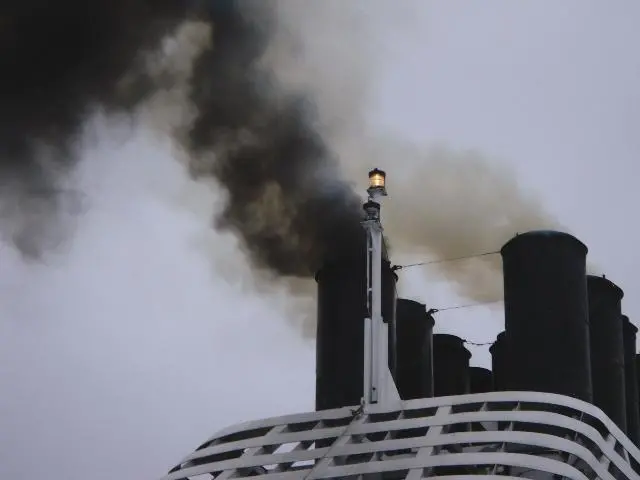
With new sulphur limits coming into force during 2010, shipowners will be forced to use lower-sulphur distillate fuels for at least part of the time. Quite apart from the potential difficulties of using two potentially-incompatible types of fuel, which are considered elsewhere in this review issue, many experts see supply problems as the sudden surge in demand for MDO and MGO may exceed refining capabilities in the area concerned. So price rises seem inevitable, and these will impact on other users of distillate fuel, not just shipping.
Taking the wider emissions-related viewpoint then there are further implications. The extra refining process will create extra carbon emissions – some say resulting in a net increase in harmful effects. Transporting the refined fuel from refineries elsewhere to meet the demand in the ECA zones and European ports and inland waterways will also create more emissions. Finally, if residual fuels – i.e. the left-overs from the refining process – cannot be burned in ship engines there could be a disposal problem.
So in the longer term a wholesale switch to distillate fuels in the growing numbers of controlled waters looks like a bad idea, to say the least. So attention again turns to exhaust-gas after-treatment, i.e. scrubbers.
The industry has several alternatives, with systems using seawater, fresh water, dry chemicals, or combinations of more than one of these. And although the regulations governing sulphur emissions appear at first sight to mandate the use of fuels with low sulphur content, the scrubber industry believes that the rules are worded so that approved exhaust gas treatment systems will be an acceptable alternative.
The scrubber industry is still in its infancy, though advancing rapidly. All of the larger systems so far tried at sea have been on passenger or ro-ro vessels, with Krystallon having experimental systems onboard a ferry in the English Channel and a cruise ship operating in Alaska. During 2009 these installations were joined by another, developed by Denmark’s Aalborg Industries in conjunction with MAN Diesel, on a Baltic ro-ro vessel, this being thought to be the first low-speed installation. A closed-circuit caustic soda system fitted on a Neste tanker by Wartsila and Metso Power became the first ship-borne system to receive certification from DNV. Some other smaller units have been fitted to large yachts.
There are many scrubbers operating as part of land-based power stations, but these do not suffer the same constraints as sea-going installations. Apart from the size, and the need to carry both ‘fuel’ for the scrubber itself and residual matter to be disposed of ashore, there has been some concern about the effect of discharge to the sea. These issues are claimed to have been addressed by Ecospec of Singapore, which uses a combination of seawater and chemical processes in a single, compact unit – known as CSNOx, to remove not only sulphur dioxide and nitrogen oxides but to reduce the carbon dioxide content of the exhaust gas. A land-based system has proved the principles, and a shipboard system is due to start trials with a view to obtaining type approval.
In the industry, Krystallon joined forces with Hamworthy during 2009, a move which should give the small company, formed as a joint venture between BP and those behind fuel testing specialist Kittiwake, access to worldwide production and marketing facilities. Since parting company with BP, Krystallon had been looking for a new partner, and its acquisition by Hamworthy would appear to make a lot of sense for both companies.
Scrubbers can also deal with particulates, which also came under the microscope in 2009 as the ‘visible’ part of ship exhaust emissions. Not only is the particulate matter harmful to health, settlement of the soot, particularly in busy harbour and coastal areas, causes further problems.
During 2009 the scrubber industry body, the EGCSA, highlighted the related ‘black carbon’ – another soot-like emission, but the much smaller particles act as a ‘greenhouse gas’. And shipping is a major source of black carbon. Some experts believe that a reduction in black carbon would have a far more immediate effect on reducing global warming than the carbon reduction measures currently being discussed. A switch to distillate fuel would not have any significant effect, and according to EGCSA it is not yet known if scrubbers can inherently reduce black carbon emissions, but black carbon in the comparatively clean post-scrubber exhaust gas could definitely be removed by a simple process such as filtration.
As this issue is being prepared, the UN Climate Change Conference (COP15) is starting in Copenhagen. Carbon emissions from shipping will almost certainly come under the spotlight, and it seems certain that the IMO, as a UN body, will be expected to come up with solutions. With several proposals on the table, involving either some form of carbon levy or taxation, or an emissions trading scheme, it is far too early to predict the outcome, but whatever happens it has to be global, workable, and it must not penalise shipping in comparison with other, less fuel-efficient, modes of transport.
Related Articles
 PROPULSION
 GENERAL NEWS
 GENERAL NEWS