



A greener diesel electric system
For over seven years the company has worked to develop a diesel-electric propulsion system with the goal of reducing the impact on the environment and improving the operating economy of ships. The system was patented in 2008, and Stadt says that interest in the new sustainable technology is increasing rapidly worldwide.
“This is sustainable technology, and we are definitely on track,” says Hallvard Slettevoll, president of Stadt.
The first installation of the new system was undertaken in 2008 on the seismic research vessel Sanco Star, and a further system has since been delivered for sister ship Sanco Spirit.
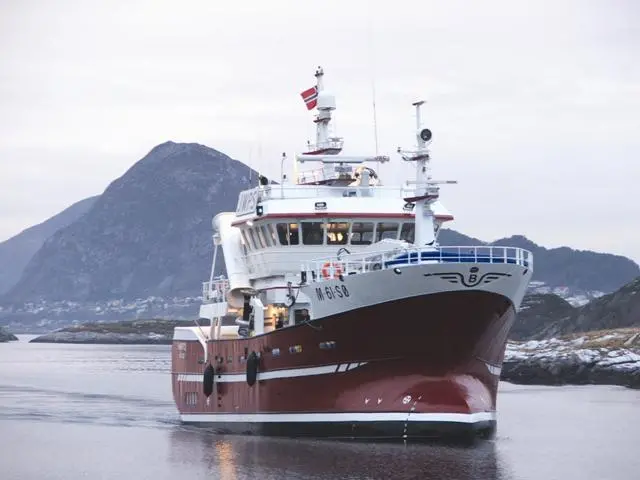
The first fishing vessel to benefit from the technology was the 27.4m purse seiner Harto, and recently the purse seiner Stokke Senior was the second fishing vessel to install the system.
Operating principles
Diesel or gas fuels the engines, which in turn supply electricity to electric motors that drive the propeller(s). The company says that it has documented proof that the new Stadt Stascho sinusoidal control technology provides lower emissions, and Slettevoll believes that with proper use, emissions can be reduced by as much as 80%. He underlines that both environment and operating economy will benefit from use of the system.
The technology is based on IGBT transistors and thyristors. The system also functions as an integrated part of the CP propulsion system, where optimum settings for speed and pitch can be applied. The system is integrated with the ship’s propulsion plant as well as the power generation system and its PMS. It has its own configurable power controller, touch screen and interface to other systems on the ship. The low losses allow the system to normally be air cooled, so the drives can be sited in the vessel’s control room. Total system losses are 5%-6%, compared with a typical PWM AC drive with losses of 13%-16%.
“We are focused on environmental and sustainable solutions. Minimising energy consumption helps to reduce emissions from other parts of the power plant. If you get into sustainable solutions, there will also be a better operating economy”, he says.
“We have extensive experience in developing electric propulsion systems, and have managed to eliminate several critical components to make them even better.” says Slettevoll. “In addition, we have removed the electronic noise, reduced the acoustic noise and cut energy losses to a minimum. It makes a great difference in terms of both maintenance and working environment. We are convinced that the solution for the future is electric propulsion system based on energy from either gas or diesel engines.”
According to the company, shipowners and designers are now focusing increasingly on sustainable solutions that can provide a long reliable lifetime, despite bad experience with complex technical propulsion solutions that have shown poor reliability. “The Stadt Stascho seems to be a perfect fit for these market needs”, says Slettevoll.
Operating experience
The seismic research vessel Sanco Star, the first vessel with the new technology, went into operation in 2008.
“Operating records document that the Stadt Stascho has been operating for more than 18 months without any problems. Only some minor adjustments have been necessary during the first months, and these have been taken care of by using telephone between the ship’s engineers and Stadt technicians. There has been no need to fly in specialists or parts from Norway. This is a clear indications that the new Stadt Stascho design intended for a lifetime of more than 25 years is quite realistic”, says Slettevoll.
So far, the operating experience of Harto shows that the system is reliable and reduces fuel consumption, thus climate and environmental emissions.
The maximum propeller output for the installation on Harto is 1100 kW. The graph shows the actual fuel consumption for the vessel. Consumption is below 50 litres/hour, as low as 35 litres/hour when searching for fish, and in the range between 65 and 90 litres/hour when fishing. Fuel consumption at the most cost-optimal speed is in the region of 125-150 litres/hour, including all consumers on board.
Worldwide plans
The company is currently working to establish a global distribution network.
“We recently signed an agreement with Norinco in Mumbai, India. Our representative has 10 offices in different locations in India. We are also in the process of signing a similar agreement in Italy, and are investigating the possibilities on other continents as well” says Slettevoll.
Interest in the new propulsion systems has grown rapidly. In Denmark a shipyard has entered into co-operation with the Danish Ministry of Fisheries, where plans for new projects include Stadt’s propulsion system.
The cruise industry has already showed an interest in the technology with several leading ship design companies reportedly having the new propulsion system in their makers’ list for new ship designs. According to Slettevoll, the ship designers consider the new Stadt propulsion system as a significant innovation.
To meet market demands, Stadt plans to double its staff in 2010. The company expects to have a total of 20 employees by the end of the year. Part of the development plan is to build a new office building with production and storage covering about 2000 m2 in Gjerdsvika.
Related Articles
 PROPULSION
 GENERAL NEWS
 GENERAL NEWS