



AC electric propulsion leads the way to noise compliance
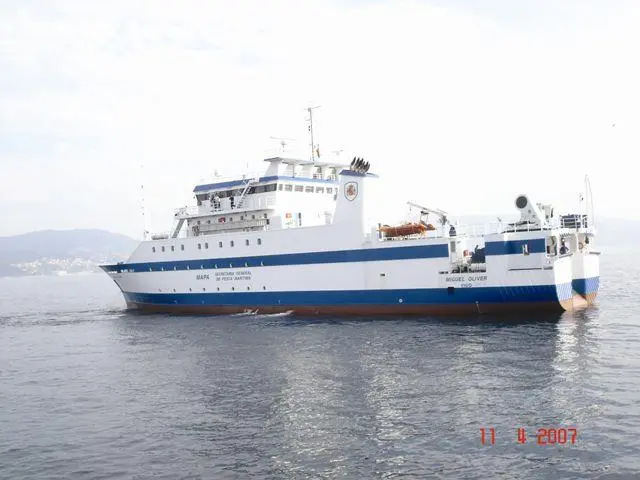
The aim of the standard is said to be to minimise the acoustic signature of these vessels. Hence, ICES 209 limits structure-borne noise levels for all onboard equipment. Ingeteam says that it is common practice for low-level acoustic signatures to be part of the design brief for military vessels, but similar standards are now being extended to the non-military ship industry. The company says that given the high levels of maritime traffic in some areas, scientists are warning about the impact of noise contamination in the marine environment. Thus technology designed to limit the effect of radiated noise in naval vessels is now being extended to commercial ships such as cruise liners and oceanographic vessels.
Up to now, vessels complying with ICES 209 employed diesel-electric propulsion systems using DC motors and converters. Ingeteam believes that there are potential noise and vibration benefits to be gained from using AC motors and converters, and has been investigating applications of this technology.
In the cruise market, several countries are considering regulations to limit radiated noise to a minimum in protected areas such as nature reserves, marine parks and river deltas, which Ingeteam considers reason enough to address this problem as thoroughly as possible.
With respect to oceanographic vessels, marine mammals and fish use sound similarly to sonar. Hence, research results depend largely on how “silent” a vessel is.
The International Council for the Exploration of the Sea (ICES) cooperative research report no.209 defines the underwater noise limit required by any oceanographic vessel used in fisheries research. Furthermore, the group of experts working on the ISO/TC8 project has recently opened the gateway to defining criteria and standards on underwater noise and its impact on marine life. Over the past 30 years, the ratio of propulsion power installed per vessel has almost doubled. Therefore, radiated noise has increased.
Two noise topologies have been examined. Structure-borne noise is caused by vibrations transmitted by machinery to the hull, this being the main conductor of radiated noise to the water. Airborne noise generated by the machinery in the various compartments causes vibrations in the vessel’s structure. Ingeteam considers that airborne noise is less significant than structure-borne noise providing that measures are adopted to enable noise levels to be within pre-established limits. To date, all ICES 209-compliant oceanographic vessels have only been built with diesel-electric propulsion systems with DC motors. Such is the case of the Celtic Explorer (2x1500kW, 0-180rpm) and the Miguel Oliver (2x1000kW, 0-178rpm) whose equipment was supplied by Ingeteam and associate electric motor manufacturing company Indar.
To successfully build an ICES 209-compliant vessel, a method must be established to ensure that the comprehensive management of noise is the main priority for all participants in the project; this should involve all parties (the shipowner, shipyard and suppliers of the main equipment such as the propeller, propulsion motor, converters, electric generators and diesel motors). The criteria regarding maximum noise levels induced by the propeller, electrical propulsion motors, electric generators and diesel motors must be defined and which in conjunction with the mobility criteria and validation tests on the vessel’s structure will make it possible to minimise radiated noise underwater.
In today’s market, there are many propulsion systems but it can be concluded that diesel-electric propulsion is the most capable of reaching low radiated noise levels besides having other advantages. Different topologies can be chosen in diesel-electric propulsion systems, such as DC/DC, AC/DC or AC/AC, all of which provide smooth speed control from low revolutions to full power.
Once the topology has been chosen, the first step is to design the key elements. One such element is the propulsion system’s motor converter set where the electromagnetic design, frame design, shaftline design and torque ripple minimisation must be designed and built in compliance with the ICES 209 standard.
Subsequently, the joining together all of these elements should be studied. At this stage, companies such as the motor and converter manufacturer Ingeteam need to be involved in order to assure the correct interaction between motor and converter, from the design phase to the equipment test phase, in order to optimise the system’s behaviour.
Once all of the components have been evaluated, both separately and as ship sets, their interaction with the vessel’s hull must be investigated. These examinations cover elements such as the fastenings of the converter and the motor to the vessel’s structure (resilient mounts are normally employed to ensure minimum transmission of vibrations to the water) or the type of motor coupling with the propeller transmission line.
Indar says that its experience is underlined by the choice of the company to supply induction motors for propulsion of several cruise ships with severe limitations in terms of structure-borne noise. Alongside this, Ingeteam’s record in AC conversion topologies and its control strategies to minimise torque pulses is claimed to open the gateway to using AC technology in future oceanographic vessels in accordance with the ICES 209 standard.
In conclusion, Ingeteam says that it is one of the few companies to demonstrate its technical capacity and noise control experience, which enables it to guarantee that the motor-converter package complies with the most stringent requirements of the ICES 209 standard.
Related Articles
 METHANOL
 MONITORING, CONTROL & DIGITALISATION
 MONITORING, CONTROL & DIGITALISATION