



Improved emissions performance
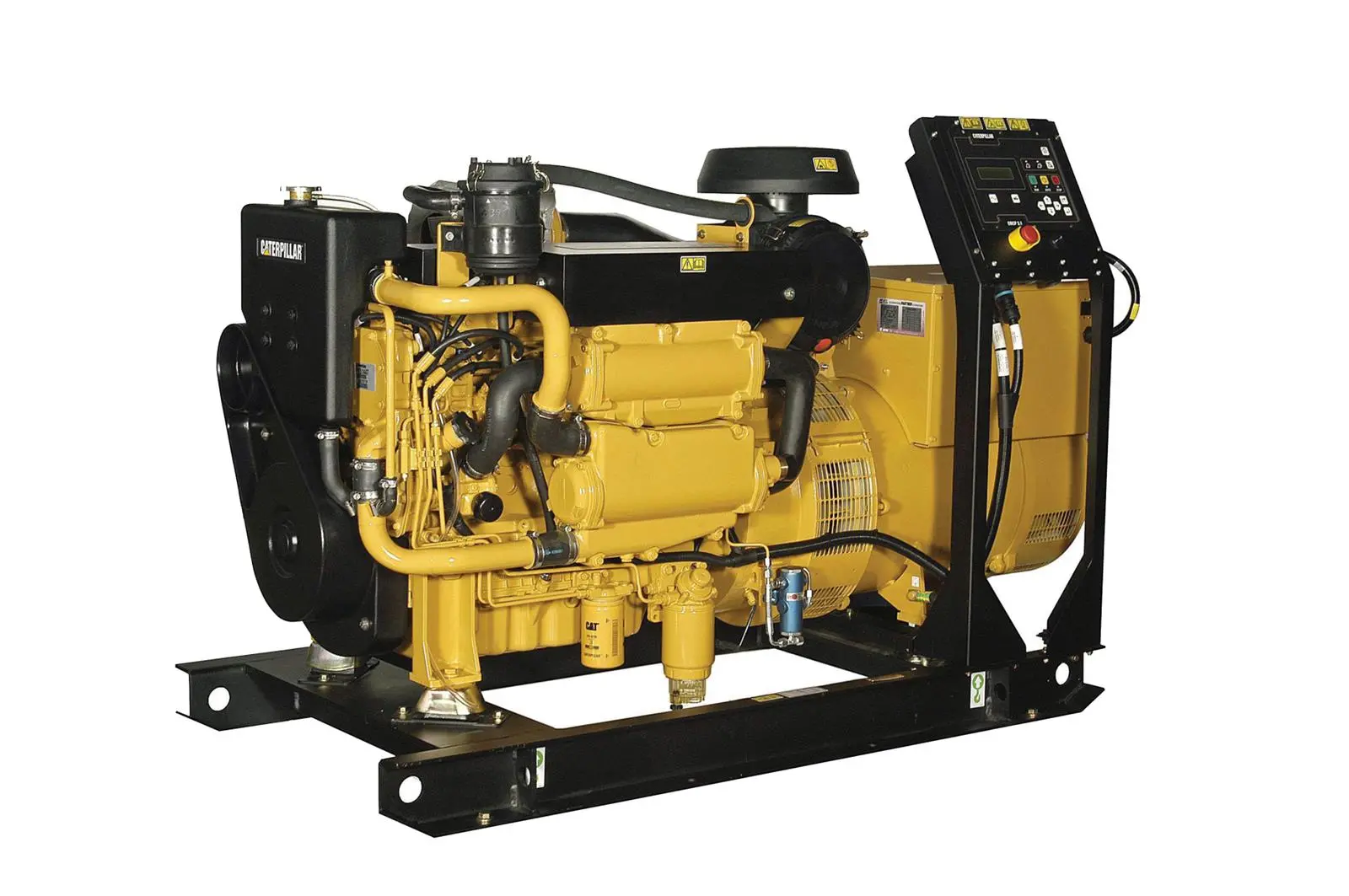
Caterpillar says that it has heavily invested in engine development and proprietary technologies to meet exhaust emissions requirements around the world without sacrificing engine performance to continue meeting customer needs.
The problem is made greater by the fat that the 3500 series has been on the market for a long time, with many engines still in operation that were produced before emissions regulations were in effect, Caterpillar Marine Power Systems, and its associated Caterpillar Emissions Solutions venture, have been working for nearly two years to design a range of engine retrofit kits. These kits will allow customers to upgrade mechanical unit injector (MUI) engines to reduce emissions to US Environmental Protection Agency (EPA) regulated levels. According to Cat, the EPA is now focusing on unregulated or prior-tier engines through the Marine Remanufacture Program.
The soon-to-be-launched series of kits will enable mechanical engines to be upgraded to either EPA Tier 1 emissions level or EPA Tier 2 emissions level.
“Caterpillar has been recognized for years as the most reliable engine manufacturer in the industry,” says P. Jaime Tetrault, product support director for CMPS. “This means that our customers are using engines day in and day out for decades with market leading quality and durability. While this is a great value to the customer, Caterpillar is committed to ensuring that customers have the opportunity to continue their reliable operations, comply with regulatory requirements, and reduce their overall environmental footprint.”
Testing of the engine retrofit kits has been taking place in the US, supported in part by government grants. This money has supported three private marine operators in the overhaul, upgrade, and testing of their engines all in verification of emissions reductions. The vessel operators have reported positive responses to the engines by reducing smoke and emissions output with positive impacts on vessel performance.
“Despite the variety of technologies which could be used to affect the requisite reductions in particulate matter, Caterpillar believes the engine retrofit option will prove most beneficial to our customers,” says Terry Sears, Caterpillar Emissions Solutions product manager. “By upgrading a mechanical engine to an electronic engine, the operator will gain smoother operation, easier diagnostics, and improved fuel economy above and beyond reducing emissions. The ease of installation is also another win because the entire retrofit can be accomplished in hull without major modification of the design or structure of the vessel.”
Retrofit kits will be available through the Cat global dealer network beginning later in 2010. The company claims that development of the upgrade kits underscores its focus on helping customers reach their sustainable development goals.
Meanwhile, Caterpillar’s UK facility, the Wimborne Marine Power Centre, has recently celebrated its 10th anniversary as part of the Cat empire. The factory, an engine packaging facility was officially acquired by Caterpillar in April 2000 as part of Caterpillar’s purchase of Perkins. It has since continued to expand into a major manufacturing facility producing small Cat generator sets (output less than 250 kWe). It also builds Perkins engines for the marine market.
“The engines manufactured in Wimborne have always carried a reputation for quality and outstanding service,” explained general manager Ian Patton.
Today, the company’s 90 employees manufacture and package a series of generator set packages that are installed globally in various marine applications. The facility carries the approval of all major marine classification societies and produces complete generator set packages that fully meet the complex and demanding requirements of these societies. Caterpillar says that several hundred of its C4.4 and C6.6 Acert gen sets have been installed in a variety of vessels, from yachts and leisure crafts, up to tug boats and other commercial applications. These packages produce electrical power for the vessels ranging from 10 to 250 kWe at either 1500 rpm or 1800 rpm.
Since the acquisition by Caterpillar, the facility has evolved and grown with much of the growth and taking place inside the building, thanks to the Caterpillar Production System approach which implements efficiencies in the production flow to match demand for the engine product. The plant, originally set up by Sabre Engines before that company became part of Perkins, is claimed to have an enviable record for safety as well as efficiency.
The plant’s managers say that Wimborne experienced a massive increase in demand before the global economic recession. Since then, the demand has slowed somewhat, but as the marine industry looks to rebound in 2011, company officials believe their demand will grow as well.
Related Articles
 PROPULSION
 GENERAL NEWS
 GENERAL NEWS