



Bunker supplier backs mass flow meters
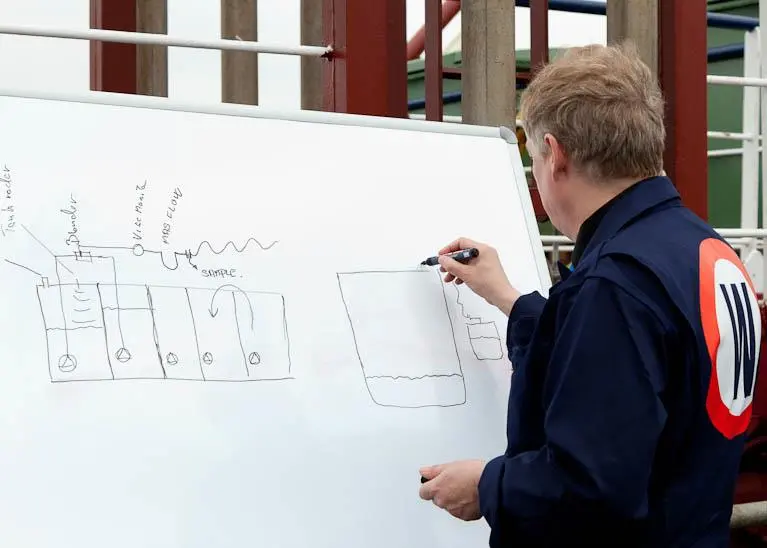
The company held an event in Copenhagen, attended by 100 customers including DFDS, Maersk Oil, Odfjell Tankers, U-Sea Bulk, Grieg Star Shipping and Torvald Klaveness Group, to see a live demonstration, presented by OW Bunker’s Technical Director, Steffen Kortegaard, of how a mass flow meter works on board one of its vessels, OW Copenhagen.
The event also demonstrated OW Bunker’s online blending, negating the need for tank blending, which ensures that air is not injected into the product. The company’s online monitoring of fuel oil quality is said to ensure that the viscosity and density of the products that are supplied are within the appropriate specifications. Both methods offer full control over the blending process and allow the sulphur content to be measured accurately; which OW Bunker says is a prerequisite given the current and impending regulatory pressures.
Mass flow meters measure the amount of fuel oil that is transferred during the bunkering process by measuring the quantity as the force of the fuel oil flows through vibrating tubes. Sensors and transmitters are then used to generate a linear flow signal, which is linked to software located in the bridge, to monitor the exact amount of fuel oil taken on board. OW Bunker says that using a mass flow meter creates a faster and smoother delivery process between the bunker barge and the receiving vessel, increasing productivity and overall efficiency.
“Ensuring ship owners and operators receive the right quantity of bunker fuel that is ordered has been an age-long issue within shipping,” said Per Søholt, director, supply chain management at DFDS. “It is clear that embracing technology and innovation is one way of successfully meeting this challenge. OW Bunker’s adoption and demonstration of the practical capabilities of mass flow meters is a clear example of what is possible in meeting this challenge and it fundamentally shows the commitment and responsibility that quality fuel suppliers should have in driving positive change within the market,” continued Søholt.
OW Bunker says it pioneered the initial adoption of mass flow meters, when it installed the technology on vessels within its global fleet five years ago in order to enhance its quality control processes. Based on the positive results, the company believes that over time, the technology could become an ‘industry standard’ for fuel suppliers as a means of helping customers to drive further efficiencies within their operations, and continuing to increase professionalism in bunkering. This was endorsed by Maersk Oil – an OW Bunker customer – when it recently advocated the use of mass flow meters, which it has installed on 50 vessels. Despite this, says the company, many suppliers continue to use manual tank gauging and sounding.
“As well as improving professional and operational standards, mass flow meters provide the opportunity to increase the level of trust between fuel suppliers and their customers,” says Steffen Kortegaard, technical director, OW Bunker. “We must constantly look to innovate as a means of progression and meeting some of the industry’s key challenges. Our event has provided the opportunity to show our customers the commitment that we have in meeting our obligations in pioneering positive change.”
Related Articles
 ALTERNATIVE FUELS & LUBRICANTS
 GENERAL NEWS
 GENERAL NEWS