



New-generation thrusters put to work on Norwegian ferry
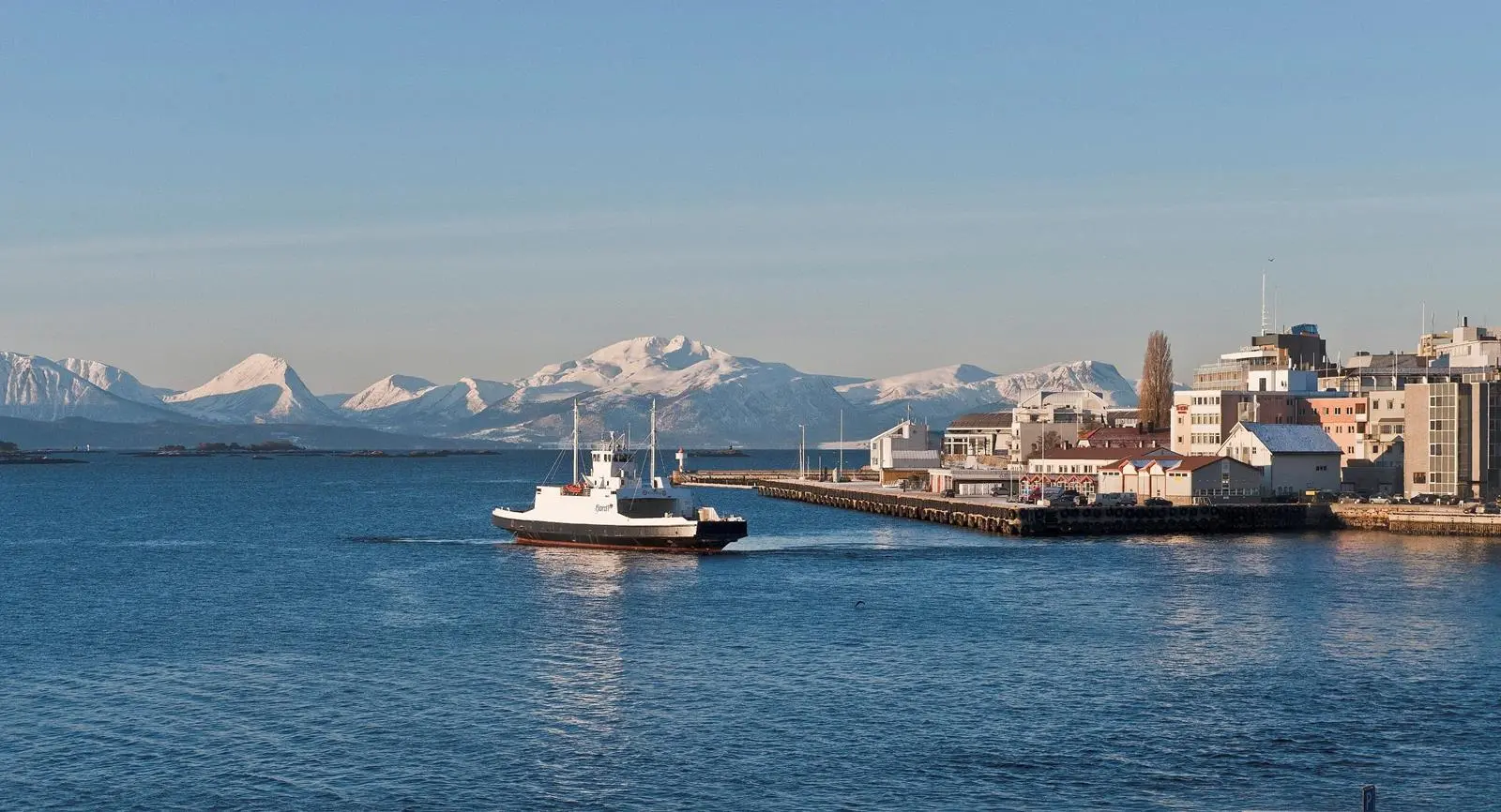
The system was developed in conjunction with fellow Norwegian company Inpower , and has been tested on the ferry Eiksund. Brunvoll and Inpower installed the thrusters and associated drive systems as a retrofit, with one thruster at each end of the ship. Brunvoll believes this to be the first main propulsion rim driven azimuth thrusters to be installed on a ship in commercial service. The rim driven thruster has, says Brunvoll, attracted significant interest from the marine industry for a wide range of different applications, and the company has previously delivered several tunnel thrusters using the pioneering rim driven concept.
Key to the thruster operation is Inpower’s drive system, in which the thruster speed is controlled directly by the speed of the diesel generators. Inpower believes this to similarly be the first of its kind.
The project was supported by Innovation Norway, with research and development undertaken by the two partners in collaboration with Fjord1 MRF. It has enabled Inpower to validate and commercialise its drive susyem, while Brunvoll says the project offered new opportunities for further development of azimuth rim driven thrusters for main propulsion.
Eiksund is described as “an older ferry”, 49m long, with capacity for 28 car units. Before the rebuild she had one main engine capable of driving two controllable pitch propellers, one at each end. According to Brunvoll, new-build double ended ferries are normally equipped with conventional azimuth thrusters, employing either a mechanical shaft system or a diesel- or gas-electric drive system.
In comparison with a direct driven propeller, increased transmission power losses from the prime mover to the propellers are inherent in these designs. According to Brunvoll, for a diesel- or gas-electric system, there are power losses in the generator, frequency converter, electric cabling, thruster motor, and in the thruster unit.
Despite the reduced overall efficiency, azimuth thrusters are still preferred due to other reasons such as redundancy from two independent propulsion systems, improved manoeuvrability, improved arrangement solutions in terms of location of machinery spaces, flexibility in selection of engines, as well as flexibility to meet various operating conditions in terms of load profile on the engines.
Brunvoll claims that its azimuth rim driven thrusters and direct speed control with electric shafts offer additional attractive perspectives with regard to:
- system simplicity and associated reduction in investment and maintenance costs;
- minimal space requirements;
- improved propulsion efficiency;
- further improved manoeuvrability; and
- reduced noise and vibration levels.
The main components of the retrofitted propulsion system as fitted to Eiksund are two resiliently mounted diesel generators, of permanent magnet (PM) design, and two azimuth rim driven thrusters complete with steering machinery, ancillaries, and control, alarm and monitoring systems. Two independent control stations were fitted on the bridge.
The new propulsion system was extensively tested to validate it quantitatively and qualitatively, with attention paid to:
- reduced power requirements and fuel consumption for comparable conditions with similar load distributions between the aft and forward propeller, even when compared to a direct drive solution;
- improved manoeuvring capabilities;
- course keeping stability;
- crash stop capability; and
- low noise and vibration levels from the propellers.
The tests demonstrated that the thrusters may be operated throughout the complete speed range from idling speed just by varying the speed of the connected diesel engine.
By replacing old-design mechanical diesel machinery, with higher pollution levels, Fjord1 MRF has actively contributed to reduced emissions. The tests showed that for ship speeds in the same range as the maximum speed before rebuild, and at otherwise comparable operating conditions, the power requirements were in the same range, or lower, after the rebuild. This, says Brunvoll, implies that the increased propulsion efficiency of the rim driven thruster has more than offset the increased transmission loss inherent in a diesel electric system.
Technical director of Fjord1 MRF, Glenn Sandberg, states: “The sea trials have confirmed that the new propulsion system met our expectations. This includes reduced fuel consumption, improved manoeuvring capabilities and noise and vibration.”
Brunvoll says that the ferry will now enter commercial service, which will provide further valuable input into a cutting-edge project realised through cooperation between companies in the lively Norwegian maritime cluster.
Related Articles
 PROPULSION
 GENERAL NEWS
 GENERAL NEWS