



Navigating the safety rulebook
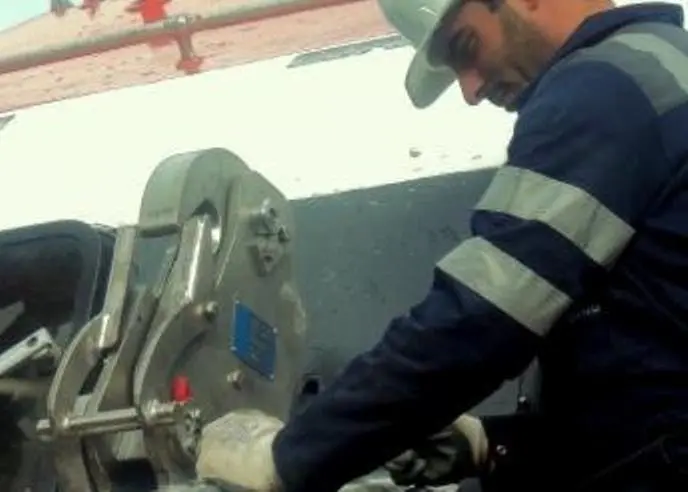
For example, Schat-Harding explains that shipowners are now obliged to evaluate existing lifeboat “release and retrieval systems” – yes, we are talking about on-load hooks – due to new IMO guidelines. Hooks which don’t meet the new standards need to be replaced no later than the next scheduled dry-dock between July, 2014 and July, 2019. If found to be compliant then they require a one-off overhaul examination on the next scheduled dry-dock taking place after the 1 July, 2014 (the follow-up overhaul examination by the manufacturer or authorised representative should be in accordance with MSC.1/Circ.1206Rev1).
Birger Grathen, CEO of Schat-Harding Service, says that the company’s global service network, “is ready to advise owners, assess existing equipment and to fit the new equipment if required”.
He adds, “The new IMO requirements are complex, and are unusual in that they are retrospective. But we are convinced they will make lifeboat release and retrieval systems safer to use.” Grathen goes on to say, “There are literally hundreds of types of lifeboat on-load hook system in service, there are thousands of lifeboats which need upgrading, and owners need help to understand and implement the rules. I urge them to ask us, we will help, we want to help, we want seafarers to feel confident that their lifeboats are safe.”
The company’s SeaCure lifeboat release and retrieval systems meet all the new IMO guidelines, and Schat-Harding has also developed a Secondary Safety System (SSS) for the SeaCure hook.
Grathen adds that timing is important too, as getting in early means it’s safer for crews, and businesses could face interruption if they leave this until the last minute rush to comply by the due date. “These SeaCure hooks can be retrofitted to most types of boat now in service, not just Schat-Harding boats, so we can offer all owners and seafarers the safety of the new IMO-compliant hooks and the security of an engineering team who can assess any hooks now in service and fit the new equipment safely and without service interruption.”
One of the hardest things to change is attitude: however, despite initial scepticism about engaging developing nations in discussion about stemming ferry fatalities in south-east Asia, the inaugural Regional Forum on Domestic Ferry Safety, a joint IMO and Interferry project agreed an action plan.
This ranged from accident reporting and investigation to guidelines on buying and running second-hand vessels plus, importantly, a study of the impact of artificially low fares, including how negative impacts can be overcome.
“There was some speculation that ferry companies may have been reluctant to attend for fear of being made scapegoats for the region’s poor safety record,” says Interferry CEO Len Roueche, “but there were operators from Bangladesh, the Philippines, Vietnam, Australia and Indonesia and their contributions were invaluable.”
“Formal presentations soon developed into open and very frank discussions in which no-one hesitated to admit that they had enormous challenges that were not going to be easy to solve,” adds Mr Roueche. “Solutions like ‘practical regulations effectively enforced’ ran up against the realities of funding, manpower and training. Nevertheless it was encouraging to hear about the major strides being made in some countries.” This included actions such as purpose-built ro-pax catamarans for Philippines-based Archipelago Ferry Corporation. This was in contrast to the nation’s usual practice of acquiring ‘hand-me-down’ tonnage from developed countries like Japan that was not always a good fit for Philippines operations.
“As the forum progressed, it became clear that peer pressure will be an important factor. No-one wants to be last in class or labelled as not keeping up. In the end this could be the most powerful incentive for change,” said Roueche.
Related Articles
 METHANOL
 MONITORING, CONTROL & DIGITALISATION
 MONITORING, CONTROL & DIGITALISATION