



Valve life extended with heavy fuels
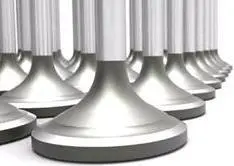
According to the company, high combustion temperatures in engines operating on HFO combined with fuel impurities are known to limit the service life of cylinder head valves. Even valves made of expensive nickel-based super-alloys suffer from hot-gas corrosion especially in highly loaded engines.
Since 2004 MWH has been pioneering the development of a solution to these problems. Higher-resistant materials are not easily available, so the approach has been to develop special coatings which protect the valve. The new CrystalCoat and CrystalCoat HT products are available in several different grades, allowing MWH to tailor the coating to the individual application.
All the coatings are said to include the following characteristics:
- high resistance to hot corrosion;
- good bonding strength between coating and substrate;
- coefficient of thermal expansion matched to the substrate;
- elastic and highly resistant to thermal shock;
- low porosity; and
- impermeable and thermodynamically stable up to high temperatures.
Hot-gas corrosion tests run at 700°C and 900°C are claimed to have shown significant reduction in corrosion rates when compared with Nimonic 80A and Nimonic 81. Operations trials in a 320 mm bore power generation engine have confirmed these results. Simplex-Turbulo says that trials have so far only been carried out on Nimonic valves coated with CrystalCoat; the next step will be to carry out trials on less expensive valve materials, but Simplex says that MWH predicts major savings for operators of engines with high temperatures, which includes engines operating on gas.
Related Articles
 ALTERNATIVE FUELS & LUBRICANTS
 GENERAL NEWS
 GENERAL NEWS