



Cutting off the leg you stand on
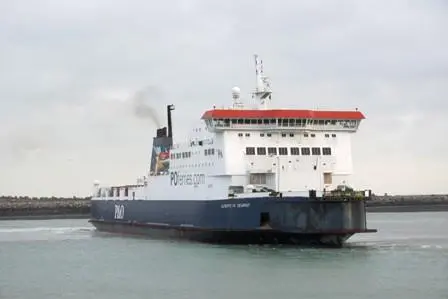
Effectively, there are two main strings to Annex VI – one is the general ruling, a 0.5% global sulphur limit due to arrive in 2020 or 2025 – depending on fuel availability. The other is the ‘regional’ implementation, the Emission Control Area (ECA) side which is definitely brewing trouble.
At the moment it’s the Channel, Baltic and the North Sea along with the US east and west coasts, (including Hawaii, substantial parts of the Canadian and recently, Caribbean coastline) which are facing the steep drop to 0.1% sulphur fuel in January 2015.
However, the European Union has a number of further ambitions for its own waters. While the EU says it’s not proposing additional ECAs, a 2005 revision of the Sulphur Directive means that a fuel requirement for regular services such as passenger ships on the Mediterranean can be seen as a de facto declaration of an ECA for this ship category – meaning 0.1% low sulphur fuel. Further, a sulphur cap is being proposed for all EU states’ territorial waters out to the 12 mile limit, and this might start to bite as early as 2015 if some proponents have their way.
Mr Balston explains that the EU Environment Committee is effectively aiming to make ECAs out of the whole of its waters. However, he isn’t convinced by the science – especially, he says, “as it is all predicated on one single 2007 study which has been used to drive the whole thing forward”.
Mr Balston adds, “Whilst we acknowledge the need to clean up emissions from ships I do doubt the veracity of that report and the manner in which it has been used since to support draconian and ill considered regulation.”
His point is that the EU is “going through the back door” with reference to the regulation, as normally countries would have to do an impact assessment before making laws that would affect their economy and population “but we will be mandated to transfer this into our individual, legal framework by the EU’s move”, says Mr Balston.
Despite this, Mr Balston does have a glimmer of hope that changes will be brought in slowly as discussions are still underway, with an EU parliamentary plenary session due in May. He adds the Council might be “more helpful” than the Commission itself, especially since a lot of EU countries are now trying to pull back. His wish is that the Directive should reflect Annex VI and no more – but he thinks it “unlikely”.
John Aitken of SEAaT explains that bulk shipping and tankers don’t spend so much of their time inside the these areas, much being mostly deep sea, so some might just bite the bullet and put in a fuel switchover device rather than avoid their usual ports. Even then, it’s a slow process to run through gas oil, and you have to do the change-over gradually, several hours before you reach the sulphur limit zone.
The real problem, says Mr Aitken, is that short sea shipping and ferries spend a very large proportion – or all – of their time in these zones. Having fought so hard to gain an important modal shift away from the roads, “many are now terrified that routes they have carved out will now become uneconomical. The irony is that it will cause a shift back to dirty trucks”, he says. Dan Sten Olsson CEO of Stena Line says it becomes abundantly clear that the benefits of going to 0.1% instead of 0.5% will be devoured by the negative consequences of losing large quantities of goods from ships to road. “According to one German study we are talking of one and a half million units in total to the road in Northern Europe, north of Holland.” He adds that it might well add an extra 30 to 40% onto some ticket prices virtually overnight on the first of January 2015, “and this will definitely not be absorbed by travelling consumers – nor by the transport companies”.
Mr Balston says, “I have seen some really bleak predictions with a number of ferry operations forced to shut down – and of course, this will force more traffic onto our overcrowded roads and add to the carbon footprint.” John Aitken agrees, and points out this will have a profound effect on the traffic between the west coast of the UK and the east coast of Ireland, and will also affect all the ferry boats like those running to the Scottish islands.
He says, the Sulphur Directive in part addresses health hazards, “But”, he says, “every legislation comes with a cost. Do we really need tight controls around areas that have a low population density when the cost of this legislation will probably be socio-economically high for people like those living in the Scottish island communities?”
Unfortunately, he adds, “Personally, I don’t think the short sea shipping lobby will be able to make much impact, because there’s no political appetite for standing up against what appears to be an eco-friendly ruling,” says Mr Aitken. He thinks the seaways will be the victim of political horse trading – and people won’t realise they are making a mistake until it’s too late.
There are other options which still allow for regulation. SEAat for example ran a trial which modelled sulphur offsetting. It could work because ships in the ECA could burn LNG, low sulphur gas oil, or use scrubbers, and could trade their positive ‘credit’ with deep sea ships that burn HFO.
Combined, the two sides reach a good level of sulphur control at a reduced cost. However, this doesn’t work if the fuel standards are very strict as the scheme needs an ability to over comply – and what is being proposed is too strict to allow this says Mr Aitken.
Related Articles
 METHANOL
 MONITORING, CONTROL & DIGITALISATION
 MONITORING, CONTROL & DIGITALISATION